
Cornelissen


-
-
-
-
-

-
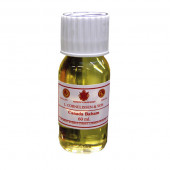
Cornelissen Canada Balsam
Starting at: £20.10
Canada Balsam is an oleoresin, meaning that it is a mixture of essential oils and resin. It comes from the fir tree Abies balsamea, native to Canada and the eastern states of North America. It is notable for its pale colour, clarity and gloss, making it a useful ingredient in recipes for oil-painting mediums.
Learn More -
-
-

Clutch Pencil with Sharpener Stand
Starting at: £24.50
Classic 5.5mm clutch pencil made from FSC certified beechwood. Supplied with display stand sharpener and HB graphite lead. Packed in a gift box. Available in Ash (oiled finish) or Black Stained. Learn More -
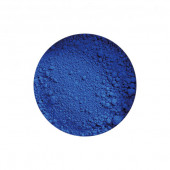
Azure Blue Pigment
Starting at: £12.00
Azure Blue Pigment (PB28). Inorganic pigment made from various aluminium, zinc and cobalt compounds. Semi-opaque. Weak tinting strength. Excellent Lightfastness.
Toxicity: C
Limeproof
Learn More -
-
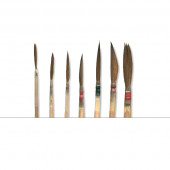
Cornelissen Pointed Quill Writer
Starting at: £7.00
Traditional long sable hair with plain wood handles bound in genuine quill. These brushes hold large amounts of colour for long lines but also point well for detail. Learn More -
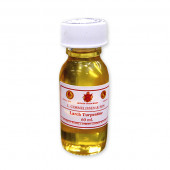
Cornelissen Larch Venice Turpentine
Starting at: £18.00
Venice Trupentine is a thick, resinous liquid extracted from the Larix decidua, a larch tree native to Austria. It can impart luminosity, brilliance and gloss when used in mediums and varnishes, and as such it was highly valued during the Golden Age of painting in Venice. It is a slow-drying balsam, which can be diluted with turpentine or placed in a bath of warm water to aid flow.
Learn More -
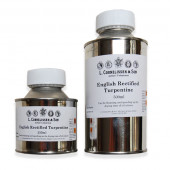
Cornelissen Rectified Turpentine
Starting at: £9.00
Volatile colourless liquid distilled from pine sap. Greater wetting powers than white spirit. Used to thin oil paint. Learn More -
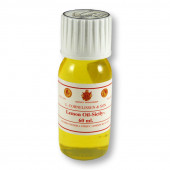
Cornelissen Lemon Oil
Starting at: £12.30
Lemon oil is an essential oil, primarily used for its scent. Learn More -
-
-
-
-
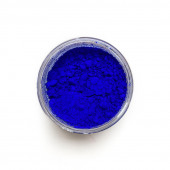
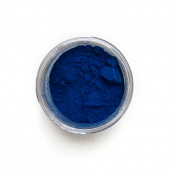
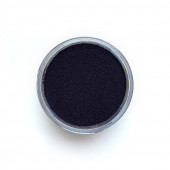
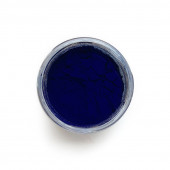
Pigment 15 ml Ultramarine Blue Dark (10g)
£4.00Inorganic pigment consisting kaolin, soda ash, sulphides and coal. Semi-transparent. High tinting strength. Excellent Lightfastness. Medium to slow drying rate. Suitable in all media except Lime-fresco. For fresco, we recommend Ultramarine Lime-wash pigment. Used since early 19th Century.
Learn More -
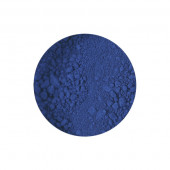
Antwerp Blue Pigment
Starting at: £4.50
PB27, PW22
Antwerp Blue is derived from Prussian Blue. It is a less intense colour, as it is contains Blanc Fixe to lower the tinting strength.
Toxicity A/B
Learn More -
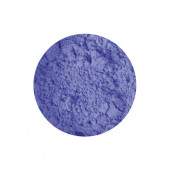
Cerulean Blue Pigment
Starting at: £9.50
PB35
Cerulean Blue is an artificial mineral pigment that is prepared by heating a mixture of Cobalt Chloride and Potassium Stannate. It was first synthesised in the early nineteenth century, becoming more widely used from 1870, when Rowney introduced Coeruleum Blue into their range. It produces a very bright, clear, and unusually opaque blue, hence its name, which is derived from the Latin for "sky-blue", or perhaps "heaven-blue". It has a very low tinting strength meaning that, although it is stable in all media, some artists may choose to bind it in poppy rather than linseed oil, so that the colour isn't affected by the colour of the binder. It creates a fairly flexible paint film, and is a fast-to-medium drying pigment.
Limeproof
Toxicity: B
Learn More -
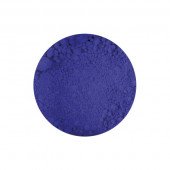
Cobalt Blue Pigment
Starting at: £6.30
PB28
Cobalt Blue is an artificial mineral pigment, produced by the calcination of cobalt oxide and aluminium oxide. It has been widely used since the early 1800s, following its discovery by the French chemist Thenard at the beginning of the century. The name Cobalt has its roots in the German word Kobold, meaning imp or evil spirit. German miners named it to in the late-Middle Ages, as the presence of cobalt ore in the mines made the extraction of silver more difficult. They were possibly also aware of the toxic properties of the mineral that was frustrating their efforts.
Cobalt remains a very popular colour today, and is present in most ranges of paints, being a semi-transparent pigment that is stable in all media. As a watercolour, all cobalt pigments tend to granulate. As an oil paint, it requires less oil content than most other pigments, and dries quite quickly. Like Cerulean Blue, some artists may choose to bind it with poppy oil, to avoid any possible colour changes brought about by the yellowish cast of linseed oil and the pigment's weak tinting strength.
Limeproof
Toxicity: C
Learn More -
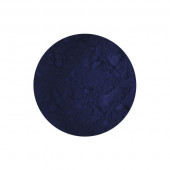
Indigo Blue Synthetic Pigment
Starting at: £5.50
Indigo Blue Synthetic Pigment (VB1). Organic pigment. Transparent. Good tinting strength. Moderate Lightfastness, slower fading rate than Genuine Indigo. Requires wetting agent. Suitable for oil and water-based media. Developed in late 19th Century. Toxicity A/B Learn More -
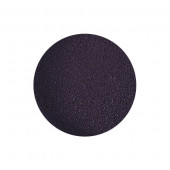
Indigo Blue Genuine Pigment
Starting at: £6.30
NB1
Genuine Indigo is a natural vegetable pigment derived from the Indigofera Tinctoria plant, which was first imported into Europe from India in the seventeenth century. It replaced woad, which had been grown natively in Europe for its blue dye. The leaves are soaked in water to ferment; upon drying, an oxidised residue forms on the dry leaves, which is removed, washed, boiled in water, and then dried to form cakes of pigment or dye.
Indigo is very transparent, with a good tinting strength. It requires a wetting agent to disperse, and in oil it dries very slowly. It is fugitive to light; this drawback means that it is no longer commonly available in commercial paints. It fell out of general use at the beginning of the seventeenth century, largely replaced by Prussian Blue, and synthetic Indigo was patented in the 1890s. However, it provides a subtle shade of blue that is still desirable in works that are going to be protected from light.
Toxicity: B
Learn More -
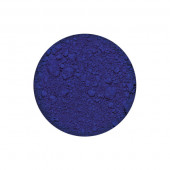
Oriental Blue Pigment
Starting at: £5.40
Oriental Blue Pigment (PB29). Inorganic pigment consisting kaolin, soda ash, sulfides and coal. Semi-transparent. High tinting strength. Excellent Lightfastness. Medium to slow drying rate. Suitable in all media except Lime-fresco. Used since early 19th Century. Toxicity B Learn More -
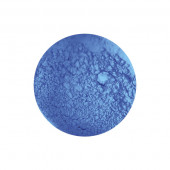
Manganese Blue Pigment
Starting at: £49.50
PB33
Manganese Blue is an articficial mineral pigment, that is prepared by heating sodium sulphate, potassium permanganate and barium nitrate to 750-800 degrees Celcius. It has been produed as a pigment and as a colourant for cement since the 1930s, and is notable for its quick drying time in oils, its high transparency, and its bright, slightly greenish colour. Its weak tinting strength can cause it to be overwhelmed in mixtures, and it has a tendency to granulate as a watercolour. It is no longer used in commercial paints, but many manufacturers offer a Manganese Blue Hue, which is typically based upon Phthalocyanine Blue.
Production of this pigment has now ceased, due to environmental and health concerns, therefore it is only available while stocks last.
Toxicity: C
Learn More -
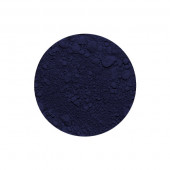
Phthalo Blue Pigment
Starting at: £8.00
PB15:3
Phthalo (Mona) Blue is a synthetic organic pigment, Copper Phthalocyanine, that has been in use since the 1930s. It has an extremely high tinting strength and is a staining colour, so cannot successfully be lifted in watercolour. It requires a wetting agent to fully disperse into a medium, and, when used at full strength, a copper sheen is visible in dried paint film. It is transparent, very lightfast, and has a medium-to-slow drying rate in oil.
Toxicity: C
While stocks last
Learn More -
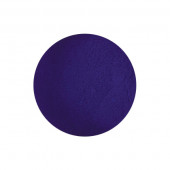
Prussian Blue Pigment
Starting at: £5.20
PB27
Prussian Blue is a synthetic organic pigment that was discovered by the paint maker Diesbach, apparently by accident, in Germany in the early eighteenth century. For many years, it was used not only as a colour in its own right, but also as a component of the original Hooker's Green. The other ingredient, gamboge, is highly fugitive, which is why many watercolours painted with Hooker's green have taken on a bluish tone with with age.
It is a very transparent and heavily staining colour. It dries quite quickly in oil, and can therefore wrinkly if applied too quickly. It is suitable for use in oils, watercolour, and egg tempera. However, it shouldn't be used in conjunction with alkali substances, such as Lead White or Calcium Carbonate as it can turn brown, so it isn't suitable for fresco. For the same reason, it isn't used with acrylic resin binders due to their alkaline nature, so most paint manufacturers will replace Prussian Blue with a mixture of Phthalo Blue and black in their acrylic ranges. It requires a wetting agent to fully disperse into a binder.
Toxicity: B
Learn More -
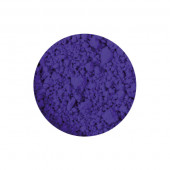
Ultramarine Blue Dark Pigment
Starting at: £4.00
PB29
Ultramarine Blue Dark is an artificial mineral pigment that is produced by heating clay, soda, sulphur and coal to high temperatures. Its name comes from outremer, or over-the-sea, as a reference to the highly-prized Lapis Lazuli pigment which had been imported into Europe from Afghanistan since the Middle Ages. First manufactured in France and Germany in 1828, synthetic Ultramarine provided a brilliant and affordable blue to artists, and it remains one of the most popular blues on artists' palettes today.
It is a transparent pigment, with a high tinting strength and excellent lightfastness. It reacts to alkali, therefore it is not suitable for use in lime-fresco; we do offer a Limeproof Ultramarine Blue for this purpose. It is stable in all other media, although it can be tricky to grind in oil. Instead of creating a thick, buttery paste, it can remain stringy and deteriorate when stored in a tube. To correct this, many commercial paint manufacturers include additives and waxes in their recipes; if you intend on grinding your own paint, you could try replacing 10-15% of your Linseed Oil with Poppy Oil to improve the consistency. Ultramine Blue provides a slow-drying, fairly hard paint film, which can tend towards brittleness.
Toxicity: B
Learn More
Shopping Options
- Category
-
- Pigments, Gums & Resins (210)
- Oils & Acrylics (15)
- Canvas & Supports (15)
- Watercolour (8)
- Pastels (1)
- Drawing / Calligraphy (27)
- Gilding & Restoration (108)
- Printmaking (62)
- Brushes (22)
- Paper (10)
- Studio (25)
- Specialist Decorating (1)
- Search Brands
-
You have no items in your shopping basket.