
Cornelissen


-
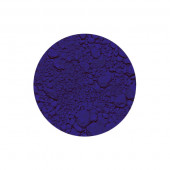
Ultramarine Blue Light Pigment
Starting at: £5.30
PB29
Ultramarine Blue Light is an artificial mineral pigment that is produced by heating clay, soda, sulphur and coal to high temperatures. Its name comes from outremer, or over-the-sea, as a reference to the highly-prized Lapis Lazuli pigment which had been imported into Europe from Afghanistan since the Middle Ages. First manufactured in France and Germany in 1828, synthetic Ultramarine provided a brilliant and affordable blue to artists, and it remains one of the most popular blues on artists' palettes today.
It is a transparent pigment, with a high tinting strength and excellent lightfastness. It reacts to alkali, therefore it is not suitable for use in lime-fresco; we do offer a Limeproof Ultramarine Blue for this purpose. It is stable in all other media, although it can be tricky to grind in oil. Instead of creating a thick, buttery paste, it can remain stringy and deteriorate when stored in a tube. To correct this, many commercial paint manufacturers include additives and waxes in their recipes; if you intend on grinding your own paint, you could try replacing 10-15% of your Linseed Oil with Poppy Oil to improve the consistency. Ultramine Blue provides a slow-drying, fairly hard paint film, which can tend towards brittleness.
Toxicity B
Learn More -
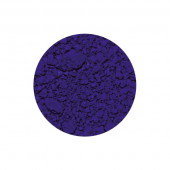
Ultramarine Blue Limewash Pigment
Starting at: £6.30
PB29
Ultramarine Blue Limewash is an artificial mineral pigment that is produced by heating clay, soda, sulphur and coal to high temperatures. Its name comes from outremer, or over-the-sea, as a reference to the highly-prized Lapis Lazuli pigment which had been imported into Europe from Afghanistan since the Middle Ages. First manufactured in France and Germany in 1828, synthetic Ultramarine provided a brilliant and affordable blue to artists, and it remains one of the most popular blues on artists' palettes today.
It is a transparent pigment, with a high tinting strength and excellent lightfastness. Most Ultramarine colours It react to alkali and are therefore unsuitable for use in lime-fresco; Limeproof Ultramarine Blue remedies this problem. It is stable in all other media, although it can be tricky to grind in oil. Instead of creating a thick, buttery paste, it can remain stringy and deteriorate when stored in a tube. To correct this, many commercial paint manufacturers include additives and waxes in their recipes; if you intend on grinding your own paint, you could try replacing 10-15% of your Linseed Oil with Poppy Oil to improve the consistency. Ultramine Blue provides a slow-drying, fairly hard paint film, which can tend towards brittleness.
Toxicity: B
Learn More -
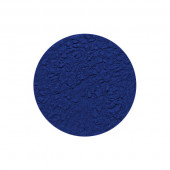
Ultramarine PB29 Pigment
Starting at: £9.10
PB29
Ultramarine Blue is an artificial mineral pigment that is produced by heating clay, soda, sulphur and coal to high temperatures. Its name comes from outremer, or over-the-sea, as a reference to the highly-prized Lapis Lazuli pigment which had been imported into Europe from Afghanistan since the Middle Ages. First manufactured in France and Germany in 1828, synthetic Ultramarine provided a brilliant and affordable blue to artists, and it remains one of the most popular blues on artists' palettes today.
It is a transparent pigment, with a high tinting strength and excellent lightfastness. It reacts to alkali, therefore it is not suitable for use in lime-fresco; we do offer a Limeproof Ultramarine Blue for this purpose. It is stable in all other media, although it can be tricky to grind in oil. Instead of creating a thick, buttery paste, it can remain stringy and deteriorate when stored in a tube. To correct this, many commercial paint manufacturers include additives and waxes in their recipes; if you intend on grinding your own paint, you could try replacing 10-15% of your Linseed Oil with Poppy Oil to improve the consistency. Ultramine Blue provides a slow-drying, fairly hard paint film, which can tend towards brittleness.
Toxicity: B/C
Learn More -
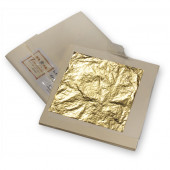
Cornelissen Gold Foil Leaf 24 carat 0.5g-Single
£53.00Call to Order
Cornelissen Gold Foil Leaf 24 carat 0.5g-Single Learn More -
-
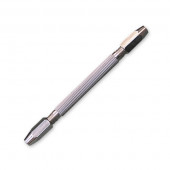
Metalpoint Holder
£14.40Metalpoint Holder - double-ended with reversible chucks to hold a range of wire sizes. Learn More -
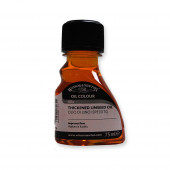
Winsor & Newton Thickened Linseed Oil
Starting at: £8.05
From the Winsor & Newton website: A pale refined oil of syrupy consistency which behaves like Linseed Stand Oil but dries quicker and darker. Improves flow and gloss. Increases the durability of paint film. Reduces brushstroke retention. Learn More -
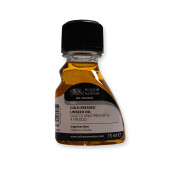
Winsor & Newton Cold Pressed Linseed Oil
Starting at: £8.05
From the Winsor & Newton website: A slightly yellow oil, which is extracted without the use of heat dries slightly quicker than refined linseed oil. Improves flow. Increases gloss & transparency. Reduces consistency and brushstrokes. Ideal for grinding pigments. Learn More -
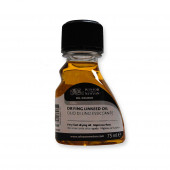
Winsor & Newton Drying Linseed Oil
Starting at: £8.05
From the Winsor & Newton website: Darker than refined Linseed Oil, this oil promotes the fastest drying rate of all the oils, whilst increasing gloss. Improves flow. Increases gloss transparency. Add to other oils to speed drying.
Learn More -
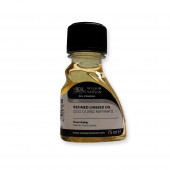
Winsor & Newton Refined Linseed Oil
Starting at: £6.05
From the Winsor & Newton website: Our most popular oil. A low viscosity alkali refined oil of pale colour that dries slowly. Reduces oil colour consistency. Increases gloss and transparency. Add to other oils to slow drying. Learn More -
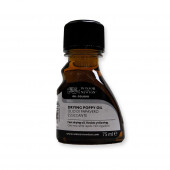
Winsor & Newton Drying Poppy Oil
Starting at: £8.05
From the Winsor & Newton website: A fast-drying, pale oil made from poppy seeds which is well suited for whites and pale colours. Reduces consistency. Increases gloss & transparency. Resists yellowing.
Learn More -
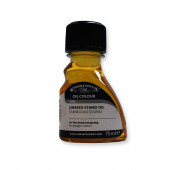
Winsor & Newton Stand Linseed Oil
Starting at: £8.05
From the Winsor & Newton website: A pale viscous oil that slows drying while imparting a tough, smooth enamel finish with no brush marks. Increases film durability. Ideal for glazing and fine detail if mixed with solvent.
Learn More -

-
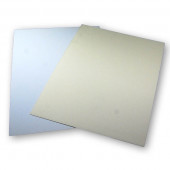
Coated Metalpoint Paper
Starting at: £0.90
Coated paper for silverpoint and metalpoint drawing. A4 and A5 sheets available in 140gsm and 250gsm. (*Please note - this paper is not archival*) Learn More -
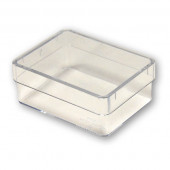
Metalpoint Storage Box
£1.50Storage box for metalpoint wires with 2 inch length. Rectangular rigid clear polystyrene box. Internal size 60x44x24 mm Learn More -
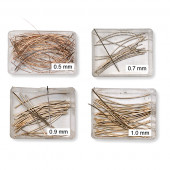
Metalpoint Wire
Starting at: £0.50
Metalpoint Wire, sold as individual pieces, 2 inches long Learn More -
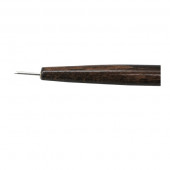
Silverpoint Pencil
£20.86Wooden pencil with 50mm length of silver (can be sharpened like a lead pencil to expose silver lead). Diameter of silver lead is 1.6 mm. Learn More -

Cornelissen Walnut Oil
Starting at: £6.50
The introduction of Walnut Oil as a pigment binder is contemporaneous with the emergence of Linseed Oil. Their drying properties have been appreciated since the Middle Ages, and throughout history there is evidence of both oils being used alongside each other within the same painting. In fact, until the sixteenth century, it is believed that Walnut Oil was the preferred binding medium among Italian artists. It is made from mature walnut kernals, offering a pale colour and brilliant gloss. For this reason, it is sometimes chosen as a binder for light colours, as it provides a stronger paint film than Poppy Oil, and faster drying times. However, a paint film made from Walnut Oil will tend to be brittle, so it is more suited to a rigid support rather than canvas.
Learn More -

Prepared Linen Canvases
Starting at: £35.85
Call to Order
Prepared Stretched Linen Canvases, available in Oil or Acrylic Primed medium grain linen. Traditional, double stretched with zinc-plated tacks. Learn More -
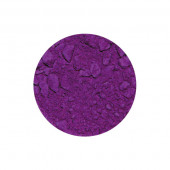
Cobalt Violet Dark Pigment
Starting at: £13.90
Cobalt Violet Dark Pigment (PV14). Synthetic inorganic pigment. Semi-transparent. High tinting strength. Excellent Lightfastness. Low oil absorption with fast drying rate. All media including ceramics. Used since late 19th Century.
Limeproof
Toxicity: C
Learn More -
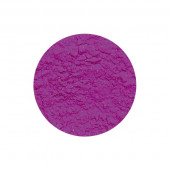
Cobalt Violet Light Pigment
Starting at: £10.00
Cobalt Violet Light Pigment (PV14). Synthetic inorganic pigment. Semi-opaque. Weak tinting strength. Excellent Lightfastness. Fast drying rate. Good for oil and watercolour but not acrylic as pigment 'settles out'. Used since early 1900's. This colour cannot be matched through mixing other colours.
Limeproof
Toxicity: C
Learn More -
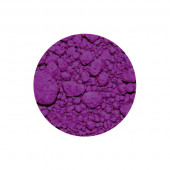
Manganese Violet Pigment
Starting at: £7.20
PV16
Manganese Violet is a synthetic organic pigment, discovered in Germany in 1868 and formed by combining manganese chloride, phosphoric acid and ammonium carbonate. It is very lightfast, but sensitive to alkalis and oils. It is semi-opaque and fast-drying, with a low tinting strength and low absorption of oil.
Toxicity: C
Learn More -
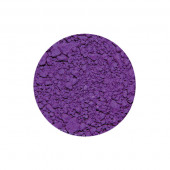
Ultramarine Violet Pigment
Starting at: £6.20
PV15
Ultramarine Violet is a synthetic organic pigment that is produced by heating Ultramarine Blue with Ammonium Chloride, causing the removal of some of the sodium and sulphur and thus a change in colour. It is lightfast and semi-transparent, with a weak tinting strength. In oils, it dries quite slowly, forming a hard, flexible film.
Toxicity: B
Learn More -
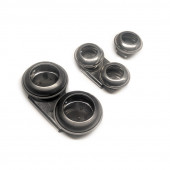
Saucer Dippers
Starting at: £2.00
Well made metal dippers, available with or without lids. A rubber disc on the inside of the lid helps create a good seal and prevent leaks. Listed measurements are of the widest point of the dipper, not the aperture. Learn More -
Lime Putty
£94.99Call to Order
Lime Putty 15 Litre (approx 20 Kg)
Limestone (Calcium Carbonate – CaCO3) is burnt in a kiln giving off Carbon Dioxide (CO2) gas and forming Calcium Oxide (CaO) which is commonly known as Quicklime. It needs to be burnt at 900-1100°C to ensure a good material is produced. The resulting lime is at its most volatile and dangerous at this stage.
The Burnt Lime or Quicklime is then combined with water (slaked) as quickly as possible. Combining Quicklime (CaO) and water (H20) produces Calcium Hydroxide (Ca(OH)2 – slaked lime and heat. It is combined with an excess of water which produces a putty. It is also known as non-hydraulic lime because it requires exposure to air in order to carbonate and does not set under water.
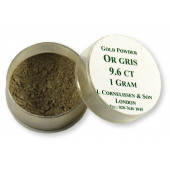
Cornelissen Gold Powder 1 g Gris 9.6 Carat
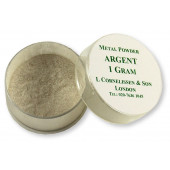
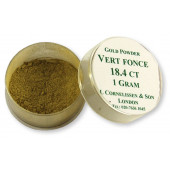
Cornelissen Gold Powder 1 g Vert Fonce 18.4 Carat
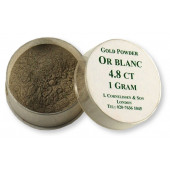
Cornelissen Gold Powder 1 g Blanc
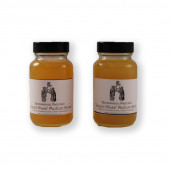
Liquid Glass Mediums
Starting at: £19.50
Renaissance Materials by Dr. David Cranswick.
A thick glazing medium of the 'Old Masters'. Liquid Glass Mediums facilitate building up layers of transparent glaze. Gloss or Satin.
Contains: Damar resin, linseed oil and beeswax (for Satin medium only)
Learn More