Click to Hide Notification

This is a demo shop. Any orders placed through this shop will not be honoured or fulfilled.

Your search 'ornament paint' did not match any products.
Showing results using some of your search terms 'ornament paint'

Search results for 'paint'

Items 1 to 30 of 83 total

per page
Page:
  1. 1
  2. 2
  3. 3

Grid  List 

Set Ascending Direction
  1. Plastic Paint Tubs

    Plastic Paint Tubs

    Starting at: £4.30

    Plastic Paint Tubs Learn More
  2. Painter's Handbook

    Painter's Handbook

    £21.95

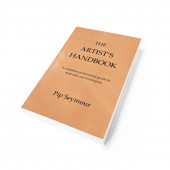
    By Mark David Gottsegen. A guide to artists’ materials as well as a thorough resource presenting techniques for using them and recipes for making them. (355 pages) Learn More
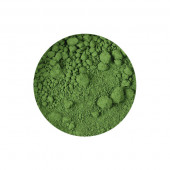
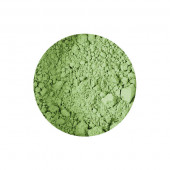
  3. Chromium Oxide Pigment

    Chromium Oxide Pigment

    Starting at: £4.50

    Chromium Oxide is a synthetic mixed-metal oxide pigment. It is stable in all media and has an average drying speed in oil, forming a hard, fairly flexible paint film. It is opaque, with a low tinting strength. It has been widely available since the mid-nineteenth century, following its introduction in 1809.
    Learn More

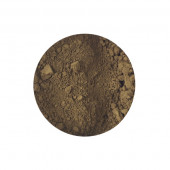
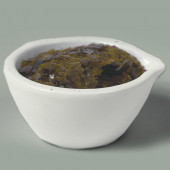
  4. Burnt Umber Pigment

    Burnt Umber Pigment

    Starting at: £4.00

    PBr7

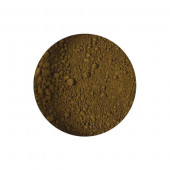
    Burnt Umber is a natural earth pigment from Italy, composed of iron oxide, manganese, and aluminium silicate. It is a form of Raw Umber that a has undergone a process of calcination, becoming warmer, more transparent and easier to disperse. It has a good tinting strength, and is very lightfast, quick-drying, and stable in all media. In oils it forms a hard, fairly flexible paint film, though it may be difficult to use in acrylic mediums.

    Toxicity: B

    Learn More
  5. Z

    Zinc White Pigment

    Starting at: £4.00

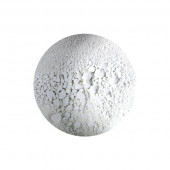
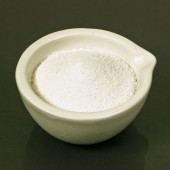
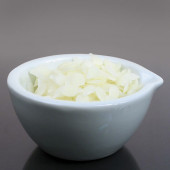
    Zinc White, or Zinc Oxide, is an artificial mineral pigment that was first produced in France in the late 18th century. Its use in commercial watercolours as Chinese White pre-dates its inclusion in oil painting. It is a semi-opaque, lightfast pigment, which dries very slowly in oil. Of all white pigments, it produces the most brittle paint film, so is not recommended in large quantities for impasto techniques. However, it is a good addition to a palette which requires a less overwhelming white than Titanium White.

    Toxicity: B

    Learn More
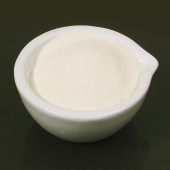
  6. Casein Lactic

    Casein Lactic

    Starting at: £18.30

    Casein is a protein derived from dried milk, which has been used in painting since ancient times. It can be combined with Ammonium Carbonate to form an emulsion, which acts as a durable, non-resoluble binder for pigments, producing a matte, fast-drying paint, similar in appearance to egg tempera. We use casein as a binder for our L. Cornelissen & Son Pigment Colour Charts, as it is a medium that clearly showcases the characteristics and behaviour of each pigment in its pure form. Casein paints can be applied in thin layers to watercolour paper, but would require a more rigid support, such as a gesso panel, to be applied thickly, as the comparative inflexibility of the paint layer means that it can be prone to cracking. Subsequent layers of paint should be more diluted to aid adhesion, and impasto effects are not recommended. It is possible to varnish casein paintings using an acrylic or damar varnish to obtain a glossy surface if desired, although this is not a necessary step. Casein can also be used as an ingredient in gesso, and is a suitable binder for fresco secco techniques.

    Some pigments may require a wetting agent in order to fully disperse within the binder, in which case alcohol may be used.

    Learn More
  7. Gum Damar

    Gum Damar

    Starting at: £7.50

    Damar is a pale, almost colourless tree resin, which is soluble in turpentine, but not in alcohol or mineral spirits. It can be used as a varnish or as a glossy painting medium in conjunction with vegetable oils, and is generally preferable to other resin-based varnishes, such as mastic varnish, as it retains its colourless appearance for a longer period of time. In encaustic painting, the inclusion of damar resin imparts toughness and gloss to the paint surface. Learn More
  8. Terre Verte Pigment

    Terre Verte Pigment

    Starting at: £4.00

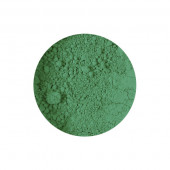
    Terre Verte, sometimes known as Green Earth, is a natural earth pigment derived from clay coloured by iron silicate. As with other natural pigments, impurities can prevent it from fully dispersing in an acrylic binder, although it is a popular pigment in all other mediums. It has been in use since antiquity, providing excellent lightfastness and great transparency, with a low tinting strength. It requires a high volume of oil, and dries slowly to create a soft, flexible paint film. When calcined, Terre Verte becomes Burnt Green Earth.
    Toxicity B Learn More

  9. Ivory Black Pigment

    Ivory Black Pigment

    Starting at: £4.00

    Ivory Black is a natural pigment of impure carbon, derived from charred animal bones. It is semi-transparent, very lightfast, and offers good tinting strength. It is a particularly slow-drying pigment, which forms a soft, rather brittle paint film in oil.

    Compared to other blacks, such as Vine Black, Ivory Black possesses warmer, brownish undertones. It should not be used at full-strength in an underpainting, as subsequent layers are likely to crack. Otherwise, it is a very useful all-purpose black for many types of paint, excluding mortar, fresco or cement.

    Toxicity: B

    Learn More
  10. Viridian Green Pigment

    Viridian Green Pigment

    Starting at: £6.30

    Viridian Green is a synthetic inorganic pigment, similar in composition to Chromium Oxide. However, unlike Chromium Oxide, Viridian contains water molecules within its crystal structure, imparting a greater degree of transparency. Sometimes referred to as Verte Eméraude, Viridian was discovered in France in 1838, patented in 1859, and made available in the UK in 1862. It is stable in all media, and offers excellent lightfastness and good tinting strength. It requires a high oil content, and dries slowly to form a hard, fairly flexible paint film.

    Toxicity B

    Learn More
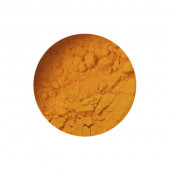
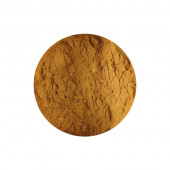
  11. Yellow Ochre Pigment

    Yellow Ochre Pigment

    Starting at: £4.00

    PY43

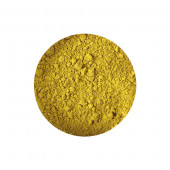
    Yellow Ochre is a natural earth pigment that has been in use since prehistoric times. It is derived from iron-rich clay deposits that are present all over the world; our Yellow Ochre comes from the hilly regions around Verona, Italy. As a pigment, it is semi-opaque, extremely lightfast, and stable in all media. It has a medium to slow drying rate in oil, creating a tough, flexible paint film. Yellow Ochre is similar in composition to Raw Sienna, but whereas Yellow Ochre contains a higher proportion of clay, Raw Sienna contains a higher proportion of silica. As a natural material, the exact colour and qualities of the resultant pigments can vary, but generally this compositional difference creates a paler, more opaque Yellow Ochre, and a darker, more transparent Raw Sienna. 

    Toxicity B

    Learn More
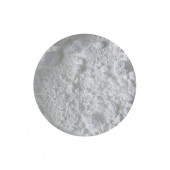
  12. Titanium White Pigment

    Titanium White Pigment

    Starting at: £4.00

    Titanium White, or Titanium Doixide, is an artificial mineral pigment introduced in the 1920s. It is valued for its opacity, good lightfastness, and stability in all media. Its high tinting strength can render it a dominant colour in mixtures. It is very slow drying in oil, and creates a somewhat brittle paint film, though more flexible than Zinc White. Its brightness makes it a popular addition to gesso.

    Toxicity: B

    Learn More
  13. Phthalo Blue Pigment

    Phthalo Blue Pigment

    Starting at: £8.00

    PB15:3

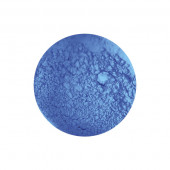
    Phthalo (Mona) Blue is a synthetic organic pigment, Copper Phthalocyanine, that has been in use since the 1930s. It has an extremely high tinting strength and is a staining colour, so cannot successfully be lifted in watercolour. It requires a wetting agent to fully disperse into a medium, and, when used at full strength, a copper sheen is visible in dried paint film. It is transparent, very lightfast, and has a medium-to-slow drying rate in oil.

    Toxicity: C

    While stocks last

    Learn More
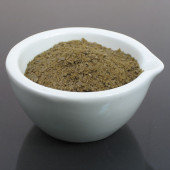
  14. Raw Umber Greenish Pigment

    Raw Umber Greenish Pigment

    Starting at: £4.80

    PBr7

    Raw Umber Greenish is a natural earth pigment composed of iron oxide, manganese, and aluminium silicate. It has its roots in the Umbria region of Italy, and was historically a popular colour for underpaintings, as it dries very quickly. It is semi-opaque, very lightfast, and stable in all media but may be difficult to disperse in acrylic. It requires a large amount of liquid when mixed with oil.

    Toxicity: B

    Learn More
  15. Verdigris Pigment

    Verdigris Pigment

    Starting at: £4.90

    Verdigris is an artificial pigment that dates from antiquity. Originally, it was produced by exposing copper to vinegar; nowadays acetic acid is used. It is acidic, so can contribute to the deterioration of paper supports. For this reason, it is more suited to oil or tempera painting than it is to watercolour. In tempera painting, it should be bound in animal glue or isinglass glue rather than egg york. When used in oil painting it should be held in a resin oil or balsam such as Venice Turpentine, as it can turn brown when ground directly into linseed oil. It is a fast-drying, transparent pigment, with a visible crystalline structure. 

    Larger quantities are available by request.

    Learn More
  16. Button Shellac

    Button Shellac

    Starting at: £8.40

    Shellac is a natural resin that is deposited by the female lac insect on the branches of trees in India and Thailand. It is soluble with alcohol, but not with mineral spirits or turpentine. It forms a tough yet flexible film, with many applications. It is suitable as a top coat for gilding when applied thinly, a sealant for porous surfaces, an isolating layer for tempera paintings, a base for pigmented inks, a protective layer for collograph plates, and a warm varnish for wooden floors and furniture. As it is prone to darkening with age, it is not recommended as a varnish for oils, and its solubility can reduce over time. There are various grades of shellac. When mixed with alcohol, it may initially form a cloudy mixture, due to traces of wax in the shellac, but this should become clear once it has dried. The highest grades of shellac are Clear Dewaxed Shellac, which has been de-coloured using the carbon filtering method, Lemon Shellac, and Orange Shellac, which are pale in colour. Button Shellac is less refined and therefore produces a reddish varnish. It was, in fact, widely used as a red dye before synthetic dyes became available. Learn More
  17. Natural Beeswax

    Natural Beeswax

    Starting at: £11.20

    Beeswax is derived from melted honeycomb, and is available in two grades. Bleached Beeswax Pellets are white, having been bleached by the sun, and are an appropriate choice for using with pale colours, although they may revert to yellow over time. Natural Beeswax Pellets are yellow in colour, and offer a more flexible structure with a higher resin content. Beeswax has a melting point of 63-66°c, and may turn brown if over-heated. It is the most widely used wax in artists' materials, having a wide range of applications. Please see below for more details.


    Learn More
  18. Sample of Distilled Verdigris pigment.

    Verdigris Deep Pigment

    £18.00

    Made to a historical recipe, this Verdigris, unlike others available, has been doubly distilled and therefore more stable than basic Verdigris. This rich green is a translucent pigment with a fine grain.

    Follow @londonpigment on Instagram for an insight into the stories behind the colours and how she makes them. 

    NOTE: many of these colours are made in extrmely limited batches so please email us at info@cornelissen.com for further infomation on what is currently availible. 

    Learn More
  19. Gypsum

    Gypsum

    Starting at: £5.70

    Gypsum is powdered Calcium Sulphate, a traditional ingredient in gesso grounds used in southern Europe. One of the advantages of preparing your painting surface with gypsum is that it allows for a particularly even absorption of the paint film. It can also be added to acrylic primers to increase absorbency or add tooth to a surface. Learn More
  20. Parchment Clippings

    Parchment Clippings

    Starting at: £9.90

    Parchment Clippings, usually waste goatskin vellum, were utilised throughout the Middle Ages to make an animal hide glue. This continued to be commonly used as a sizing for canvas before rabbit skin glue came to prominence in the nineteenth century. Parchment glue is comparable to isinglass glue, as it also produces a very pale, almost transparent glue with a degree of flexibility. Our parchment clippings are a mixture of vellum scraps, and may include goatskin, calfskin and sheepskin. Cennino Cennini gives a recipe for gesso using parchment in his treatise about painting; please see below for our recipe. Learn More
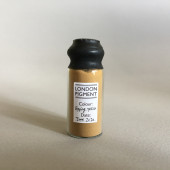
  21. Hampstead Heath Yellow Ochre in a 20 ml glass vial, sealed with wax.

    Hampstead Heath Yellow Ochre Pigment

    £12.00

    A similar yellow to Epping Forest yellow ochre, this colour is another soft semi-opaque yellow. Hampstead Heath is an ancient woodland and grassland in North London.

    Follow @londonpigment on Instagram for an insight into the stories behind the colours and how she makes them. 

    NOTE: many of these colours are made in extrmely limited batches so please email us at info@cornelissen.com for further infomation on what is currently availible. 

    Learn More
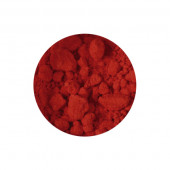
  22. Cadmium Red Deep Pigment

    Cadmium Red Deep Pigment

    Starting at: £10.10

    PR108

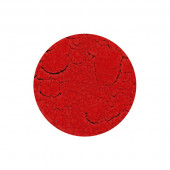
    Cadmium Red Deep is a synthetic organic pigment, which has been in use since the 1920s, effectively replacing vermilion. It is formed by heating cadmium sulphide and selenium, the hue is determined by the level of calcination and proportion of selenium. It is very opaque, and lightfast, with a high tinting strength. It absorbs a small amount of oil, and dries very slowly to form a hard, flexible paint film.

    Larger quantities are available by request.  

    Limeproof

    Toxicity: C

    Learn More
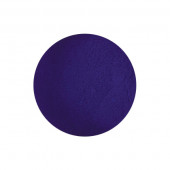
  23. Indigo Blue Genuine Pigment

    Indigo Blue Genuine Pigment

    Starting at: £6.30

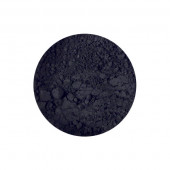
    NB1

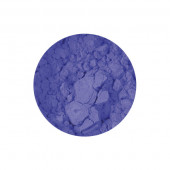
    Genuine Indigo is a natural vegetable pigment derived from the Indigofera Tinctoria plant, which was first imported into Europe from India in the seventeenth century. It replaced woad, which had been grown natively in Europe for its blue dye. The leaves are soaked in water to ferment; upon drying, an oxidised residue forms on the dry leaves, which is removed, washed, boiled in water, and then dried to form cakes of pigment or dye.

    Indigo is very transparent, with a good tinting strength. It requires a wetting agent to disperse, and in oil it dries very slowly. It is fugitive to light; this drawback means that it is no longer commonly available in commercial paints. It fell out of general use at the beginning of the seventeenth century, largely replaced by Prussian Blue, and synthetic Indigo was patented in the 1890s. However, it provides a subtle shade of blue that is still desirable in works that are going to be protected from light.

    Toxicity: B

    Learn More
  24. Azurite Pigment

    Azurite Pigment

    Starting at: £11.80

    PB30

    Azurite is a naturally occuring copper carbonate, with a long history within European and Asian painting. It was mined in northern Europe, so was a less expensive source of blue than Lapis Lazuli, which was imported from Afghanistan. Medieval artists would often use Azurite in underpaintings, before applying layers of Lapis Lazuli during later stages of production.

    It is best used in aqueous media, as the acidity of oils can cause it to darken in colour, although this can be somewhat counteracted by protecting the pigment particles with a protein such as egg yolk. It has a very low tinting strength, and the particle size tends to be quite large, to give a darker colour. It is sensitive to damp conditions, and is slightly transparent.

    Learn More
  25. Gum Sandarac

    Gum Sandarac

    Starting at: £8.60

    Gum Sandarac, derived from a coniferous tree, is available in powdered or lump form. It can be dissolved in alcohol to create a varnish that is suitable as an isolating layer in oil painting and as a traditional top coat for egg tempera. It forms a brittle layer, so is only suitable for use on a rigid support. Another application is as a surface preparation for calligraphy; the ground gum can be dusted across a piece of prepared vellum or paper to create a resist, which shrinks ink strokes slightly, making them appear finer, with crisp edges. Learn More
  26. Mixing Slab

    Mixing Slab

    Starting at: £19.95

    A glass slab with wooden cradle for the grinding of pigments.

    The friction created between the sand-blasted surfaces of the glass slab and muller facilitates the thorough mixing of pigment and medium, creating a consistent and strong paint body. This slab can be used to manufacture many types of paint including watercolours, egg tempera and oils.

    Mulling is of particular importance when making oil paint; simply mixing pigment and oil together using a palette knife will result in an unstable substance with poor plasticity, which contains a large amount of excess oil and unevenly distributed pigment particles. Thorough mulling in a figure-of-eight motion will enable the pigment to be fully combined into the binder, strengthening the resultant paint film.

    PLEASE NOTE: This item is in stock but it is a call to order item due to the fact that we cannot guarantee its safe delivery, however well we package it. Please ring us to discuss your delivery options.

    Learn More
  27. Ultramarine PB29 Pigment

    Ultramarine PB29 Pigment

    Starting at: £9.10

    PB29

    Ultramarine Blue is an artificial mineral pigment that is produced by heating clay, soda, sulphur and coal to high temperatures. Its name comes from outremer, or over-the-sea, as a reference to the highly-prized Lapis Lazuli pigment which had been imported into Europe from Afghanistan since the Middle Ages. First manufactured in France and Germany in 1828, synthetic Ultramarine provided a brilliant and affordable blue to artists, and it remains one of the most popular blues on artists' palettes today.

    It is a transparent pigment, with a high tinting strength and excellent lightfastness. It reacts to alkali, therefore it is not suitable for use in lime-fresco; we do offer a Limeproof Ultramarine Blue for this purpose. It is stable in all other media, although it can be tricky to grind in oil. Instead of creating a thick, buttery paste, it can remain stringy and deteriorate when stored in a tube. To correct this, many commercial paint manufacturers include additives and waxes in their recipes; if you intend on grinding your own paint, you could try replacing 10-15% of your Linseed Oil with Poppy Oil to improve the consistency. Ultramine Blue provides a slow-drying, fairly hard paint film, which can tend towards brittleness.

    Toxicity: B/C

    Learn More
  28. Alumina Hydrate Light

    Alumina Hydrate Light

    Starting at: £8.30

    Alumina Hydrate is an inert pigment with highly absorbent properties, which can be ground into oil paint as an almost colourless extender. It is often used as an additive in commercial oil paints, particularly in conjunction with transparent or lake pigments, as it provides stability and a homogenous consistency without effecting colour or gloss, although it may effect the pigment strength. When combined with linseed oil, it produces an almost transparent painting medium for extending oil colours. Sometimes referred to as Lake Base. Learn More
  29. Alizarin Crimson Pigment

    Alizarin Crimson Pigment

    Starting at: £4.50

    PR83

    Alizarin Crimson is a synthetic organic pigment that became available in 1868. It requires a wetting agent to disperse, and in oil it also absorbs a lot of liquid and dries very slowly to form a hard, brittle paint film. It is chemically identical to madder-root pigments and should be protected against UV light where possible as it can fade when applied onto a white ground, although it is less fugitive than its natural counterpart. Alizarin Crimson is a very transparent pigment, with a high tinting strength and slightly blue undertone.  

    Toxicity: A/B

    Larger quantities are available by request. 

    Learn More
  30. Cerulean Blue Pigment

    Cerulean Blue Pigment

    Starting at: £9.50

    PB35

    Cerulean Blue is an artificial mineral pigment that is prepared by heating a mixture of Cobalt Chloride and Potassium Stannate. It was first synthesised in the early nineteenth century, becoming more widely used from 1870, when Rowney introduced Coeruleum Blue into their range. It produces a very bright, clear, and unusually opaque blue, hence its name, which is derived from the Latin for "sky-blue", or perhaps "heaven-blue". It has a very low tinting strength meaning that, although it is stable in all media, some artists may choose to bind it in poppy rather than linseed oil, so that the colour isn't affected by the colour of the binder. It creates a fairly flexible paint film, and is a fast-to-medium drying pigment.

    Limeproof

    Toxicity: B

    Learn More

Items 1 to 30 of 83 total

per page
Page:
  1. 1
  2. 2
  3. 3

Grid  List 

Set Ascending Direction