Search results for 'yellow pigments'
-
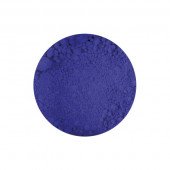
Cobalt Blue Pigment
Starting at: £6.30
PB28
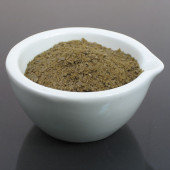
Cobalt Blue is an artificial mineral pigment, produced by the calcination of cobalt oxide and aluminium oxide. It has been widely used since the early 1800s, following its discovery by the French chemist Thenard at the beginning of the century. The name Cobalt has its roots in the German word Kobold, meaning imp or evil spirit. German miners named it to in the late-Middle Ages, as the presence of cobalt ore in the mines made the extraction of silver more difficult. They were possibly also aware of the toxic properties of the mineral that was frustrating their efforts.
Cobalt remains a very popular colour today, and is present in most ranges of paints, being a semi-transparent pigment that is stable in all media. As a watercolour, all cobalt pigments tend to granulate. As an oil paint, it requires less oil content than most other pigments, and dries quite quickly. Like Cerulean Blue, some artists may choose to bind it with poppy oil, to avoid any possible colour changes brought about by the yellowish cast of linseed oil and the pigment's weak tinting strength.
Limeproof
Toxicity: C
Learn More -
Natural Beeswax
Starting at: £11.20
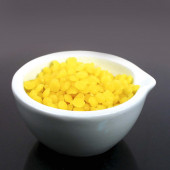
Beeswax is derived from melted honeycomb, and is available in two grades. Bleached Beeswax Pellets are white, having been bleached by the sun, and are an appropriate choice for using with pale colours, although they may revert to yellow over time. Natural Beeswax Pellets are yellow in colour, and offer a more flexible structure with a higher resin content. Beeswax has a melting point of 63-66°c, and may turn brown if over-heated. It is the most widely used wax in artists' materials, having a wide range of applications. Please see below for more details.
Learn More -
Pigment Set of 30 Colours
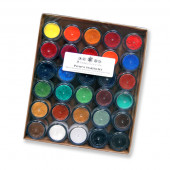
£119.00The perfect introduction to working with pigment, this selection of thirty pigments provides a wide range of colours for the production of paint. Each colour is supplied in a 15ml plastic jar, and the set includes both natural and synthetic colours. Recipes can be found on our homepage, with instructions for making different paints, including watercolour, egg tempera and oil paint. Learn More
-
Bleached Beeswax
Starting at: £12.30
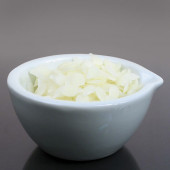
Beeswax is derived from melted honeycomb, and is available in two grades. Bleached Beeswax Pellets are white, having been bleached by the sun, and are an appropriate choice for using with pale colours, although they may revert to yellow over time. Natural Beeswax Pellets are yellow in colour, and offer a more flexible structure with a higher resin content. Beeswax has a melting point of 63-66°c, and may turn brown if over-heated. It is the most widely used wax in artists' materials, having a wide range of applications. Please see below for more details.
Learn More -
Japan Wax
Starting at: £13.50
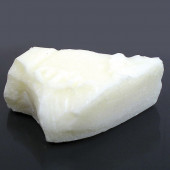
A by-product of lacquer production, Japan Wax has a low melting point of 50-52°c. It is very soft and pale yellow in colour, and can be incorporated into lithographic crayons, pastels, and polishing compounds.
While stocks last.
Learn More -
Carnauba Wax Grey
Starting at: £8.40
Carnauba Wax is the hardest wax commonly used in the production of artists' materials, with a melting point of 83-86°c. It is derived from a tree native to South America, and is available in a natural colour (grey), or a refined colour (pale yellow). Small amounts of carnauba wax are commonly used in both oil painting mediums and encaustic painting, usually in conjunction with beeswax to add toughness, durability and sheen to the paint film. It creates an inflexible surface, so works best on rigid supports such as gesso panels, and it should be noted that it will raise the melting point of encaustic mixtures. It can produce a glossy finish; as such it is used in waxes and polishes for shoes, cars, musical instruments, furniture, and wooden floors, especially when mixed with beeswax and turpentine. Learn More -
Georgian Yellow Brick Pigment
£12.00Call to Order
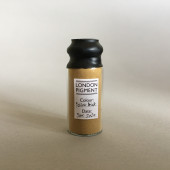
This warm earthy yellow is made from yellow bricks the quintessential London ‘stock brick’ which was in use during the 18th and 19th centuries. This pigment has a medium grain size and is transparent. Learn More
-
Flake White Pigment
Starting at: £18.76
Call to Order
PW1
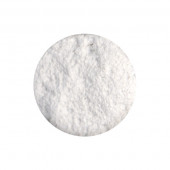
Flake White Pigment, sometimes referred to as Lead White or Cremnitz White, is an artificial mineral pigment, lead carbonate. It is no longer available as a paint, due to its extreme toxicity. For this reason, great care must be taken when handling the dry pigment.
It is not usuable in water-based media, but works well in oils. It creates a flexible paint film that dries quickly. Although opaque, small quantities do not dominate mixtures, and can help slow-drying pigments to dry. For this reason, it has been a popular mixing white historically; in fact, until the mid-19th century, Flake White was the only white pigment available to artists. Although varnishing is generally considered optional for oil paintings, it is recommended for works containing Flake White, as contact with sulphur in the atmosphere can cause it to blacken. It creates a warm white, which can yellow over time when mixed with linseed oil.
Toxicity: D
Permitted uses: Restoration of art works and protected buildings when alternatives unsuitable.
Learn More -
Mud Lark Verdigris Pigment
£18.00Call to Order
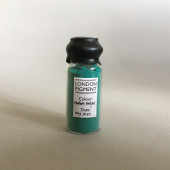
Made to a historical recipe, this Verdigris is made from Victorian copper scraps from the foreshore of the Thames in Tilbury, London and reacted with vinegar. This rich green is a translucent pigment with a fine grain. Learn More