Click to Hide Notification

This is a demo shop. Any orders placed through this shop will not be honoured or fulfilled.

Search results for 'wax seal'

12 Item(s)

per page

Grid  List 

Set Ascending Direction
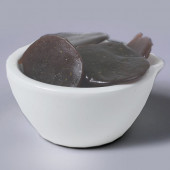
  1. Clear Dewaxed Shellac

    Clear Dewaxed Shellac

    Starting at: £9.20

    Shellac is a natural resin that is deposited by the female lac insect on the branches of trees in India and Thailand. It is soluble with alcohol, but not with mineral spirits or turpentine. It forms a tough yet flexible film, with many applications. It is suitable as a top coat for gilding when applied thinly, a sealant for porous surfaces, an isolating layer for tempera paintings, a base for pigmented inks, a protective layer for collograph plates, and a warm varnish for wooden floors and furniture. As it is prone to darkening with age, it is not recommended as a varnish for oils, and its solubility can reduce over time. There are various grades of shellac. When mixed with alcohol, it may initially form a cloudy mixture, due to traces of wax in the shellac, but this should become clear once it has dried. The highest grades of shellac are Clear Dewaxed Shellac, which has been de-coloured using the carbon filtering method, Lemon Shellac, and Orange Shellac, which are pale in colour. Button Shellac is less refined and therefore produces a reddish varnish. It was, in fact, widely used as a red dye before synthetic dyes became available. Learn More
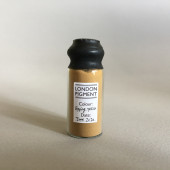
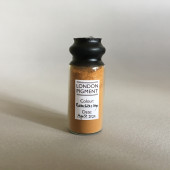
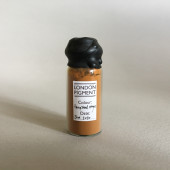
  2. Epping Forest Yellow Ochre in a 20 ml glass vial, sealed with wax.

    Epping Forest Yellow Ochre Pigment

    £12.00

    This soft yellow ochre is sourced from near the ancient woodland of Epping Forest in North London. Given legal status by Henry ll as a Royal hunting ground for the Monarchy this forest has a rich cultural and geological history. This pigment is a fine particle size and is semi-opaque.

    Follow @londonpigment on Instagram for an insight into the stories behind the colours and how she makes them. 

    NOTE: many of these colours are made in extrmely limited batches so please email us at info@cornelissen.com for further infomation on what is currently availible. 

    Learn More
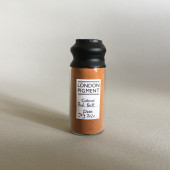
  3. Rotherhithe Orange in a 20 ml glass vial, sealed with wax.

    Rotherhithe Orange Pigment

    £12.00

    This unique colour is an intense orange oxide that is made from the decay of Victorian pipes mixing with the chalk bed of the infilled docks at Rotherhithe, in south east London. Rotherhithe has a long history as a port, with many shipyards from Elizabethan times until the early 20th century and with working docks until the 1970s, when they began to be infilled due to a decline in imports to Central London. With a fine particle size and transparent quality this pigment would be great for glazing techniques.

    Follow @londonpigment on Instagram for an insight into the stories behind the colours and how she makes them. 

    NOTE: many of these colours are made in extrmely limited batches so please email us at info@cornelissen.com for further infomation on what is currently availible. 

    Learn More
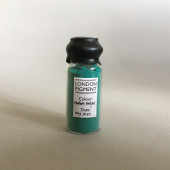
  4. Sample of Distilled Verdigris pigment.

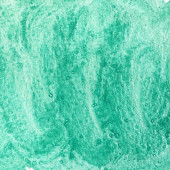
    Verdigris Deep Pigment

    £18.00

    Made to a historical recipe, this Verdigris, unlike others available, has been doubly distilled and therefore more stable than basic Verdigris. This rich green is a translucent pigment with a fine grain.

    Follow @londonpigment on Instagram for an insight into the stories behind the colours and how she makes them. 

    NOTE: many of these colours are made in extrmely limited batches so please email us at info@cornelissen.com for further infomation on what is currently availible. 

    Learn More
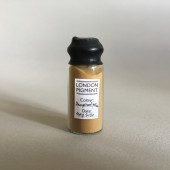
  5. Hampstead Heath Yellow Ochre in a 20 ml glass vial, sealed with wax.

    Hampstead Heath Yellow Ochre Pigment

    £12.00

    A similar yellow to Epping Forest yellow ochre, this colour is another soft semi-opaque yellow. Hampstead Heath is an ancient woodland and grassland in North London.

    Follow @londonpigment on Instagram for an insight into the stories behind the colours and how she makes them. 

    NOTE: many of these colours are made in extrmely limited batches so please email us at info@cornelissen.com for further infomation on what is currently availible. 

    Learn More
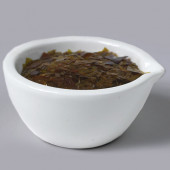
  6. Orange Shellac

    Orange Shellac

    Starting at: £8.00

    Shellac is a natural resin that is deposited by the female lac insect on the branches of trees in India and Thailand. It is soluble with alcohol, but not with mineral spirits or turpentine. It forms a tough yet flexible film, with many applications. It is suitable as a top coat for gilding when applied thinly, a sealant for porous surfaces, an isolating layer for tempera paintings, a base for pigmented inks, a protective layer for collograph plates, and a warm varnish for wooden floors and furniture. As it is prone to darkening with age, it is not recommended as a varnish for oils, and its solubility can reduce over time. There are various grades of shellac. When mixed with alcohol, it may initially form a cloudy mixture, due to traces of wax in the shellac, but this should become clear once it has dried. The highest grades of shellac are Clear Dewaxed Shellac, which has been de-coloured using the carbon filtering method, Lemon Shellac, and Orange Shellac, which are pale in colour. Button Shellac is less refined and therefore produces a reddish varnish. It was, in fact, widely used as a red dye before synthetic dyes became available. Learn More
  7. Lemon Shellac

    Lemon Shellac

    Starting at: £8.20

    Shellac is a natural resin that is deposited by the female lac insect on the branches of trees in India and Thailand. It is soluble with alcohol, but not with mineral spirits or turpentine. It forms a tough yet flexible film, with many applications. It is suitable as a top coat for gilding when applied thinly, a sealant for porous surfaces, an isolating layer for tempera paintings, a base for pigmented inks, a protective layer for collograph plates, and a warm varnish for wooden floors and furniture. As it is prone to darkening with age, it is not recommended as a varnish for oils, and its solubility can reduce over time. There are various grades of shellac. When mixed with alcohol, it may initially form a cloudy mixture, due to traces of wax in the shellac, but this should become clear once it has dried. The highest grades of shellac are Clear Dewaxed Shellac, which has been de-coloured using the carbon filtering method, Lemon Shellac, and Orange Shellac, which are pale in colour. Button Shellac is less refined and therefore produces a reddish varnish. It was, in fact, widely used as a red dye before synthetic dyes became available. Learn More
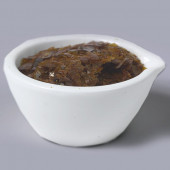
  8. Button Shellac

    Button Shellac

    Starting at: £8.40

    Shellac is a natural resin that is deposited by the female lac insect on the branches of trees in India and Thailand. It is soluble with alcohol, but not with mineral spirits or turpentine. It forms a tough yet flexible film, with many applications. It is suitable as a top coat for gilding when applied thinly, a sealant for porous surfaces, an isolating layer for tempera paintings, a base for pigmented inks, a protective layer for collograph plates, and a warm varnish for wooden floors and furniture. As it is prone to darkening with age, it is not recommended as a varnish for oils, and its solubility can reduce over time. There are various grades of shellac. When mixed with alcohol, it may initially form a cloudy mixture, due to traces of wax in the shellac, but this should become clear once it has dried. The highest grades of shellac are Clear Dewaxed Shellac, which has been de-coloured using the carbon filtering method, Lemon Shellac, and Orange Shellac, which are pale in colour. Button Shellac is less refined and therefore produces a reddish varnish. It was, in fact, widely used as a red dye before synthetic dyes became available. Learn More
  9. Mud Lark Verdigris in a 20 ml glass vial, sealed with wax.

    Mud Lark Verdigris Pigment

    £18.00

    Call to Order

    Made to a historical recipe, this Verdigris is made from Victorian copper scraps from the foreshore of the Thames in Tilbury, London and reacted with vinegar. This rich green is a translucent pigment with a fine grain. Learn More

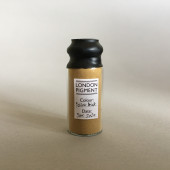
  10. Georgian Yellow Brick in a 20 ml glass vial, sealed with wax.

    Georgian Yellow Brick Pigment

    £12.00

    Call to Order

    This warm earthy yellow is made from yellow bricks the quintessential London ‘stock brick’ which was in use during the 18th and 19th centuries. This pigment has a medium grain size and is transparent. Learn More

  11. Hampstead Heath Orange in a 20 ml glass vial, sealed with wax.

    Hampstead Heath Orange Pigment

    £12.00

    Call to Order

    A beautifully bright and transparent orange, this ochre is particularly good for glazes. It has been sourced from the banks of the river Fleet, a tributary of the river Thames. This pigment has a fine grain size.

    Follow @londonpigment on Instagram for an insight into the stories behind the colours and how she makes them. 

    NOTE: many of these colours are made in extrmely limited batches so please email us at info@cornelissen.com for further infomation on what is currently availible. 

    Learn More
  12. London Red Brick in a 20 ml glass vial, sealed with wax.

    London Red Brick Pigment

    £12.00

    Call to Order

    Made from pulverised historic London bricks collected from the foreshore of the Thames near Tower Bridge and Wapping this deep red pigment is essentially a variety of red ochre. During the Victorian era, London Clay was dug up and fired on construction sites to produce the building materials for the city. Red brick pigment has a medium grain size and is opaque. Learn More

12 Item(s)

per page

Grid  List 

Set Ascending Direction