Search results for 'painting'
-
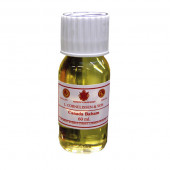
Cornelissen Walnut Oil
Starting at: £6.50
The introduction of Walnut Oil as a pigment binder is contemporaneous with the emergence of Linseed Oil. Their drying properties have been appreciated since the Middle Ages, and throughout history there is evidence of both oils being used alongside each other within the same painting. In fact, until the sixteenth century, it is believed that Walnut Oil was the preferred binding medium among Italian artists. It is made from mature walnut kernals, offering a pale colour and brilliant gloss. For this reason, it is sometimes chosen as a binder for light colours, as it provides a stronger paint film than Poppy Oil, and faster drying times. However, a paint film made from Walnut Oil will tend to be brittle, so it is more suited to a rigid support rather than canvas.
Learn More -
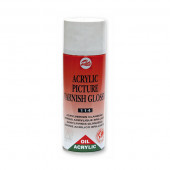
Talens Acrylic Picture Varnishes Aerosol
Starting at: £13.00
Aerosol varnish for oil or acrylic paintings. Gloss or Matt finishes. Unable to send overseas. Learn More -
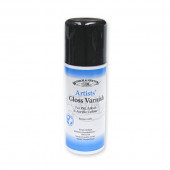
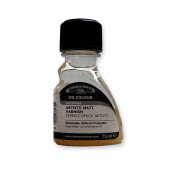
Winsor & Newton Artists' Matt Varnish
Starting at: £8.05
Ketone resin/silica/white spirit. Pale translucent liquid dries quickly to matt film. Can be mixed with Gloss Varnish to alter finish. Not suitable for highly absorbant cracked paintings. Learn More -
Lefranc Retouching Varnish Extra Fine
Starting at: £7.80
Acrylic resin/quick drying petroleum. Colourless and non-yellowing. Allows you to touch up ols paintings. Temporary and insulating varnish. Satin finish. Learn More -
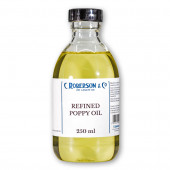
Roberson Poppy Oil
Starting at: £8.80
Poppy Oil is a slightly later addition to the artist's cabinet than Linseed Oil and Walnut Oil. It is generally used as a binder for pale colours, where the warmth of Linseed Oil is not desired. It provides a matte finish and dries very slowly, so we would not advise using it in conjunction with slow-drying pigments or in underpaintings. A paint film produced by Poppy Oil is weaker and softer than that created by Linseed Oil. This is because it contains a smaller percentage of linolenic acid than Linseed Oil; this substance imparts both strength and yellowness to an oil.
Although some of these properties can be perceived as drawbacks, paints made with Poppy Oil generally obtain a "short" or buttery texture without the addition of waxes or other additives, which can be an advantage for certain colours that produce poor consistencies in Linseed oil alone. Sometimes, the addition of a small quantity of Poppy Oil when grinding a tricky or "stringy" pigment in Cold Pressed Linseed Oil can introduce some of benefits of Poppy Oil, without transmitting its negative characteristics.
Paints made with Poppy Oil are particularly suited to "alla prima" working methods, where paint is applied spontaneously. When working in successive layers, Poppy Oil would only be appropriate for the final stages of a painting.
Learn More -
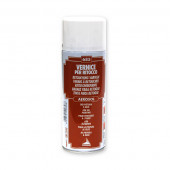
Maimeri Retouching Varnish Aerosol
Starting at: £13.45
Call to Order
Aerosol varnish for oil or acrylic paintings. For use as temporary varnish for paintings less than 6 months old. Unable to send overseas. Learn More -
Roberson Exhibition Varnish
Starting at: £6.80
Apply to touch dry paintings as a temporary exhibition varnish. After 6 months a final picture varnish can be applied with no need to remove Ketone resin/white spirit. Unable to send overseas. Learn More -
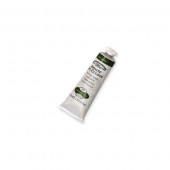
Winsor & Newton Artists' Oil Colour 37 ml
Starting at: £8.90
This long established artists' quality oil colour range of 113 colours is well known for its firm consistency and excellent handling properties. Learn More -
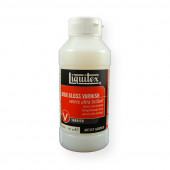
Liquitex Acrylic Varnish High Gloss
Starting at: £39.50
Use as varnish over finished paintings. Learn More -
Lefranc Safflower Oil
Starting at: £8.40
Lefranc Bourgeois are a paint manufacturer with a long history of supplying to artists since their beginnings in 1720. From their website: Safflower Oil enhances the fluidity of oil paintings. Lighter in colour than Linseed Oil, it does not yellow and dries faster than Poppy Seed Oil. It improves the flow of the paste and the intensity and transparency of colours. It also works particularly well with different white shades and light colours. Learn More -
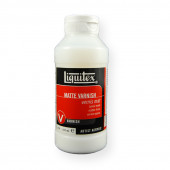
Liquitex Acrylic Varnish Matt
Starting at: £17.35
Use as varnish over finished paintings. Learn More -
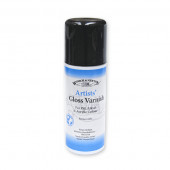
Winsor & Newton Picture Varnish Aerosol
Starting at: £16.10
Aerosol varnish for oil and acrylic paintings. Gloss, Satin or Matt finishes. Contains: Ketone resin, UV blockers. Unable to send overseas. Learn More -
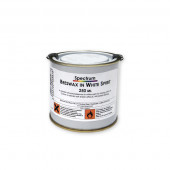
Spectrum Beeswax in White Spirit
Starting at: £16.50
From the Cranfield website:
A pereparation of pure beeswax in white spirit, this is used to achieve a soft sheen on your finished painting. It will retard drying, allowing you to achieve a range of effects.
Learn More -
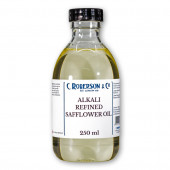
Roberson Safflower Oil
Starting at: £6.40
Safflower Oil is light-coloured, making it suitable for grinding pale pigments. It is still sometimes used as a binder for commercially available paints, although due to its very slow drying time it is best reserved for the final layers of a painting. Compared to Linseed oil, Safflower Oil will give a matte finish.
Learn More -
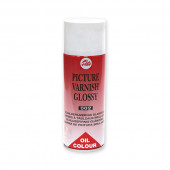
Talens Picture Varnishes Aerosol
Starting at: £13.00
Aerosol varnish for oil paintings. Gloss or Matt finishes. Unable to send overseas. Learn More -
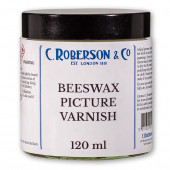
Roberson Beeswax Picture Varnish
Starting at: £8.80
A final picture varnish suitable for both oil and acrylic paintings. unable to send overseas. Learn More -
Winsor & Newton Griffin Alkyd Oil Colour
Starting at: £5.95
Artist quality range of 50 colours made from pigments bound in an oil modified alkyd resin. The main advantage of the Griffin Alkyd range is speed of drying - about 24 hours. Ideal for under painting. Compatible with traditional oils. Learn More -
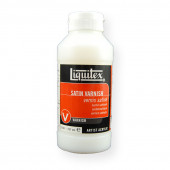
Liquitex Acrylic Varnish Satin
Starting at: £17.35
Use as varnish over finished paintings. Learn More -
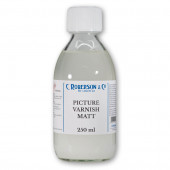
Roberson Matt Picture Varnish
Starting at: £7.00
Ketone resin/white spirit microcrystalline wax. Clear, tough protection without gloss. Useful overpaintings where resinous media have been used. Unable to send overseas. Learn More -
Cornelissen Canada Balsam
Starting at: £20.10
Canada Balsam is an oleoresin, meaning that it is a mixture of essential oils and resin. It comes from the fir tree Abies balsamea, native to Canada and the eastern states of North America. It is notable for its pale colour, clarity and gloss, making it a useful ingredient in recipes for oil-painting mediums.
Learn More -
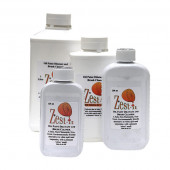
Zest-it Turpentine Substitute
Starting at: £7.40
Specially formulated non-toxic alternative to conventional thinners. Can be used as a substitute for turpentine. Ideal for asthmatics and those allergic to normal thinners. Reduces lingering smell normally generated by oil painting, has a citrus fragrance. Learn More -
Winsor & Newton Retouching Varnish Aerosol
Starting at: £16.10
Temporary protection for oil paintings less than 6 months old. Contains: Ketone resin. Unable to send overseas. Learn More -
Lefranc White Courtrai Drier
Starting at: £7.80
Lefranc Bourgeois are a paint manufacturer with a long history of supplying to artists since their beginnings in 1720.
From their website: White Courtrai siccative helps to dry oil colours as it is easy to use. It is important to be precise with the quantities: one drop to one part colour. This direct addition to colour should be carried out with slow-drying colours. It can also be used at 1 to 5% to create painting mediums.
Learn More -
Cornelissen Larch Venice Turpentine
Starting at: £18.00
Venice Trupentine is a thick, resinous liquid extracted from the Larix decidua, a larch tree native to Austria. It can impart luminosity, brilliance and gloss when used in mediums and varnishes, and as such it was highly valued during the Golden Age of painting in Venice. It is a slow-drying balsam, which can be diluted with turpentine or placed in a bath of warm water to aid flow.
Learn More -
Schmincke Oil Medium N
Starting at: £8.05
This product does not contain turpentine, and can therefore be suitable for artists with allergies.
From the Schmincke website:
A neutral, nearly non-yellowing, painting and thinning medium for oil colours. Suitable for all painting techniques except for early layers on absorbent undergrounds (not lean enough); has a low impact on drying time. For dilution, use terpin (max. 30%). Dosage: 10 to max. 20%. Contains: alkyd and acrylic resin, mineral spirit.
Learn More -
Lascaux Studio Acrylic Colours 85ml
Starting at: £11.10
Lascaux Studio Original is an artists’ quality acrylic paint. This exceptional quality acrylic is highly versatile and suitable for all painting techniques. The paint is highly pigmented, lightfast, non-ageing and non-yellowing with very good coating flexibility and water-resistant when dry. The colour range is optimised to give the same working qualities for each colour. So all colours have the same viscosity, opacity and dry to the same semi-gloss sheen. This uniform covering power is ideal for effortless creation of monochrome surfaces. There is also minimal colour shift from wet to dry. *Please note, this range is stored offsite. Please allow extra time for your order to be processed and dispatched. Learn More -
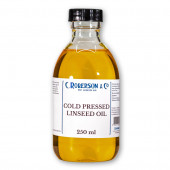
Roberson Cold Pressed Linseed Oil
Starting at: £6.60
Linseed Oil is derived from flax seeds, and appears on our shelves in many guises: Cold Pressed, Refined, Stand Oil, and as a key ingredient in many mediums. It has been appreciated for its drying properties since the Medieval period, and has become the most popular oil used in painting today due to the strong, flexible and glossy film that it creates. Cold Pressed Linseed Oil is ideal for the grinding of pigment to make oil paints. The process of producing Cold Pressed Linseed Oil results in a lower yield, but the resultant oil is of a superior quality to oil that has been extracted by other methods, creating a paint film that is more resistant to embrittlement on aging. Its slight yellow colour is caused by the high concentration of linolenic acid, the presence of which provides durability to the paint film. The amount of oil that each pigment requires can vary enormously. Alizarin Crimson, for example, requires a high percentage of oil compared to most other colours. We would always recommend mulling the pigment and oil together thoroughly to create a "short" or buttery paste, with evenly dispersed, well-coated pigment particles. This process contributes to the strength and flexibility of the paint film, and prevents the inclusion of excess oil. Origin: USA Learn More -
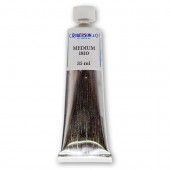
Roberson 1810 Medium
Starting at: £25.90
This is a traditional, high-oil "fat" painting medium, made using the highest quality materials. It will retain colour strength, is resistant to bleeding, has good flow release, is ideal for blending, and can be mixed with oil colours in any ratio. When dry, it creates an enamel-like surface.
Contains: Stand oil,Cold-pressed Linseed oil, Canada Balsam, Rectified Spirit of Turpentine, Beeswax, Driers.
Clean tools in white spirit. Do not use as a varnish, always mix with oil colour.
Learn More -
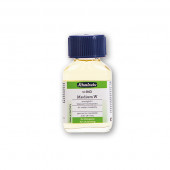
Schmincke Medium W
Starting at: £8.05
Schmincke Medium W is an odourless, jelly-like ("lean") medium for mixing oil colours with water instead of organic solvents such as turpentine or turpentine substitute. It increases gloss and transparency, reduces viscosity and harmonizes the drying process.
Dosage: 50%
Thinner: Water
Learn More -
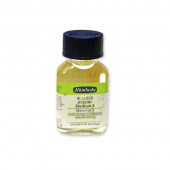
Schmincke Mussini Oil Medium 2
Starting at: £7.95
A slow-drying medium that allows for extending the working period, wet-in-wet painting and blending techniques.
From the Schmincke website:
Medium for oil colours rich in oil. Retards drying; allows wet-in-wet painting; its high content of oil and resin improves the gloss and develops a smooth, elastic film. Dosage: 10% to 20% maximum.
ontains: sunflower oil, stand oil, mineral spirit, aldehyde resin
Learn More