

Your search 'boards of oils' did not match any products.
Showing results using some of your search terms 'boards of oils'
Search results for 'of oils'


-
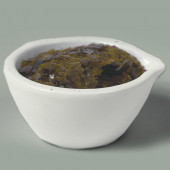
Clear Dewaxed Shellac
Starting at: £9.20
Shellac is a natural resin that is deposited by the female lac insect on the branches of trees in India and Thailand. It is soluble with alcohol, but not with mineral spirits or turpentine. It forms a tough yet flexible film, with many applications. It is suitable as a top coat for gilding when applied thinly, a sealant for porous surfaces, an isolating layer for tempera paintings, a base for pigmented inks, a protective layer for collograph plates, and a warm varnish for wooden floors and furniture. As it is prone to darkening with age, it is not recommended as a varnish for oils, and its solubility can reduce over time. There are various grades of shellac. When mixed with alcohol, it may initially form a cloudy mixture, due to traces of wax in the shellac, but this should become clear once it has dried. The highest grades of shellac are Clear Dewaxed Shellac, which has been de-coloured using the carbon filtering method, Lemon Shellac, and Orange Shellac, which are pale in colour. Button Shellac is less refined and therefore produces a reddish varnish. It was, in fact, widely used as a red dye before synthetic dyes became available. Learn More -

Cobalt Green Light Pigment
Starting at: £8.70
PG19
Cobalt Green is a synthetic pigment that consists of compounds of cobalt and zinc oxides. It is sometimes referred to as Rinman's Green, after the Swedish chemist who discovered it in the late-18th century. It is a permanent, opaque colour, with a weak tinting strength. It dries quite quickly in oil, requiring a high oil content and forming a hard, fairly fleixible paint film. Cobalt Green is available in light and dark shades; the colour is determined by the amount of zinc oxide present.
Toxicity: B
Learn More -
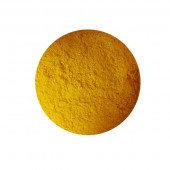
Orpiment Pigment
Starting at: £12.75
PY39
Orpiment, also called King's Yellow, is a mineral pigment containing naturally occurring sulphide of arsenic. Its high toxicity, and the prevalence of cadmium pigments, means that it is largely obsolete outside the field of restoration. It works best bound in oil or egg tempera, but it is not reliably permanent.
Larger quantities are available by request.
Learn More -
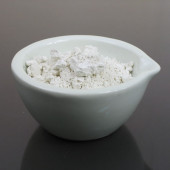
Whiting
Starting at: £3.80
Whiting is powdered Calcium Carbonate, which can be mixed with rabbit skin glue to create a chalk-based ground for oil, tempera, distemper or encaustic painting. Traditionally, whiting was an important ingredient when preparing painting surfaces in the north of Europe, as opposed to gypsum (Calcium Sulphate), which was widely used south of the Alps. Learn More -

Alumina Hydrate Light
Starting at: £8.30
Alumina Hydrate is an inert pigment with highly absorbent properties, which can be ground into oil paint as an almost colourless extender. It is often used as an additive in commercial oil paints, particularly in conjunction with transparent or lake pigments, as it provides stability and a homogenous consistency without effecting colour or gloss, although it may effect the pigment strength. When combined with linseed oil, it produces an almost transparent painting medium for extending oil colours. Sometimes referred to as Lake Base. Learn More -
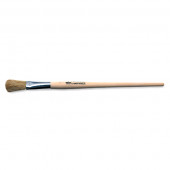
Omega Series 71 Hog Fitch Filbert
Starting at: £11.80
Soft flat domed Italian hog hair with long flexible bristles and good colour holding capacity. Well suited to flat strokes and blocking in of colour. Ideal for large scale painting. Learn More -
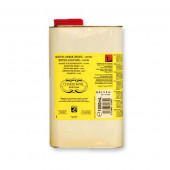
Charbonnel Oil Gold Size 3 hour
Starting at: £9.70
High quality oil based gold size. Well known for its predictability and length of open time. Tacky in 3 hours, remains open for 6 hours. Learn More -
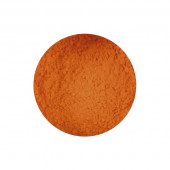
Lead Red Pigment (Minium)
Starting at: £4.50
PR105
Lead Red is an early articficial pigment that dates back to antiquity. It is created by heating Lead White or Litharge at a constant temperature of 480ºC over a prolonged period of time. It is a fast-drying colour, with good tinting strength and opacity, and has been widely used as an underpaint for gilding and in industry. However, it is highly toxic and generally unstable, so has fallen out of use in favour of Cadmium pigments. The acid in linseed oil causes Lead Red to darken, and it can solidify when stored in a tube. In water-based mediums, it can turn black.
Toxicity: D
Learn More -

Gum Sandarac
Starting at: £8.60
Gum Sandarac, derived from a coniferous tree, is available in powdered or lump form. It can be dissolved in alcohol to create a varnish that is suitable as an isolating layer in oil painting and as a traditional top coat for egg tempera. It forms a brittle layer, so is only suitable for use on a rigid support. Another application is as a surface preparation for calligraphy; the ground gum can be dusted across a piece of prepared vellum or paper to create a resist, which shrinks ink strokes slightly, making them appear finer, with crisp edges. Learn More -
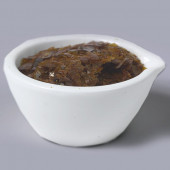
Lemon Shellac
Starting at: £8.20
Shellac is a natural resin that is deposited by the female lac insect on the branches of trees in India and Thailand. It is soluble with alcohol, but not with mineral spirits or turpentine. It forms a tough yet flexible film, with many applications. It is suitable as a top coat for gilding when applied thinly, a sealant for porous surfaces, an isolating layer for tempera paintings, a base for pigmented inks, a protective layer for collograph plates, and a warm varnish for wooden floors and furniture. As it is prone to darkening with age, it is not recommended as a varnish for oils, and its solubility can reduce over time. There are various grades of shellac. When mixed with alcohol, it may initially form a cloudy mixture, due to traces of wax in the shellac, but this should become clear once it has dried. The highest grades of shellac are Clear Dewaxed Shellac, which has been de-coloured using the carbon filtering method, Lemon Shellac, and Orange Shellac, which are pale in colour. Button Shellac is less refined and therefore produces a reddish varnish. It was, in fact, widely used as a red dye before synthetic dyes became available. Learn More -
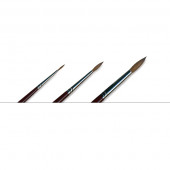
Cornelissen Sable Round
Starting at: £5.55
Finest quality red sable to all types of oil techniques. This brush has good sping even in the smaller sizes and retains its point well. Learn More -
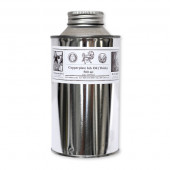
Roberson Copperplate Reducing Oil
Starting at: £20.30
Printing inks can be made by mixing powdered pigments with copperplate oil. Pour small quantity of oil into well of dry pigment and grind with glass muller untill smooth. Thin oil is then added until mixture has consistency of double cream. Thin, Medium or Thick. Learn More -
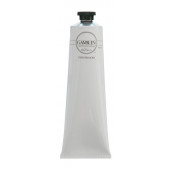
Gamblin Tack Reducer 150ml
£15.60Tack Reducer is a gel made from a very light drying oil, making it completely compatible with the inks. Small amounts added to ink will efficiently reduce tack. Tack Reducer is transparent to allow the intensity of an inks color to be maintained. Learn More -

da Vinci Series 1875 Nova Filbert
Starting at: £3.25
Long handled synthetic brush for acrylic or oil painting. Soft bristles. Learn More -
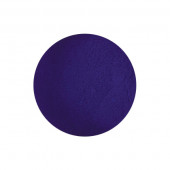
Prussian Blue Pigment
Starting at: £5.20
PB27
Prussian Blue is a synthetic organic pigment that was discovered by the paint maker Diesbach, apparently by accident, in Germany in the early eighteenth century. For many years, it was used not only as a colour in its own right, but also as a component of the original Hooker's Green. The other ingredient, gamboge, is highly fugitive, which is why many watercolours painted with Hooker's green have taken on a bluish tone with with age.
It is a very transparent and heavily staining colour. It dries quite quickly in oil, and can therefore wrinkly if applied too quickly. It is suitable for use in oils, watercolour, and egg tempera. However, it shouldn't be used in conjunction with alkali substances, such as Lead White or Calcium Carbonate as it can turn brown, so it isn't suitable for fresco. For the same reason, it isn't used with acrylic resin binders due to their alkaline nature, so most paint manufacturers will replace Prussian Blue with a mixture of Phthalo Blue and black in their acrylic ranges. It requires a wetting agent to fully disperse into a binder.
Toxicity: B
Learn More -
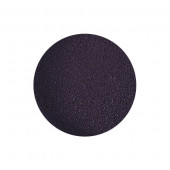
Indigo Blue Genuine Pigment
Starting at: £6.30
NB1
Genuine Indigo is a natural vegetable pigment derived from the Indigofera Tinctoria plant, which was first imported into Europe from India in the seventeenth century. It replaced woad, which had been grown natively in Europe for its blue dye. The leaves are soaked in water to ferment; upon drying, an oxidised residue forms on the dry leaves, which is removed, washed, boiled in water, and then dried to form cakes of pigment or dye.
Indigo is very transparent, with a good tinting strength. It requires a wetting agent to disperse, and in oil it dries very slowly. It is fugitive to light; this drawback means that it is no longer commonly available in commercial paints. It fell out of general use at the beginning of the seventeenth century, largely replaced by Prussian Blue, and synthetic Indigo was patented in the 1890s. However, it provides a subtle shade of blue that is still desirable in works that are going to be protected from light.
Toxicity: B
Learn More -
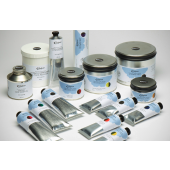
Caligo Safe Wash Etching Inks
Starting at: £8.00
Oil-based and washable - Artist quality etching inks for non-toxic printmaking. Solvent-free cleaning and lightfast, this unique range of etching inks can be washed away with liquid soap and water. Suitable for all types of intaglio printing e.g. etching, aquatint and line engraving. This range does not contain any driers. For faster drying rates, add a small amount of cobalt or manganese driers.
Learn More -
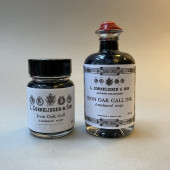
Cornelissen Historical Inks, Oak Gall
Starting at: £9.00
Exclusive to Cornelissen, our intense black Oak Gall Ink is made to a medieval recipe using oak galls collected in Cambridgeshire. The small, handmade batches are blended to give the required consistency and strength, and are steeped for several weeks and left to ‘mature’ for several more. Lightfast and fully waterproof 5-7 days after application, Oak Gall Ink has been used for centuries by calligraphers and scribes to create illuminated manuscripts and legal documents.When used on animal skins such as vellum, the acids in the Oak Gall Ink react with collagen, effectively ‘etching’ itself into the surface, hence its permanence. As with all products derived from natural ingredients, there may be slight variations in the colour and consistency of the ink due to seasonal changes
Learn More -
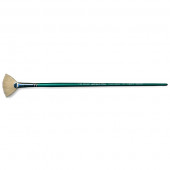
Pro Arte Series E Hog Fan
Starting at: £5.65
Used for blending and softening adjacent areas of oil and acrylic colour. Suitable for thicker layers of colour. Learn More -
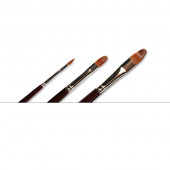
Cornelissen Sable Filbert
Starting at: £8.25
Similar to the sable round but with a filbert shape combining the characteristics of rounds and flats. Excellent spring and colour holding capacity. Learn More -
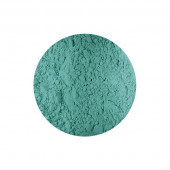
Verdigris Pigment
Starting at: £4.90
Verdigris is an artificial pigment that dates from antiquity. Originally, it was produced by exposing copper to vinegar; nowadays acetic acid is used. It is acidic, so can contribute to the deterioration of paper supports. For this reason, it is more suited to oil or tempera painting than it is to watercolour. In tempera painting, it should be bound in animal glue or isinglass glue rather than egg york. When used in oil painting it should be held in a resin oil or balsam such as Venice Turpentine, as it can turn brown when ground directly into linseed oil. It is a fast-drying, transparent pigment, with a visible crystalline structure.
Larger quantities are available by request.
Learn More -
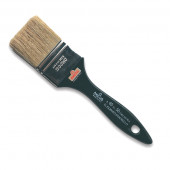
Omega Series 40 Varnish
Starting at: £6.20
Flat soft hog hair in cupro-nickel ferrule on short flat handle used for applying varnish to both oil and acrylic paintings. Also recommended for applying warm glue size and primers to all surfaces. Learn More -
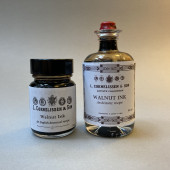
Cornelissen Historical Inks, Walnut
Starting at: £9.00
Made from organic walnut husks collected in Cambridgeshire, this deep brown walnut ink is made to an 18th-century formula. Small batches of the ink are blended to give the required consistency and strength. It has good permanence, but will eventually fade if left in direct sunlight for sustained periods of time, and is not wholly waterproof, but has some staying power, especially on sized watercolour papers. As with all handmade products derived from natural ingredients, there may be slight variations in the colour and consistency as a result of seasonal changes.
Learn More -
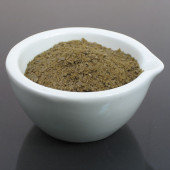
Carnauba Wax Grey
Starting at: £8.40
Carnauba Wax is the hardest wax commonly used in the production of artists' materials, with a melting point of 83-86°c. It is derived from a tree native to South America, and is available in a natural colour (grey), or a refined colour (pale yellow). Small amounts of carnauba wax are commonly used in both oil painting mediums and encaustic painting, usually in conjunction with beeswax to add toughness, durability and sheen to the paint film. It creates an inflexible surface, so works best on rigid supports such as gesso panels, and it should be noted that it will raise the melting point of encaustic mixtures. It can produce a glossy finish; as such it is used in waxes and polishes for shoes, cars, musical instruments, furniture, and wooden floors, especially when mixed with beeswax and turpentine. Learn More -
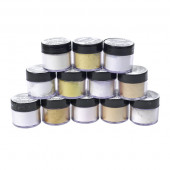
Pearl Lustre Pigments 7g
Starting at: £4.70
Pearl Lustre Pigments 7g. Colour swatch on the left indicates colour on a White Background and Colour on a Black Background on the right. Learn More -
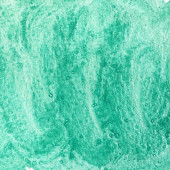
Verdigris Deep Pigment
£18.00Made to a historical recipe, this Verdigris, unlike others available, has been doubly distilled and therefore more stable than basic Verdigris. This rich green is a translucent pigment with a fine grain.
Follow @londonpigment on Instagram for an insight into the stories behind the colours and how she makes them.
NOTE: many of these colours are made in extrmely limited batches so please email us at info@cornelissen.com for further infomation on what is currently availible.
Learn More -
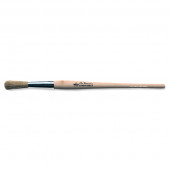
Omega Series 70 Hog Fitch Round
Starting at: £11.40
Soft round Italian hog hair with long flexible bristles and good colour holding capacity. Ideal for large scale painting in oils or acrylics. Learn More -
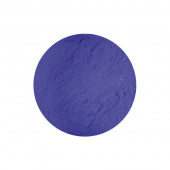
Smalt Dark Pigment
Starting at: £5.30
PB32
Smalt is a kind of cobalt blue glass or frit, and its use as a pigment dates from the 1600s in the glass-making regions of Saxony. We offer two shades, light and dark, which are determined by the particle size of the pigment; the more finely ground the powder, the paler the colour. Before the introduction of Ultramarine Blue, Smalt was available in a wide variety of grades. It is a very transparent pigment, which is easily overwhelmed in mixtures due to its weak tinting strength. It works best in water based media. When ground in oil, it can become almost invisible in dried oil-paint films because its refractive index is so close to that of linseed oil.
Larger quantities are available by request.
Learn More -
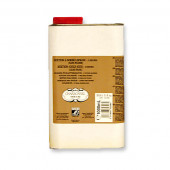
Charbonnel Oil Gold Size 12 hour
Starting at: £11.60
High quality oil based gold size. Well known for it's predictability and length of it's open period. Tacky in 12 hours, remains open for 20 hours. Learn More -
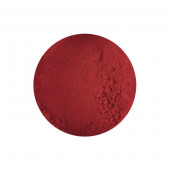
Alizarin Crimson Pigment
Starting at: £4.50
PR83
Alizarin Crimson is a synthetic organic pigment that became available in 1868. It requires a wetting agent to disperse, and in oil it also absorbs a lot of liquid and dries very slowly to form a hard, brittle paint film. It is chemically identical to madder-root pigments and should be protected against UV light where possible as it can fade when applied onto a white ground, although it is less fugitive than its natural counterpart. Alizarin Crimson is a very transparent pigment, with a high tinting strength and slightly blue undertone.
Toxicity: A/B
Larger quantities are available by request.
Learn More
Shopping Options
- Category
-
- Pigments, Gums & Resins (80)
- Oils & Acrylics (119)
- Canvas & Supports (2)
- Watercolour (1)
- Pastels (2)
- Drawing / Calligraphy (4)
- Gilding & Restoration (18)
- Printmaking (13)
- Brushes (15)
- Paper (2)
- Studio (5)
- Specialist Decorating (1)
- Manufacturer
-
- Charbonnel (2)
- Cornelissen (102)
- Creta (1)
- Da Vinci (4)
- Daler-Rowney (5)
- Faber-Castell (1)
- Fabriano (2)
- Gamblin (15)
- Golden (7)
- Kölner (1)
- Lascaux (6)
- Lefranc et Bourgeois (15)
- Liquitex (7)
- London Pigment (1)
- Michael Harding (4)
- Omega (5)
- Pro Arte (2)
- Roberson (25)
- Schmincke (18)
- Spectrum (5)
- Winsor&Newton (10)
- Zest-It (1)
- Sennelier (2)
You have no items in your shopping basket.

- Search Brands
-