

Search results for 'wax varnish'
15 Item(s)
Grid List

-

Colophony
Starting at: £7.30
Colophony is a by-product of the distillation of turpentine. It is soluble in most solvents, but considered an adulterant in varnishes and paints, as it forms a weak surface that is prone to darkening and cracking. It is, however, a key ingredient in wax-based etching grounds, imparting hardness, and can be used in powdered form (rosin) to make aquatints. Learn More -
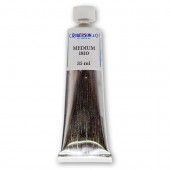
Roberson 1810 Medium
Starting at: £25.90
This is a traditional, high-oil "fat" painting medium, made using the highest quality materials. It will retain colour strength, is resistant to bleeding, has good flow release, is ideal for blending, and can be mixed with oil colours in any ratio. When dry, it creates an enamel-like surface.
Contains: Stand oil,Cold-pressed Linseed oil, Canada Balsam, Rectified Spirit of Turpentine, Beeswax, Driers.
Clean tools in white spirit. Do not use as a varnish, always mix with oil colour.
Learn More -
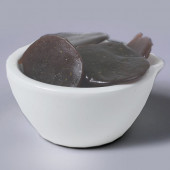
Button Shellac
Starting at: £8.40
Shellac is a natural resin that is deposited by the female lac insect on the branches of trees in India and Thailand. It is soluble with alcohol, but not with mineral spirits or turpentine. It forms a tough yet flexible film, with many applications. It is suitable as a top coat for gilding when applied thinly, a sealant for porous surfaces, an isolating layer for tempera paintings, a base for pigmented inks, a protective layer for collograph plates, and a warm varnish for wooden floors and furniture. As it is prone to darkening with age, it is not recommended as a varnish for oils, and its solubility can reduce over time. There are various grades of shellac. When mixed with alcohol, it may initially form a cloudy mixture, due to traces of wax in the shellac, but this should become clear once it has dried. The highest grades of shellac are Clear Dewaxed Shellac, which has been de-coloured using the carbon filtering method, Lemon Shellac, and Orange Shellac, which are pale in colour. Button Shellac is less refined and therefore produces a reddish varnish. It was, in fact, widely used as a red dye before synthetic dyes became available. Learn More -
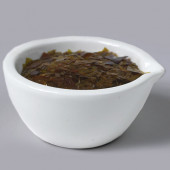
Orange Shellac
Starting at: £8.00
Shellac is a natural resin that is deposited by the female lac insect on the branches of trees in India and Thailand. It is soluble with alcohol, but not with mineral spirits or turpentine. It forms a tough yet flexible film, with many applications. It is suitable as a top coat for gilding when applied thinly, a sealant for porous surfaces, an isolating layer for tempera paintings, a base for pigmented inks, a protective layer for collograph plates, and a warm varnish for wooden floors and furniture. As it is prone to darkening with age, it is not recommended as a varnish for oils, and its solubility can reduce over time. There are various grades of shellac. When mixed with alcohol, it may initially form a cloudy mixture, due to traces of wax in the shellac, but this should become clear once it has dried. The highest grades of shellac are Clear Dewaxed Shellac, which has been de-coloured using the carbon filtering method, Lemon Shellac, and Orange Shellac, which are pale in colour. Button Shellac is less refined and therefore produces a reddish varnish. It was, in fact, widely used as a red dye before synthetic dyes became available. Learn More -
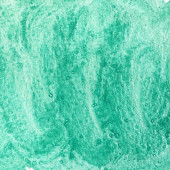
Verdigris Deep Pigment
£18.00Made to a historical recipe, this Verdigris, unlike others available, has been doubly distilled and therefore more stable than basic Verdigris. This rich green is a translucent pigment with a fine grain.
Follow @londonpigment on Instagram for an insight into the stories behind the colours and how she makes them.
NOTE: many of these colours are made in extrmely limited batches so please email us at info@cornelissen.com for further infomation on what is currently availible.
Learn More -
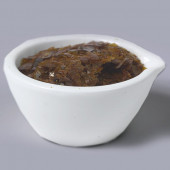
Lemon Shellac
Starting at: £8.20
Shellac is a natural resin that is deposited by the female lac insect on the branches of trees in India and Thailand. It is soluble with alcohol, but not with mineral spirits or turpentine. It forms a tough yet flexible film, with many applications. It is suitable as a top coat for gilding when applied thinly, a sealant for porous surfaces, an isolating layer for tempera paintings, a base for pigmented inks, a protective layer for collograph plates, and a warm varnish for wooden floors and furniture. As it is prone to darkening with age, it is not recommended as a varnish for oils, and its solubility can reduce over time. There are various grades of shellac. When mixed with alcohol, it may initially form a cloudy mixture, due to traces of wax in the shellac, but this should become clear once it has dried. The highest grades of shellac are Clear Dewaxed Shellac, which has been de-coloured using the carbon filtering method, Lemon Shellac, and Orange Shellac, which are pale in colour. Button Shellac is less refined and therefore produces a reddish varnish. It was, in fact, widely used as a red dye before synthetic dyes became available. Learn More -
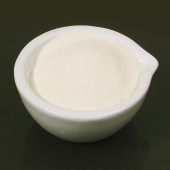
Casein Lactic
Starting at: £18.30
Casein is a protein derived from dried milk, which has been used in painting since ancient times. It can be combined with Ammonium Carbonate to form an emulsion, which acts as a durable, non-resoluble binder for pigments, producing a matte, fast-drying paint, similar in appearance to egg tempera. We use casein as a binder for our L. Cornelissen & Son Pigment Colour Charts, as it is a medium that clearly showcases the characteristics and behaviour of each pigment in its pure form. Casein paints can be applied in thin layers to watercolour paper, but would require a more rigid support, such as a gesso panel, to be applied thickly, as the comparative inflexibility of the paint layer means that it can be prone to cracking. Subsequent layers of paint should be more diluted to aid adhesion, and impasto effects are not recommended. It is possible to varnish casein paintings using an acrylic or damar varnish to obtain a glossy surface if desired, although this is not a necessary step. Casein can also be used as an ingredient in gesso, and is a suitable binder for fresco secco techniques.
Some pigments may require a wetting agent in order to fully disperse within the binder, in which case alcohol may be used.
Learn More -
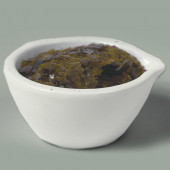
Clear Dewaxed Shellac
Starting at: £9.20
Shellac is a natural resin that is deposited by the female lac insect on the branches of trees in India and Thailand. It is soluble with alcohol, but not with mineral spirits or turpentine. It forms a tough yet flexible film, with many applications. It is suitable as a top coat for gilding when applied thinly, a sealant for porous surfaces, an isolating layer for tempera paintings, a base for pigmented inks, a protective layer for collograph plates, and a warm varnish for wooden floors and furniture. As it is prone to darkening with age, it is not recommended as a varnish for oils, and its solubility can reduce over time. There are various grades of shellac. When mixed with alcohol, it may initially form a cloudy mixture, due to traces of wax in the shellac, but this should become clear once it has dried. The highest grades of shellac are Clear Dewaxed Shellac, which has been de-coloured using the carbon filtering method, Lemon Shellac, and Orange Shellac, which are pale in colour. Button Shellac is less refined and therefore produces a reddish varnish. It was, in fact, widely used as a red dye before synthetic dyes became available. Learn More -
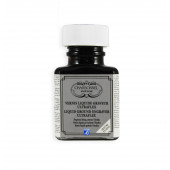
Charbonnel Ultraflex Liquid Ground
Starting at: £13.10
Judea bitumen, essence of turpentine, wax. Quick drying with transparent velvety finish. Apply cold with a supple brush. Learn More -

Charbonnel Liquid Siccative Varnish 75 ml
£11.60Charbonnel Etching Ground 75 ml Liquid Siccative Varnish. Beeswax, bitumen, ketone thinner. Liquid retouching ground which should be applied cold. Hard, with satin opaque finish. Learn More -

Gamblin Cold Wax Medium
Starting at: £10.30
Cold Wax medium is made by Gamblin. They say:
"Cold Wax medium is made from naturally white, pure beeswax. Formulated to knife consistency, Cold Wax Medium makes oil colours thicker and more matte. Cold Wax Medium can be used to make Gamblin mediums and Gamvar more matte. It can also be applied alone as a matte varnish."
Please see below for more information.
Learn More -

Renaissance Wax
Starting at: £8.75
Used by restoration specialists to revive and protect furniture, leather, paintings, metals etc. Freshens colours, imparts soft sheen. Very long shelf life. (approx 20 years) as long as it is not exposed to heat. Learn More -

Lefranc Clear Matt Picture Varnish (LIMITED STOCK)
Starting at: £10.80
Beeswax/Damar resin/rectified turpentine. Dries well and gives perfect transparency and mattness. Flexible with little tendency to yellow. Learn More -
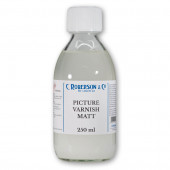
Roberson Matt Picture Varnish
Starting at: £7.00
Ketone resin/white spirit microcrystalline wax. Clear, tough protection without gloss. Useful overpaintings where resinous media have been used. Unable to send overseas. Learn More -
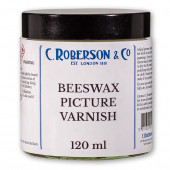
Roberson Beeswax Picture Varnish
Starting at: £8.80
A final picture varnish suitable for both oil and acrylic paintings. unable to send overseas. Learn More
15 Item(s)
Grid List
Shopping Options
- Category
-
- Pigments, Gums & Resins (7)
- Oils & Acrylics (5)
- Gilding & Restoration (2)
- Printmaking (2)
- Manufacturer
-
- Charbonnel (2)
- Cornelissen (6)
- Gamblin (1)
- Lefranc et Bourgeois (1)
- London Pigment (1)
- Roberson (3)
You have no items in your shopping basket.

- Search Brands
-