Search results for 'wax'
-
Rohrer & Klingner Lithographic Inks
Starting at: £16.40
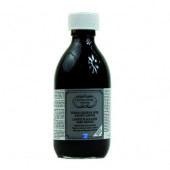
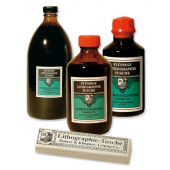
Liquid lithographic ink and solid (tushe) lithographic ink are highly resistant against acids and can be used to draw on stone, aluminium and zinc plates. Uses a highly dispersed pigment that is compounded from shellac, wax and soap. While the liquid ink is suited for complete covering, the tushe ink is excellent for halftones and transitions. Learn More -
Colour Shapers
Starting at: £6.15
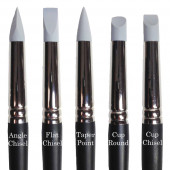
Unique silicone tipped tools for painting heavy mediums such as acrylic and oil paint. Excellent for spreading adhesives and appplying masking fluid. Can be used with Batik and encaustic wax. Available in soft ivory tip and firm grey tip. Learn More -
Charbonnel Ultraflex Liquid Ground
Starting at: £13.10
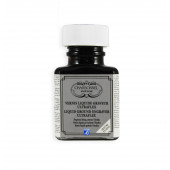
Judea bitumen, essence of turpentine, wax. Quick drying with transparent velvety finish. Apply cold with a supple brush. Learn More -
Roberson Poppy Oil
Starting at: £8.80
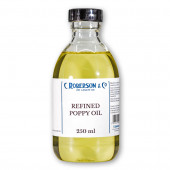
Poppy Oil is a slightly later addition to the artist's cabinet than Linseed Oil and Walnut Oil. It is generally used as a binder for pale colours, where the warmth of Linseed Oil is not desired. It provides a matte finish and dries very slowly, so we would not advise using it in conjunction with slow-drying pigments or in underpaintings. A paint film produced by Poppy Oil is weaker and softer than that created by Linseed Oil. This is because it contains a smaller percentage of linolenic acid than Linseed Oil; this substance imparts both strength and yellowness to an oil.
Although some of these properties can be perceived as drawbacks, paints made with Poppy Oil generally obtain a "short" or buttery texture without the addition of waxes or other additives, which can be an advantage for certain colours that produce poor consistencies in Linseed oil alone. Sometimes, the addition of a small quantity of Poppy Oil when grinding a tricky or "stringy" pigment in Cold Pressed Linseed Oil can introduce some of benefits of Poppy Oil, without transmitting its negative characteristics.
Paints made with Poppy Oil are particularly suited to "alla prima" working methods, where paint is applied spontaneously. When working in successive layers, Poppy Oil would only be appropriate for the final stages of a painting.
Learn More -
Cornelissen Historical Inks, Oak Gall
Starting at: £9.00
Exclusive to Cornelissen, our intense black Oak Gall Ink is made to a medieval recipe using oak galls collected in Cambridgeshire. The small, handmade batches are blended to give the required consistency and strength, and are steeped for several weeks and left to ‘mature’ for several more. Lightfast and fully waterproof 5-7 days after application, Oak Gall Ink has been used for centuries by calligraphers and scribes to create illuminated manuscripts and legal documents.When used on animal skins such as vellum, the acids in the Oak Gall Ink react with collagen, effectively ‘etching’ itself into the surface, hence its permanence. As with all products derived from natural ingredients, there may be slight variations in the colour and consistency of the ink due to seasonal changes
Learn More -
Sennelier Oil Pastels Large
Starting at: £9.50
Beautifully soft and creamy oil pastels in a range of 120 colours. Blend of pure pigment, oil and acid free wax. 20% Discount for purchasing 4+ pastels. Learn More -
Lefranc Clear Matt Picture Varnish (LIMITED STOCK)
Starting at: £10.80
Beeswax/Damar resin/rectified turpentine. Dries well and gives perfect transparency and mattness. Flexible with little tendency to yellow. Learn More -
Roberson Impasto Medium
Starting at: £14.70
Roberson Impasto medium is a crack-resistant medium for impasto effects. It retains palette knife and brush strokes, giving the paint sharp, defined edges. It remains thick and doubles paint easily, drying to a matte finish. To retain colour strength, mix one part medium to one part oil colour.
Contains: Stand Oil, Damar Resin, Turpentine, Bleached Beeswax.
Learn More -
Treasure Gold
Starting at: £10.80
Treasure Gold is a metallic wax which is unparalleled in restoring gold lead and the finishing touches for antiquing. Blend any of the colours together for just the right shade. Apply with the fingers or a cloth and buff lightly. The metal lustre won't fade or tarnish. It is ready to be polished in ten minutes. Treasure Gold is highly concentrated and is to be used sparingly. A 25g jar will cover approximately 2sq/m. Learn More
-
-
Isinglass
Starting at: £20.00
Isinglass is derived from the dried swim bladders of fish, with Salianski Isinglass being the highest grade available. In the Russian Icon tradition, it commonly provided the glue component in gesso recipes, and was sometimes mixed with pigment to make tempera paints, due to its high binding strength. It can be used to make a pale, clear glue, which is less prone to darkening than other animal glues, and which is particularly flexible, making it a useful material for repairing textiles. Learn More -
HMG B72 Restoration Adhesive
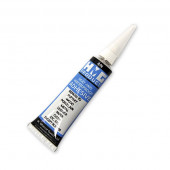
£7.70B72 Acrylic Adhesive is touch dry in 3-5 minutes, surface dry in 1 hour and hard dry in around 6 hours. Not having instant grab, fragments can be easily re-adjusted and surplus adhesive removed with acetone, making any joint virtually invisible. It’s ideal for repairs to pottery, wood, metal, glass, ivory and many porous substances. 14ml. Learn More -
Casein Lactic
Starting at: £18.30
Casein is a protein derived from dried milk, which has been used in painting since ancient times. It can be combined with Ammonium Carbonate to form an emulsion, which acts as a durable, non-resoluble binder for pigments, producing a matte, fast-drying paint, similar in appearance to egg tempera. We use casein as a binder for our L. Cornelissen & Son Pigment Colour Charts, as it is a medium that clearly showcases the characteristics and behaviour of each pigment in its pure form. Casein paints can be applied in thin layers to watercolour paper, but would require a more rigid support, such as a gesso panel, to be applied thickly, as the comparative inflexibility of the paint layer means that it can be prone to cracking. Subsequent layers of paint should be more diluted to aid adhesion, and impasto effects are not recommended. It is possible to varnish casein paintings using an acrylic or damar varnish to obtain a glossy surface if desired, although this is not a necessary step. Casein can also be used as an ingredient in gesso, and is a suitable binder for fresco secco techniques.
Some pigments may require a wetting agent in order to fully disperse within the binder, in which case alcohol may be used.
Learn More -
Pearl Glue
Starting at: £5.80
Pearl Glue is a traditional animal-based wood glue used for veneering, joinery and antique restoration. 170-200 bloom. Learn More
-
-
Gelatine Leaf
Starting at: £5.30
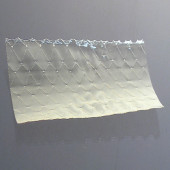
A pure form of glue from animal tissue. Used for sizing paper. Used in gliding and for weak sizes in isolating layers in tempera painting. Learn More -
Parchment Clippings
Starting at: £9.90
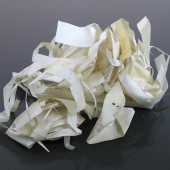
Parchment Clippings, usually waste goatskin vellum, were utilised throughout the Middle Ages to make an animal hide glue. This continued to be commonly used as a sizing for canvas before rabbit skin glue came to prominence in the nineteenth century. Parchment glue is comparable to isinglass glue, as it also produces a very pale, almost transparent glue with a degree of flexibility. Our parchment clippings are a mixture of vellum scraps, and may include goatskin, calfskin and sheepskin. Cennino Cennini gives a recipe for gesso using parchment in his treatise about painting; please see below for our recipe. Learn More -
HMG Acrylic Restoration Adhesive
£6.00HMG Acrylic Restoration Adhesive. Heat and waterproof adhesive for repairs to pottery, wood, porcelain, leather etc. Not suitable for use on rubber. 14ml. Learn More -
Rabbit Skin Glue
Starting at: £10.95
For sizing canvas prior to priming with an oil based primer. Do not use under acrylic primer. Soak overnight in water. Heat in double boiler (do not boil). Ratio water:size 13:1. Use while still warm. Rabbit Skin Glue do not contain any preservatives. 340 - 360 Bloom Learn More
-
Carrageen Moss
Starting at: £51.00
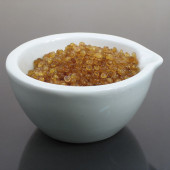
Commonly used as a thickener and stabiliser in milk products such as ice cream and processed foods. It may also be used as a thickener in calico-printing and for fining beer or wine. Learn More -
-
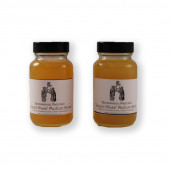
Roberson Studio Safe Beeswax Medium
Starting at: £14.30
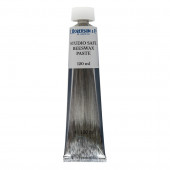
A safe wax medium for impasto effects. This medium retains palette knife marks and brush strokes, remains thick and doubles paint easily, drying to a matt finish.
Studio Safe products are non-aromatic, non-flammable, and have a pleasant orange smell.
Learn More -
Spectrum Beeswax in White Spirit
Starting at: £16.50
From the Cranfield website:
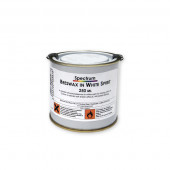
A pereparation of pure beeswax in white spirit, this is used to achieve a soft sheen on your finished painting. It will retard drying, allowing you to achieve a range of effects.
Learn More -
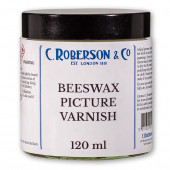
Roberson Beeswax Picture Varnish
Starting at: £8.80
A final picture varnish suitable for both oil and acrylic paintings. unable to send overseas. Learn More -
Clear Dewaxed Shellac
Starting at: £9.20
Shellac is a natural resin that is deposited by the female lac insect on the branches of trees in India and Thailand. It is soluble with alcohol, but not with mineral spirits or turpentine. It forms a tough yet flexible film, with many applications. It is suitable as a top coat for gilding when applied thinly, a sealant for porous surfaces, an isolating layer for tempera paintings, a base for pigmented inks, a protective layer for collograph plates, and a warm varnish for wooden floors and furniture. As it is prone to darkening with age, it is not recommended as a varnish for oils, and its solubility can reduce over time. There are various grades of shellac. When mixed with alcohol, it may initially form a cloudy mixture, due to traces of wax in the shellac, but this should become clear once it has dried. The highest grades of shellac are Clear Dewaxed Shellac, which has been de-coloured using the carbon filtering method, Lemon Shellac, and Orange Shellac, which are pale in colour. Button Shellac is less refined and therefore produces a reddish varnish. It was, in fact, widely used as a red dye before synthetic dyes became available. Learn More -
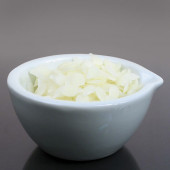
Bleached Beeswax
Starting at: £12.30
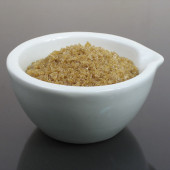
Beeswax is derived from melted honeycomb, and is available in two grades. Bleached Beeswax Pellets are white, having been bleached by the sun, and are an appropriate choice for using with pale colours, although they may revert to yellow over time. Natural Beeswax Pellets are yellow in colour, and offer a more flexible structure with a higher resin content. Beeswax has a melting point of 63-66°c, and may turn brown if over-heated. It is the most widely used wax in artists' materials, having a wide range of applications. Please see below for more details.
Learn More -
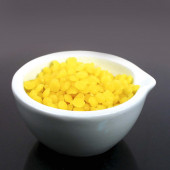
Natural Beeswax
Starting at: £11.20
Beeswax is derived from melted honeycomb, and is available in two grades. Bleached Beeswax Pellets are white, having been bleached by the sun, and are an appropriate choice for using with pale colours, although they may revert to yellow over time. Natural Beeswax Pellets are yellow in colour, and offer a more flexible structure with a higher resin content. Beeswax has a melting point of 63-66°c, and may turn brown if over-heated. It is the most widely used wax in artists' materials, having a wide range of applications. Please see below for more details.
Learn More -
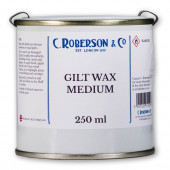
Roberson Gilt Wax Medium
Starting at: £12.00
To use as a medium, mix with burnishable bronze powders in equal parts. Or use to protect imitation leaf, metal, wood, furniture and paintings. Learn More -
Faber-Castell Pitt Wax Free Pastel Pencils
Starting at: £2.00
Faber-Castell Pitt Wax Free Pencils Learn More -
Renaissance Wax
Starting at: £8.75
Used by restoration specialists to revive and protect furniture, leather, paintings, metals etc. Freshens colours, imparts soft sheen. Very long shelf life. (approx 20 years) as long as it is not exposed to heat. Learn More