Click to Hide Notification

This is a demo shop. Any orders placed through this shop will not be honoured or fulfilled.

Search results for 'Lapis Lazuli Pigment of'

10 Item(s)

per page

Grid  List 

Set Descending Direction
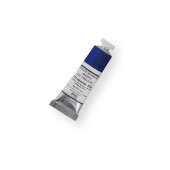
  1. Michael Harding Artists' Oil Colour 225 ml

    Michael Harding Artists' Oil Colour 225 ml

    Starting at: £26.30

    Michael Harding Artists’ Oil Colours are formulated to the highest possible standards. They do not include any fillers, extenders or driers and the high pigment content of the paint ensures a greater resistance to fading. Our selection of 225ml size includes colours from series 1,2 and 3. Please contact us for ordering colours from series 4.5,6, and 7. Learn More
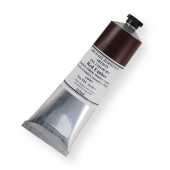
  2. Michael Harding Artists' Oil Colour 40 ml

    Michael Harding Artists' Oil Colour 40 ml

    Starting at: £8.30

    Michael Harding Artists’ Oil Colours are formulated to the highest possible standards. They do not include any fillers, extenders or driers and the high pigment content of the paint ensures a greater resistance to fading. The range includes 86 rich, intense colours which have a stiff and viscous texture. Learn More
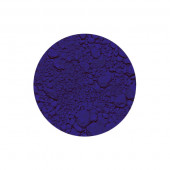
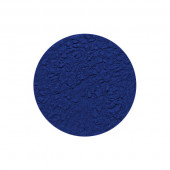
  3. Ultramarine Blue Light Pigment

    Ultramarine Blue Light Pigment

    Starting at: £5.30

    PB29

    Ultramarine Blue Light is an artificial mineral pigment that is produced by heating clay, soda, sulphur and coal to high temperatures. Its name comes from outremer, or over-the-sea, as a reference to the highly-prized Lapis Lazuli pigment which had been imported into Europe from Afghanistan since the Middle Ages. First manufactured in France and Germany in 1828, synthetic Ultramarine provided a brilliant and affordable blue to artists, and it remains one of the most popular blues on artists' palettes today. 

    It is a transparent pigment, with a high tinting strength and excellent lightfastness. It reacts to alkali, therefore it is not suitable for use in lime-fresco; we do offer a Limeproof Ultramarine Blue for this purpose. It is stable in all other media, although it can be tricky to grind in oil. Instead of creating a thick, buttery paste, it can remain stringy and deteriorate when stored in a tube. To correct this, many commercial paint manufacturers include additives and waxes in their recipes; if you intend on grinding your own paint, you could try replacing 10-15% of your Linseed Oil with Poppy Oil to improve the consistency. Ultramine Blue provides a slow-drying, fairly hard paint film, which can tend towards brittleness.

    Toxicity B

    Learn More
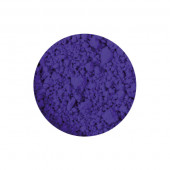
  4. Ultramarine PB29 Pigment

    Ultramarine PB29 Pigment

    Starting at: £9.10

    PB29

    Ultramarine Blue is an artificial mineral pigment that is produced by heating clay, soda, sulphur and coal to high temperatures. Its name comes from outremer, or over-the-sea, as a reference to the highly-prized Lapis Lazuli pigment which had been imported into Europe from Afghanistan since the Middle Ages. First manufactured in France and Germany in 1828, synthetic Ultramarine provided a brilliant and affordable blue to artists, and it remains one of the most popular blues on artists' palettes today.

    It is a transparent pigment, with a high tinting strength and excellent lightfastness. It reacts to alkali, therefore it is not suitable for use in lime-fresco; we do offer a Limeproof Ultramarine Blue for this purpose. It is stable in all other media, although it can be tricky to grind in oil. Instead of creating a thick, buttery paste, it can remain stringy and deteriorate when stored in a tube. To correct this, many commercial paint manufacturers include additives and waxes in their recipes; if you intend on grinding your own paint, you could try replacing 10-15% of your Linseed Oil with Poppy Oil to improve the consistency. Ultramine Blue provides a slow-drying, fairly hard paint film, which can tend towards brittleness.

    Toxicity: B/C

    Learn More
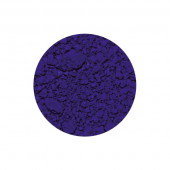
  5. Ultramarine Blue Dark Pigment

    Ultramarine Blue Dark Pigment

    Starting at: £4.00

    PB29

    Ultramarine Blue Dark is an artificial mineral pigment that is produced by heating clay, soda, sulphur and coal to high temperatures. Its name comes from outremer, or over-the-sea, as a reference to the highly-prized Lapis Lazuli pigment which had been imported into Europe from Afghanistan since the Middle Ages. First manufactured in France and Germany in 1828, synthetic Ultramarine provided a brilliant and affordable blue to artists, and it remains one of the most popular blues on artists' palettes today.

    It is a transparent pigment, with a high tinting strength and excellent lightfastness. It reacts to alkali, therefore it is not suitable for use in lime-fresco; we do offer a Limeproof Ultramarine Blue for this purpose. It is stable in all other media, although it can be tricky to grind in oil. Instead of creating a thick, buttery paste, it can remain stringy and deteriorate when stored in a tube. To correct this, many commercial paint manufacturers include additives and waxes in their recipes; if you intend on grinding your own paint, you could try replacing 10-15% of your Linseed Oil with Poppy Oil to improve the consistency. Ultramine Blue provides a slow-drying, fairly hard paint film, which can tend towards brittleness.

    Toxicity: B

    Learn More
  6. Ultramarine Blue Limewash Pigment

    Ultramarine Blue Limewash Pigment

    Starting at: £6.30

    PB29

    Ultramarine Blue Limewash is an artificial mineral pigment that is produced by heating clay, soda, sulphur and coal to high temperatures. Its name comes from outremer, or over-the-sea, as a reference to the highly-prized Lapis Lazuli pigment which had been imported into Europe from Afghanistan since the Middle Ages. First manufactured in France and Germany in 1828, synthetic Ultramarine provided a brilliant and affordable blue to artists, and it remains one of the most popular blues on artists' palettes today.

    It is a transparent pigment, with a high tinting strength and excellent lightfastness. Most Ultramarine colours It react to alkali and are therefore unsuitable for use in lime-fresco; Limeproof Ultramarine Blue remedies this problem. It is stable in all other media, although it can be tricky to grind in oil. Instead of creating a thick, buttery paste, it can remain stringy and deteriorate when stored in a tube. To correct this, many commercial paint manufacturers include additives and waxes in their recipes; if you intend on grinding your own paint, you could try replacing 10-15% of your Linseed Oil with Poppy Oil to improve the consistency. Ultramine Blue provides a slow-drying, fairly hard paint film, which can tend towards brittleness.

    Toxicity: B

    Learn More
  7. Azurite Pigment

    Azurite Pigment

    Starting at: £11.80

    PB30

    Azurite is a naturally occuring copper carbonate, with a long history within European and Asian painting. It was mined in northern Europe, so was a less expensive source of blue than Lapis Lazuli, which was imported from Afghanistan. Medieval artists would often use Azurite in underpaintings, before applying layers of Lapis Lazuli during later stages of production.

    It is best used in aqueous media, as the acidity of oils can cause it to darken in colour, although this can be somewhat counteracted by protecting the pigment particles with a protein such as egg yolk. It has a very low tinting strength, and the particle size tends to be quite large, to give a darker colour. It is sensitive to damp conditions, and is slightly transparent.

    Learn More
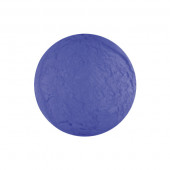
  8. Lapis Lazuli Light Pigment

    Lapis Lazuli Light Pigment

    Starting at: £10.20

    PB29

    Lapis Lazuli is a natural mineral pigment, mined in Afghanistan and South America. Different shades of Lapis Lazuli are determined by the intensity of colour of the lazurite vein; we offer the pigment in light and dark. For many centuries it was the most reliable blue pigment available, and became particularly significant during the Medieval and Renaissance periods, when its inclusion in a work of art denoted the wealth and status of the patron, or the holiness of a painting's subject. In commercial paint production it has largely been replaced by the more affordable Ultramarine Blue, although it still has a place on modern palettes due to its unique soft violet tone. It is a transparant pigment, with a low tinting strength.

    Larger quantities are available by request.

    Learn More
  9. Lapis Lazuli Dark Pigment

    Lapis Lazuli Dark Pigment

    Starting at: £12.20

    PB29

    Lapis Lazuli is a natural mineral pigment, mined in Afghanistan and South America. Different shades of Lapis Lazuli are determined by the intensity of colour of the lazurite vein; we offer the pigment in light and dark. For many centuries it was the most reliable blue pigment available, and became particularly significant during the Medieval and Renaissance periods, when its inclusion in a work of art denoted the wealth and status of the patron, or the holiness of a painting's subject. In commercial paint production it has largely been replaced by the more affordable Ultramarine Blue, although it still has a place on modern palettes due to its unique soft violet tone. It is a transparant pigment, with a low tinting strength.

    Larger quantities are available by request.

    Learn More
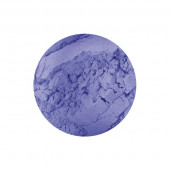
  10. Lapis Lazuli Middle Pigment

    Lapis Lazuli Middle Pigment

    Starting at: £10.20

    Lapis Lazuli Middle Pigment. Usage dates from the Middle Ages when it was the only reliable blue pigment. Different intensities of genuine ultramarine are caused by the varying intensities of colour in the original lazurite vein Learn More

10 Item(s)

per page

Grid  List 

Set Descending Direction