Search results for 'painting'
-
Gamblin Solvent-Free Gel
Starting at: £5.00
Gamblin Solvent-Free Gel is manufactured by the American company Gamblin. They write:
"Gamblin Solvent-Free Gel is the only solvent-free painting medium that supports a broad range of painting techniques with minimal compromise. Solvent-Free Gel gives colours more flow and transparency, yet holds the shape of your brushmark. Solvent-Free Gel has a moderately fast drying rate and increases gloss. Made from safflower oil and alkyd resin, Gamblin Solvent-Free Gel is non-toxic and contains no Gamsol or petroleum distillates. In comparison to other solvent-free mediums, Gamblin Solvent-Free Gel supports the broadest range of painting techniques with the least compromise across color, dry time, texture and mark-making. To ensure proper drying of paint layers, Solvent-Free Gel should be used in moderation with oil colors. No more than 25% by volume. To avoid wrinkling, apply mixtures of Solvent-Free Gel and oil colors thinly. To paint solvent-free, we recommend Gamblin Safflower Oil for cleaning brushes while you are working. After your painting session, brushes can be further cleaned using Gamsol and/or soap and water."
Learn More -
Lascaux Tusche Wash Spray 500ml
£36.70This tusche can be sprayed from a simple airbrush and is required if Lascaux Lift Solution is to be used. Other airbrush techniques can be employed and tonal effects similar to aquatints in etching can be created. It can also be used for painting washes and handles like Chinese ink. When diluted it creates a further range of washes. Learn More -
Schmincke Horadam Gouache
Starting at: £7.35
Finest quality gouache paints, available in 48 shades, all of which are fully inter-mixable with the HORADAM® WATERCOLOUR range. Made following a traditional gum arabic recipe, they are naturally opaque, without the addition of white. They provide a luminous, velvet-matte finish, drying to a slightly lighter shade than when wet.
Schmincke recommends the following:
"The application possibilities of HORADAM® GOUACHE are extremely versatile. Although it can be heavily diluted, gouache is mainly intended to provide opaque application of colour. Opaque, in this case, means that it is not impasto, because impasto application tends to produce cracking, unless the percentage of binder is increased by adding gum arabic (50302). While watercolour painting work goes from light to dark (the white paper is the light), in gouache painting, any process can be used. While “back painting” of lights is limited in watercolour painting, when working in gouache (and other opaque colours), light values and lights can be added later using colours."
Learn More -
Papyrus
Starting at: £24.25
30cm x 40cm / 12" x 16", 5 Sheets, Made by hand in the traditional manner from Papyrus reeds. Learn More -
Natural Beeswax
Starting at: £11.20
Beeswax is derived from melted honeycomb, and is available in two grades. Bleached Beeswax Pellets are white, having been bleached by the sun, and are an appropriate choice for using with pale colours, although they may revert to yellow over time. Natural Beeswax Pellets are yellow in colour, and offer a more flexible structure with a higher resin content. Beeswax has a melting point of 63-66°c, and may turn brown if over-heated. It is the most widely used wax in artists' materials, having a wide range of applications. Please see below for more details.
Learn More -
Daler-Rowney Cryla 75ml
Starting at: £8.30
Cryla Artists' Heavy Body colours are designed to retain the intended stroke when applied with a knife or brush, so they are ideal for highly textured impasto painting techniques. Learn More -
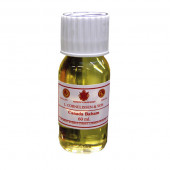
Cornelissen Copaiba Balsam
Starting at: £12.40
Copaiba Balsam comes from the South American tree Copaifera landsdorfii. Its primary function is to improve the appearance of paint layers that may have become dull, brittle or sunken upon drying. It is a viscous liquid that may be diluted with turpentine, but which should not be used in painting mediums.
Learn More -
Primed Linen Panels
Starting at: £10.50
Hand-primed pure Belgian linen. Oil or Acrylic (universally) primed. Learn More -
Verdigris Deep Pigment
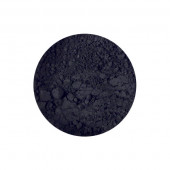
£18.00Made to a historical recipe, this Verdigris, unlike others available, has been doubly distilled and therefore more stable than basic Verdigris. This rich green is a translucent pigment with a fine grain.
Follow @londonpigment on Instagram for an insight into the stories behind the colours and how she makes them.
NOTE: many of these colours are made in extrmely limited batches so please email us at info@cornelissen.com for further infomation on what is currently availible.
Learn More -
Liquid Glass Mediums
Starting at: £19.50
Renaissance Materials by Dr. David Cranswick.
A thick glazing medium of the 'Old Masters'. Liquid Glass Mediums facilitate building up layers of transparent glaze. Gloss or Satin.
Contains: Damar resin, linseed oil and beeswax (for Satin medium only)
Learn More -
Omega Series 1067 Lily Varnish
Starting at: £15.50
Thick hog hair brush or varnishing or painting on a large scale. Learn More -
Paraffin Wax
Starting at: £6.60
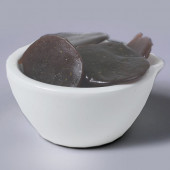
Paraffin Wax is a by-product of the petro-chemical industry. It has a low melting point of 50-60°c and a brittle texture, making it unsuitable for encaustic painting or as an additive to oil paints, but it can be used to impart softness to lithographic crayons. As a petroleum product, it is more inert than animal or vegetable waxes, and is therefore not saponified (turned into soap) by alkali substances. Learn More -
Roberson Cold Pressed Linseed Oil
Starting at: £6.60
Linseed Oil is derived from flax seeds, and appears on our shelves in many guises: Cold Pressed, Refined, Stand Oil, and as a key ingredient in many mediums. It has been appreciated for its drying properties since the Medieval period, and has become the most popular oil used in painting today due to the strong, flexible and glossy film that it creates. Cold Pressed Linseed Oil is ideal for the grinding of pigment to make oil paints. The process of producing Cold Pressed Linseed Oil results in a lower yield, but the resultant oil is of a superior quality to oil that has been extracted by other methods, creating a paint film that is more resistant to embrittlement on aging. Its slight yellow colour is caused by the high concentration of linolenic acid, the presence of which provides durability to the paint film. The amount of oil that each pigment requires can vary enormously. Alizarin Crimson, for example, requires a high percentage of oil compared to most other colours. We would always recommend mulling the pigment and oil together thoroughly to create a "short" or buttery paste, with evenly dispersed, well-coated pigment particles. This process contributes to the strength and flexibility of the paint film, and prevents the inclusion of excess oil. Origin: USA Learn More -
Arches for Oil Pads
Starting at: £21.95
Mould-made, 100% cotton, natural white (Neutral pH acid free). 12 sheets per pad, NOT surfaced. Specially designed for oil painting. Ready to use. Learn More -
Schmincke Masking Fluid
Starting at: £7.35
Drawing gum for masking specific areas which should remain white on water-colour paper, smooth drawing carton, photographs or films. For direct application with the dispensing bottle. Contains: synthetic resin dispersion without ammonia. Learn More -
Roberson Glass Mullers
Starting at: £24.50
Roberson Glass Mullers are handmade using high quality-glass.
Mullers act as flat-bottomed pestles, which are used to grind pigment into a binding medium, suspending it evenly to create a uniform covering of binder around each pigment particle. Using a muller and slab, rather than simply mixing pigment and binder together, will create a more homogenised and stable paint.
Use in conjunction with a Cornelissen Glass Slab to make paint efficiently. The sand-blasted texture of the muller and plate helps to push and distribute the pigment throughout the binder quickly. This will mean less grinding, and more painting!
NOTE: Sizes may vary slightly as these are handmade products.
Learn More -
Liquitex Acrylic Varnish Satin
Starting at: £17.35
Use as varnish over finished paintings. Learn More -
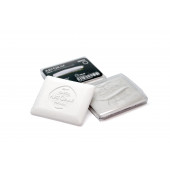
ArtGraf Blue Tailor shape
£5.80Inspired by traditional tailor’s chalk block, prepared for drawing and painting. Water soluble and extremely soft. Learn More -
Lefranc Safflower Oil
Starting at: £8.40
Lefranc Bourgeois are a paint manufacturer with a long history of supplying to artists since their beginnings in 1720. From their website: Safflower Oil enhances the fluidity of oil paintings. Lighter in colour than Linseed Oil, it does not yellow and dries faster than Poppy Seed Oil. It improves the flow of the paste and the intensity and transparency of colours. It also works particularly well with different white shades and light colours. Learn More -
Clear Dewaxed Shellac
Starting at: £9.20
Shellac is a natural resin that is deposited by the female lac insect on the branches of trees in India and Thailand. It is soluble with alcohol, but not with mineral spirits or turpentine. It forms a tough yet flexible film, with many applications. It is suitable as a top coat for gilding when applied thinly, a sealant for porous surfaces, an isolating layer for tempera paintings, a base for pigmented inks, a protective layer for collograph plates, and a warm varnish for wooden floors and furniture. As it is prone to darkening with age, it is not recommended as a varnish for oils, and its solubility can reduce over time. There are various grades of shellac. When mixed with alcohol, it may initially form a cloudy mixture, due to traces of wax in the shellac, but this should become clear once it has dried. The highest grades of shellac are Clear Dewaxed Shellac, which has been de-coloured using the carbon filtering method, Lemon Shellac, and Orange Shellac, which are pale in colour. Button Shellac is less refined and therefore produces a reddish varnish. It was, in fact, widely used as a red dye before synthetic dyes became available. Learn More -
da Vinci Series 1670 Nova Round
Starting at: £2.65
Long handled synthetic brush or acrylic or oil painting. Soft bristles. Learn More -
Unison 8 Portrait Assorted Pastels
£40.55The Unison classic Portrait 8 set, specially selected by John Hersey for portrait painting. Unison Colour Soft pastels allow for ease of use with a highly blendable texture.
Learn More -
Bockingford Inkjet Paper
Starting at: £21.75
190GSM, A4 / A3+, 20 Sheets, CP (NOT), pH Neutral, Acid Free, Archival, White. Learn More -
Cornelissen Walnut Oil
Starting at: £6.50
The introduction of Walnut Oil as a pigment binder is contemporaneous with the emergence of Linseed Oil. Their drying properties have been appreciated since the Middle Ages, and throughout history there is evidence of both oils being used alongside each other within the same painting. In fact, until the sixteenth century, it is believed that Walnut Oil was the preferred binding medium among Italian artists. It is made from mature walnut kernals, offering a pale colour and brilliant gloss. For this reason, it is sometimes chosen as a binder for light colours, as it provides a stronger paint film than Poppy Oil, and faster drying times. However, a paint film made from Walnut Oil will tend to be brittle, so it is more suited to a rigid support rather than canvas.
Learn More -
Parchment Clippings
Starting at: £9.90
Parchment Clippings, usually waste goatskin vellum, were utilised throughout the Middle Ages to make an animal hide glue. This continued to be commonly used as a sizing for canvas before rabbit skin glue came to prominence in the nineteenth century. Parchment glue is comparable to isinglass glue, as it also produces a very pale, almost transparent glue with a degree of flexibility. Our parchment clippings are a mixture of vellum scraps, and may include goatskin, calfskin and sheepskin. Cennino Cennini gives a recipe for gesso using parchment in his treatise about painting; please see below for our recipe. Learn More -
Roberson Exhibition Varnish
Starting at: £6.80
Apply to touch dry paintings as a temporary exhibition varnish. After 6 months a final picture varnish can be applied with no need to remove Ketone resin/white spirit. Unable to send overseas. Learn More -
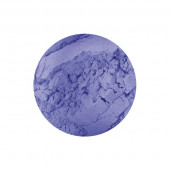
ArtGraf Red Tailor shape
£5.80Inspired by traditional tailor’s chalk block, prepared for drawing and painting. Water soluble and extremely soft. Learn More -
da Vinci Series 5570 Cosmotop Nova Round
Starting at: £3.35
Finest golden synthetic fibre. More springy than Cosmotop Spin making it an excellent brush for watercolour, gouache, acrylic and oil painting. Learn More -
Lemon Shellac
Starting at: £8.20
Shellac is a natural resin that is deposited by the female lac insect on the branches of trees in India and Thailand. It is soluble with alcohol, but not with mineral spirits or turpentine. It forms a tough yet flexible film, with many applications. It is suitable as a top coat for gilding when applied thinly, a sealant for porous surfaces, an isolating layer for tempera paintings, a base for pigmented inks, a protective layer for collograph plates, and a warm varnish for wooden floors and furniture. As it is prone to darkening with age, it is not recommended as a varnish for oils, and its solubility can reduce over time. There are various grades of shellac. When mixed with alcohol, it may initially form a cloudy mixture, due to traces of wax in the shellac, but this should become clear once it has dried. The highest grades of shellac are Clear Dewaxed Shellac, which has been de-coloured using the carbon filtering method, Lemon Shellac, and Orange Shellac, which are pale in colour. Button Shellac is less refined and therefore produces a reddish varnish. It was, in fact, widely used as a red dye before synthetic dyes became available. Learn More -
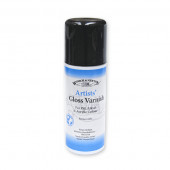
Talens Acrylic Picture Varnishes Aerosol
Starting at: £13.00
Aerosol varnish for oil or acrylic paintings. Gloss or Matt finishes. Unable to send overseas. Learn More