Your search 'boards of oils' did not match any products.
Showing results using some of your search terms 'boards of oils'
Search results for 'of oils'
-
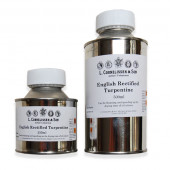
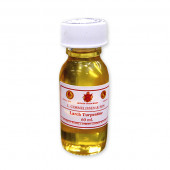
Cornelissen Rectified Turpentine
Starting at: £9.00
Volatile colourless liquid distilled from pine sap. Greater wetting powers than white spirit. Used to thin oil paint. Learn More -
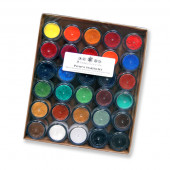
Pigment Set of 30 Colours
£119.00The perfect introduction to working with pigment, this selection of thirty pigments provides a wide range of colours for the production of paint. Each colour is supplied in a 15ml plastic jar, and the set includes both natural and synthetic colours. Recipes can be found on our homepage, with instructions for making different paints, including watercolour, egg tempera and oil paint. Learn More
-
-
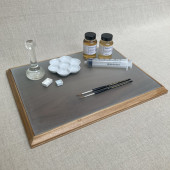
Watercolour paint making set
Starting at: £0.40
A collection of equipment and ingredients useful for making watercolour by hand. This selection of quality materials has been put together for the begginer and intermediate paint maker alike. This set includes:
Equipment to mix the paint and fill watercolour pans:
Glass slab with hardwood stand
Cornelissen small muller
Small (half pan) and large (full pan) watercolour pan
Ingredients to make the watercolour binder :
Roberson Gum Arabic
Roberson Ox Gall
Equipment for painting:
Cornelissen 80a sables brushes in sizes 3 & 6
cermaic palette in flower shape
Learn More -
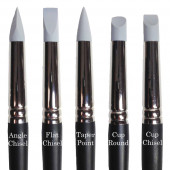
Colour Shapers
Starting at: £6.15
Unique silicone tipped tools for painting heavy mediums such as acrylic and oil paint. Excellent for spreading adhesives and appplying masking fluid. Can be used with Batik and encaustic wax. Available in soft ivory tip and firm grey tip. Learn More -
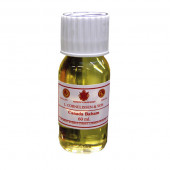
Cornelissen Canada Balsam
Starting at: £20.10
Canada Balsam is an oleoresin, meaning that it is a mixture of essential oils and resin. It comes from the fir tree Abies balsamea, native to Canada and the eastern states of North America. It is notable for its pale colour, clarity and gloss, making it a useful ingredient in recipes for oil-painting mediums.
Learn More -
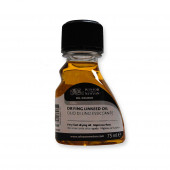
Winsor & Newton Drying Linseed Oil
Starting at: £8.05
From the Winsor & Newton website: Darker than refined Linseed Oil, this oil promotes the fastest drying rate of all the oils, whilst increasing gloss. Improves flow. Increases gloss transparency. Add to other oils to speed drying.
Learn More -
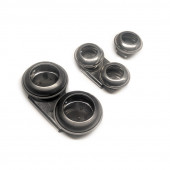
Saucer Dippers
Starting at: £2.00
Well made metal dippers, available with or without lids. A rubber disc on the inside of the lid helps create a good seal and prevent leaks. Listed measurements are of the widest point of the dipper, not the aperture. Learn More -
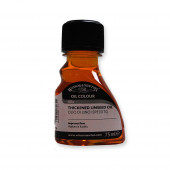
Winsor & Newton Thickened Linseed Oil
Starting at: £8.05
From the Winsor & Newton website: A pale refined oil of syrupy consistency which behaves like Linseed Stand Oil but dries quicker and darker. Improves flow and gloss. Increases the durability of paint film. Reduces brushstroke retention. Learn More -
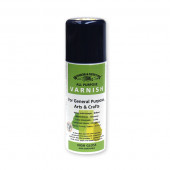
Winsor & Newton All Purpose Varnish Aerosol
Starting at: £16.10
Provides clear, non-removable protection of craftwork. Suitable for a variety of surfaces (wood, metal, paper, modelling materials). Contains: Acrylic resin. High Gloss or Matt. Unable to send overseas. Learn More -
Cornelissen Larch Venice Turpentine
Starting at: £18.00
Venice Trupentine is a thick, resinous liquid extracted from the Larix decidua, a larch tree native to Austria. It can impart luminosity, brilliance and gloss when used in mediums and varnishes, and as such it was highly valued during the Golden Age of painting in Venice. It is a slow-drying balsam, which can be diluted with turpentine or placed in a bath of warm water to aid flow.
Learn More -
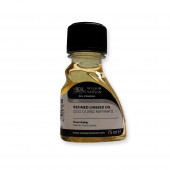
Winsor & Newton Refined Linseed Oil
Starting at: £6.05
From the Winsor & Newton website: Our most popular oil. A low viscosity alkali refined oil of pale colour that dries slowly. Reduces oil colour consistency. Increases gloss and transparency. Add to other oils to slow drying. Learn More -
Liquid Glass Mediums
Starting at: £19.50
Renaissance Materials by Dr. David Cranswick.
A thick glazing medium of the 'Old Masters'. Liquid Glass Mediums facilitate building up layers of transparent glaze. Gloss or Satin.
Contains: Damar resin, linseed oil and beeswax (for Satin medium only)
Learn More -
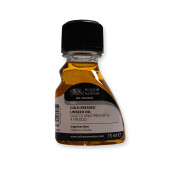
Winsor & Newton Cold Pressed Linseed Oil
Starting at: £8.05
From the Winsor & Newton website: A slightly yellow oil, which is extracted without the use of heat dries slightly quicker than refined linseed oil. Improves flow. Increases gloss & transparency. Reduces consistency and brushstrokes. Ideal for grinding pigments. Learn More -
Cornelissen Walnut Oil
Starting at: £6.50
The introduction of Walnut Oil as a pigment binder is contemporaneous with the emergence of Linseed Oil. Their drying properties have been appreciated since the Middle Ages, and throughout history there is evidence of both oils being used alongside each other within the same painting. In fact, until the sixteenth century, it is believed that Walnut Oil was the preferred binding medium among Italian artists. It is made from mature walnut kernals, offering a pale colour and brilliant gloss. For this reason, it is sometimes chosen as a binder for light colours, as it provides a stronger paint film than Poppy Oil, and faster drying times. However, a paint film made from Walnut Oil will tend to be brittle, so it is more suited to a rigid support rather than canvas.
Learn More -
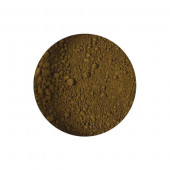
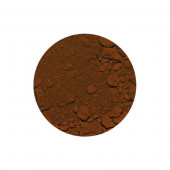
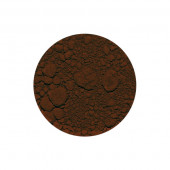
Raw Umber Pigment
Starting at: £4.00
PBr7
Raw Umber is a natural earth pigment composed of iron oxide, manganese, and aluminium silicate. It has its roots in the Umbria region of Italy, and was historically a popular colour for underpaintings, as it dries very quickly. It is semi-opaque, very lightfast, and stable in all media but may be difficult to disperse in acrylic. It requires a large amount of liquid when mixed with oil.
Toxicity: B
Learn More -
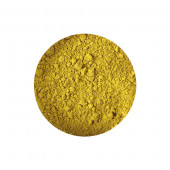
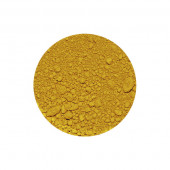
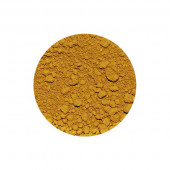
Yellow Ochre Pigment
Starting at: £4.00
PY43
Yellow Ochre is a natural earth pigment that has been in use since prehistoric times. It is derived from iron-rich clay deposits that are present all over the world; our Yellow Ochre comes from the hilly regions around Verona, Italy. As a pigment, it is semi-opaque, extremely lightfast, and stable in all media. It has a medium to slow drying rate in oil, creating a tough, flexible paint film. Yellow Ochre is similar in composition to Raw Sienna, but whereas Yellow Ochre contains a higher proportion of clay, Raw Sienna contains a higher proportion of silica. As a natural material, the exact colour and qualities of the resultant pigments can vary, but generally this compositional difference creates a paler, more opaque Yellow Ochre, and a darker, more transparent Raw Sienna.
Toxicity B
Learn More -
-
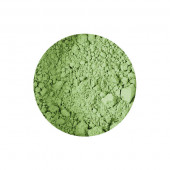
Terre Verte Pigment
Starting at: £4.00
Terre Verte, sometimes known as Green Earth, is a natural earth pigment derived from clay coloured by iron silicate. As with other natural pigments, impurities can prevent it from fully dispersing in an acrylic binder, although it is a popular pigment in all other mediums. It has been in use since antiquity, providing excellent lightfastness and great transparency, with a low tinting strength. It requires a high volume of oil, and dries slowly to create a soft, flexible paint film. When calcined, Terre Verte becomes Burnt Green Earth.
Toxicity B Learn More -
Golden Ochre Pigment
Starting at: £4.50
PY43 Golden Ochre is a natural earth pigment, somewhat darker than Yellow Ochre. It is a semi-transparent, lightfast pigment, that is stable in all media. It has a medium to slow drying rate in oil, creating a tough, flexible paint film. Toxicity: B Limeproof Learn More -
Cadmium Vermilion Pigment
Starting at: £7.50
PR108
Cadmium Red is a synthetic organic pigment that has been in use since the 1920s. It is formed by heating cadmium sulphide and selenium, the hue is determined by the level of calcination and proportion of selenium. It is very opaque, and lightfast, with a high tinting strength. It absorbs a small amount of oil, and dries very slowly to form a hard, flexible paint film. This shade has been formulated to imitate the bright hue of vermilion.
Larger quantities are available by request.
Limeproof
Toxicity: C
Learn More -
Cerulean Blue Pigment
Starting at: £9.50
PB35
Cerulean Blue is an artificial mineral pigment that is prepared by heating a mixture of Cobalt Chloride and Potassium Stannate. It was first synthesised in the early nineteenth century, becoming more widely used from 1870, when Rowney introduced Coeruleum Blue into their range. It produces a very bright, clear, and unusually opaque blue, hence its name, which is derived from the Latin for "sky-blue", or perhaps "heaven-blue". It has a very low tinting strength meaning that, although it is stable in all media, some artists may choose to bind it in poppy rather than linseed oil, so that the colour isn't affected by the colour of the binder. It creates a fairly flexible paint film, and is a fast-to-medium drying pigment.
Limeproof
Toxicity: B
Learn More -
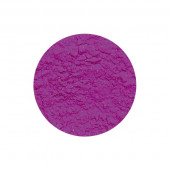
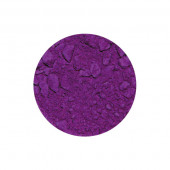
Cobalt Violet Dark Pigment
Starting at: £13.90
Cobalt Violet Dark Pigment (PV14). Synthetic inorganic pigment. Semi-transparent. High tinting strength. Excellent Lightfastness. Low oil absorption with fast drying rate. All media including ceramics. Used since late 19th Century.
Limeproof
Toxicity: C
Learn More -
Mars Violet Pigment
Starting at: £4.50
PR101
Mars Violet is an artificial mineral pigment. Its pigment code, PR101, refers to a wide spectrum of synthetic iron oxide pigments including yellows, oranges, reds, violet-browns and green-browns, which replace many natural earth colours, to provide pigments without impurities and with great opacity. It has a good tinting strength, is lightfast and stable in all media, and has a medium drying time in oil. Although it is similar to Caput Mortuum and Indian Red, it is less transparent than the former and warmer than the latter.
Toxicity: B
Limeproof
Learn More -
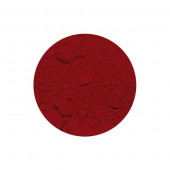
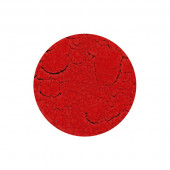
Cadmium Red Pigment
Starting at: £6.30
PR108
Cadmium Red is a synthetic organic pigment, which has been in use since the 1920s, effectively replacing vermilion. It is formed by heating cadmium sulphide and selenium, the hue is determined by the level of calcination and proportion of selenium. It is very opaque, and lightfast, with a high tinting strength. It absorbs a small amount of oil, and dries very slowly to form a hard, flexible paint film.
Larger quantities are available by request.
Limeproof
Toxicity: C
Learn More -
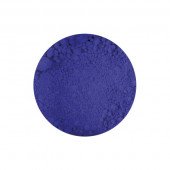
Ultramarine Blue Limewash Pigment
Starting at: £6.30
PB29
Ultramarine Blue Limewash is an artificial mineral pigment that is produced by heating clay, soda, sulphur and coal to high temperatures. Its name comes from outremer, or over-the-sea, as a reference to the highly-prized Lapis Lazuli pigment which had been imported into Europe from Afghanistan since the Middle Ages. First manufactured in France and Germany in 1828, synthetic Ultramarine provided a brilliant and affordable blue to artists, and it remains one of the most popular blues on artists' palettes today.
It is a transparent pigment, with a high tinting strength and excellent lightfastness. Most Ultramarine colours It react to alkali and are therefore unsuitable for use in lime-fresco; Limeproof Ultramarine Blue remedies this problem. It is stable in all other media, although it can be tricky to grind in oil. Instead of creating a thick, buttery paste, it can remain stringy and deteriorate when stored in a tube. To correct this, many commercial paint manufacturers include additives and waxes in their recipes; if you intend on grinding your own paint, you could try replacing 10-15% of your Linseed Oil with Poppy Oil to improve the consistency. Ultramine Blue provides a slow-drying, fairly hard paint film, which can tend towards brittleness.
Toxicity: B
Learn More -
Chromium Oxide Pigment
Starting at: £4.50
Chromium Oxide is a synthetic mixed-metal oxide pigment. It is stable in all media and has an average drying speed in oil, forming a hard, fairly flexible paint film. It is opaque, with a low tinting strength. It has been widely available since the mid-nineteenth century, following its introduction in 1809.
Learn More -
Titanium White Pigment
Starting at: £4.00
Titanium White, or Titanium Doixide, is an artificial mineral pigment introduced in the 1920s. It is valued for its opacity, good lightfastness, and stability in all media. Its high tinting strength can render it a dominant colour in mixtures. It is very slow drying in oil, and creates a somewhat brittle paint film, though more flexible than Zinc White. Its brightness makes it a popular addition to gesso.
Toxicity: B
Learn More -
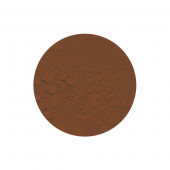
Cadmium Brown Pigment
Starting at: £10.00
PR108
Cadmium Brown is a shade of Cadmium Red, a synthetic organic pigment that has been in use since the 1920s. It is formed by heating cadmium sulphide and selenium, the hue is determined by the level of calcination and proportion of selenium. It is very opaque, and lightfast, with a high tinting strength. It absorbs a small amount of oil, and dries very slowly to form a hard, flexible paint film.
Larger quantities are available by request.
Limeproof
Toxicity: C
Learn More -
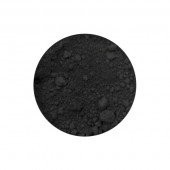
Mars Black Pigment
Starting at: £5.70
PBk11
Mars Black is an artificial mineral pigment composed of hydrated ferric oxides. Like other Mars colours, it provides a very opaque, permanent colour, which is stable in all media. It has an average drying time in oil, forming a hard, fairly flexible film, making it more suitable for impasto application than carbon-based black pigments, which tend to be brittle. It also wets more easily than other black pigments, and possesses a warm, brownish undertone.
Toxicity: B
Limeproof
Larger quantities are available by request.
Learn More