

Your search 'boards of oils' did not match any products.
Showing results using some of your search terms 'boards of oils'
Search results for 'of oils'


-

Michael Harding Artists Oils Set of 6
Starting at: £50.20
Michael Harding Artists Oils Set of 6 colours in 40ml Titanium White, Ultramarine Blue, Scarlet Lake, Yellow Lake, Yellow Ochre Deep, Burnt Umber Learn More -
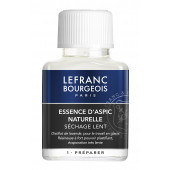
Lefranc Oil of Spike
Starting at: £18.10
Lefranc Bourgeois are a paint manufacturer with a long history of supplying to artists since their beginnings in 1720.
From their website: Natural spike lavender oil is obtained by distilling lavender. It evaporates very slowly, making it ideal for producing very precise, transparent brush strokes. It is used to create preliminary sketches. Mixed with a medium, it activates the retarder effect.
Learn More -
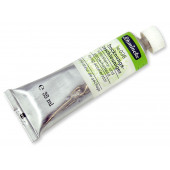
Schmincke Drying Accelerator for Oils
Starting at: £7.00
From the Schmincke website:
Jelly-like medium for accelerating the drying of oil colours. Preserves consistency and degree of gloss. Dosage: 10% to 30% maximum. Contains: Siccative, stand oil, resin solution, mineral spirit.
Learn More -
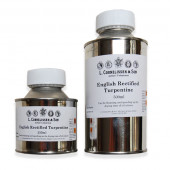
Cornelissen Rectified Turpentine
Starting at: £9.00
Volatile colourless liquid distilled from pine sap. Greater wetting powers than white spirit. Used to thin oil paint. Learn More -

-
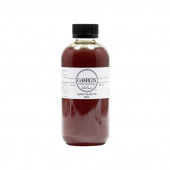
Gamblin Burnt Plate Oils
Starting at: £14.10
Burnt Plate Oils are used to lower the viscosity of the ink. Burnt Plate Oil should be added to inks sparingly, as the detail of a print may be lost if the ink becomes too fluid. Burnt Plate Oil #000 has less tack and is a good match for use with Gamblin Relief Inks. Burnt Plate Oil #2 has a higher tack and is the primary oil binder for Gamblin Etching Inks. Learn More -
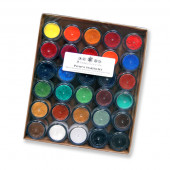
Pigment Set of 30 Colours
£119.00The perfect introduction to working with pigment, this selection of thirty pigments provides a wide range of colours for the production of paint. Each colour is supplied in a 15ml plastic jar, and the set includes both natural and synthetic colours. Recipes can be found on our homepage, with instructions for making different paints, including watercolour, egg tempera and oil paint. Learn More
-
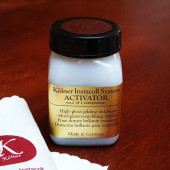
Instacoll Gilding System
Starting at: £5.50
Kölner Instacoll is a two-part system, consisting of a base coat and activator, that can be used on nearly all suitably prepared substrates to create weather-resistant, high gloss interior and exterior gilded surfaces. The Instacoll Tool is a double-ended tool with shaped tips made of elastic rubber, designed for pressing gold and silver transfer leaf into indentations when gilding uneven surfaces. The Instacoll Chiffonnette is an extra soft, lint-free cloth, used for polishing and burnishing surfaces gilded with Instacoll. Learn More -
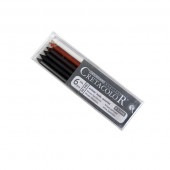
Cretacolour Leads
Starting at: £7.75
Cretacolour Leads. 5mm leads for Cretacolour pencils. The 6 pack contains White chalk, Sanguine Oil, Sepia (Light and Dark), Charcoal Medium, and Graphite 4B Learn More -
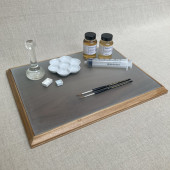
Watercolour paint making set
Starting at: £0.40
A collection of equipment and ingredients useful for making watercolour by hand. This selection of quality materials has been put together for the begginer and intermediate paint maker alike. This set includes:
Equipment to mix the paint and fill watercolour pans:
Glass slab with hardwood stand
Cornelissen small muller
Small (half pan) and large (full pan) watercolour pan
Ingredients to make the watercolour binder :
Roberson Gum Arabic
Roberson Ox Gall
Equipment for painting:
Cornelissen 80a sables brushes in sizes 3 & 6
cermaic palette in flower shape
Learn More -
-
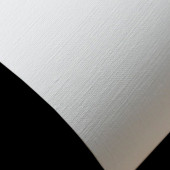
Clairefontaine Oil Paper
Starting at: £3.00
360GSM, 50cm x 65cm / 19.5" x 25.5", 10 Sheets, Acid free, Subtle Linen Texture. Learn More -
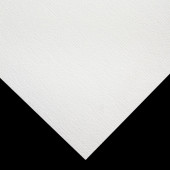
Fabriano Pittura Paper
Starting at: £2.45
400GSM, Woodfree, Acid Free, Natural Grain Surface, High White, Tub and Surface Sized. Learn More -
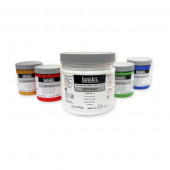
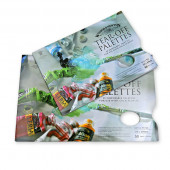
Liquitex Soft Body
Starting at: £22.30
A range of artists quality acrylics which are durable, permanent and do not yellow with age. Soft Body colour has a creamy consistancy which dries to a smooth, even surface which is slightly more matt than the Heavy Body colour. Learn More -
-
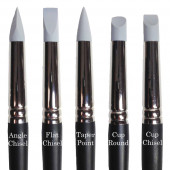
Colour Shapers
Starting at: £6.15
Unique silicone tipped tools for painting heavy mediums such as acrylic and oil paint. Excellent for spreading adhesives and appplying masking fluid. Can be used with Batik and encaustic wax. Available in soft ivory tip and firm grey tip. Learn More -
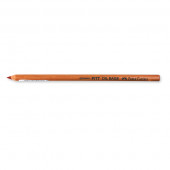
Faber-Castell Pitt Oil Based Pencils
Starting at: £2.00
Faber-Castell Pitt Oil Based Pencils Learn More -
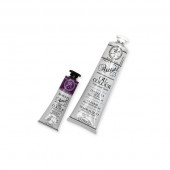
Daler-Rowney Artists' Oil Colour
Starting at: £9.30
The distinctive buttery consistency of Daler-Rowney Artists' Oils derives from the use of linseed oil and wax, which acts as a plasticiser, helping to prevent even heavy impasto from becoming brittle and cracking over time. Learn More -
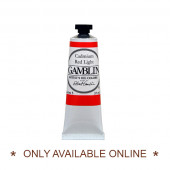
Gamblin Oil Colours 37ml
Starting at: £9.50
Robert Gamblin started making artists' oil paints in 1980. Since then he has built a reputation as both an innovative and imaginative maker of some of the best oils on the market today. As well as usual single pigment colours you would expect, the range also includes an interesting selection of neutral greys, beautiful metallics and the truly innovative Radiant range of pastel colours. Combining science and artistry, Gamblin paints are truly exceptional. *Please note, this range is stored offsite. Please allow extra time for your order to be processed and dispatched. Learn More -
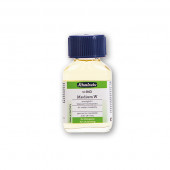
Schmincke Medium W
Starting at: £8.05
Schmincke Medium W is an odourless, jelly-like ("lean") medium for mixing oil colours with water instead of organic solvents such as turpentine or turpentine substitute. It increases gloss and transparency, reduces viscosity and harmonizes the drying process.
Dosage: 50%
Thinner: Water
Learn More -
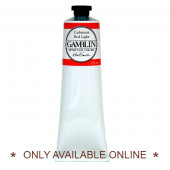
Gamblin Oil Colours 150ml
Starting at: £24.00
Robert Gamblin started making artists' oil paints in 1980. Since then he has built a reputation as both an innovative and imaginative maker of some of the best oils on the market today. As well as usual single pigment colours you would expect, the range also includes an interesting selection of neutral greys, beautiful metallics and the truly innovative Radiant range of pastel colours. Combining science and artistry, Gamblin paints are truly exceptional. *Please note, this range is stored offsite. Please allow extra time for your order to be processed and dispatched. Learn More -
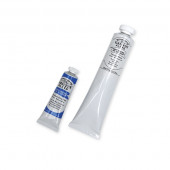
Winsor & Newton Griffin Alkyd Oil Colour
Starting at: £5.95
Artist quality range of 50 colours made from pigments bound in an oil modified alkyd resin. The main advantage of the Griffin Alkyd range is speed of drying - about 24 hours. Ideal for under painting. Compatible with traditional oils. Learn More -
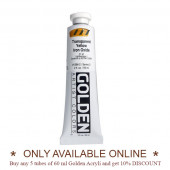
Golden Heavy Body Acrylic 60ml
Starting at: £9.60
The first acrylic colors offered by Golden Acrylic, Heavy Body paints are known for their exceptionally smooth, buttery consistency. The Heavy Body palette includes the largest assortment of unique pure pigments in a 100% acrylic emulsion available to professional artists. These colours offer excellent permanency and lightfastness. There are no fillers, extenders, opacifiers, toners, or dyes added. MULTI-BUY DISCOUNT Buy any five tubes of 60ml Golden Acrylic Heavy and get 10% discount. *Please note, this range is stored offsite. Please allow extra time for your order to be processed and dispatched. Learn More -
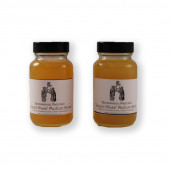
Liquid Glass Mediums
Starting at: £19.50
Renaissance Materials by Dr. David Cranswick.
A thick glazing medium of the 'Old Masters'. Liquid Glass Mediums facilitate building up layers of transparent glaze. Gloss or Satin.
Contains: Damar resin, linseed oil and beeswax (for Satin medium only)
Learn More -
Lascaux Studio Bronze Colours 250ml
Starting at: £29.60
Lascaux Studio Bronze Original is a range of brilliant bronze colours made from pure, non-oxidizing metallic bronze for use in design, decoration and architecture. *Please note, this range is stored offsite. Please allow extra time for your order to be processed and dispatched. Learn More -
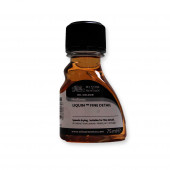
Winsor & Newton Liquin Fine Detail
Starting at: £8.05
From the Winsor & Newton website: The most fluid of the Liquin family of products, this quick drying, gloss medium is ideal for fine details, glazing and blending, or to produce a smooth surface picture. Speeds drying (touch dry in 1-6 days depending on colour and film thickness).Resists yellowing. Not suitable as a varnish or final coat.
Learn More -
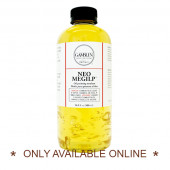
Gamblin Neo-Meglip Medium
Starting at: £11.00
Neo-Meglip Medium is produced by Gamblin. They say:
"Neo Megilp is a contemporary version of Maroger. This soft gel medium maintains the body of oil colours, increases transparency and flow, and imparts a smooth, silky feel. Neo Megilp dries at a moderate rate and remains workable for hours. Neo Megilp gives colours a satin gloss."
Learn More -

Roberson Canada Balsam Medium
Starting at: £21.30
A high quality painting medium which will produce a deep glow, made from Canada Balsam and Turpentine. Especially effective with transparent oil colours, it is recommended as the medium of choice in the final stages of an oil painting. Learn More -
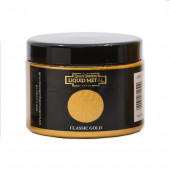
Roberson Liquid Metal 500ml
Starting at: £30.00
Roberson Liquid Metals have a rich deep colour, ideal for a wide range of applications including plaster, wood, paper & canvas. The Liquid Metal range does not tarnish and does not need to be varnished. All colours are intermixable and water wash up. Learn More -
Daler-Rowney Cryla 75ml
Starting at: £8.30
Cryla Artists' Heavy Body colours are designed to retain the intended stroke when applied with a knife or brush, so they are ideal for highly textured impasto painting techniques. Learn More
Shopping Options
- Category
-
- Pigments, Gums & Resins (80)
- Oils & Acrylics (119)
- Canvas & Supports (2)
- Watercolour (1)
- Pastels (2)
- Drawing / Calligraphy (4)
- Gilding & Restoration (18)
- Printmaking (13)
- Brushes (15)
- Paper (2)
- Studio (5)
- Specialist Decorating (1)
- Manufacturer
-
- Charbonnel (2)
- Cornelissen (102)
- Creta (1)
- Da Vinci (4)
- Daler-Rowney (5)
- Faber-Castell (1)
- Fabriano (2)
- Gamblin (15)
- Golden (7)
- Kölner (1)
- Lascaux (6)
- Lefranc et Bourgeois (15)
- Liquitex (7)
- London Pigment (1)
- Michael Harding (4)
- Omega (5)
- Pro Arte (2)
- Roberson (25)
- Schmincke (18)
- Spectrum (5)
- Winsor&Newton (10)
- Zest-It (1)
- Sennelier (2)
You have no items in your shopping basket.

- Search Brands
-