

Your search 'boards of oils' did not match any products.
Showing results using some of your search terms 'boards of oils'
Search results for 'of oils'


-
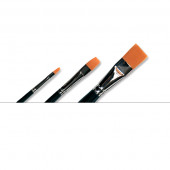
da Vinci Series 1870 Nova Flat
Starting at: £2.70
Long handled synthetic brush for acrylic or oil painting. Soft bristles. Learn More -
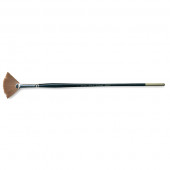
Pro Arte Series F Prolene Fan
Starting at: £6.50
Soft synthetic haired fan used for blending and softening adjacent areas of oil and acrylic colour. Learn More -
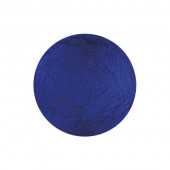
Blue Verditer Pigment
Starting at: £4.90
Blue Verditer, sometimes referred to as Bremen Blue, is a synthetic form of Azurite, or copper-calcium carbonate. It has a weak tinting strength and is sligtly transparent. It works best in water-based binders, as the acidity of linseed oil can cause discolouration.
Learn More
Larger sizes available on request -
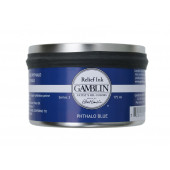
Gamblin Relief Printing Inks 175ml
Starting at: £15.00
Gamblin Relief Inks are formulated for all relief techniques, including woodblock, linocut, monotype, and Solarplate. They contain the right amount of stiffness and tack to hold fine detail yet spread evenly on the block or plate. The palette of ten colors is designed to give artists intense pure pigmented colors straight from the jar, along with a wide range of color mixing capabilities. Gamblin Relief Inks are all bound in the highest quality Burnt Plate Oil. Learn More -
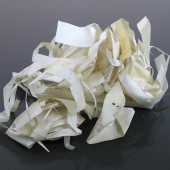
Parchment Clippings
Starting at: £9.90
Parchment Clippings, usually waste goatskin vellum, were utilised throughout the Middle Ages to make an animal hide glue. This continued to be commonly used as a sizing for canvas before rabbit skin glue came to prominence in the nineteenth century. Parchment glue is comparable to isinglass glue, as it also produces a very pale, almost transparent glue with a degree of flexibility. Our parchment clippings are a mixture of vellum scraps, and may include goatskin, calfskin and sheepskin. Cennino Cennini gives a recipe for gesso using parchment in his treatise about painting; please see below for our recipe. Learn More -
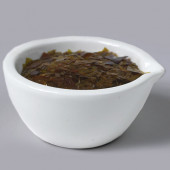
Orange Shellac
Starting at: £8.00
Shellac is a natural resin that is deposited by the female lac insect on the branches of trees in India and Thailand. It is soluble with alcohol, but not with mineral spirits or turpentine. It forms a tough yet flexible film, with many applications. It is suitable as a top coat for gilding when applied thinly, a sealant for porous surfaces, an isolating layer for tempera paintings, a base for pigmented inks, a protective layer for collograph plates, and a warm varnish for wooden floors and furniture. As it is prone to darkening with age, it is not recommended as a varnish for oils, and its solubility can reduce over time. There are various grades of shellac. When mixed with alcohol, it may initially form a cloudy mixture, due to traces of wax in the shellac, but this should become clear once it has dried. The highest grades of shellac are Clear Dewaxed Shellac, which has been de-coloured using the carbon filtering method, Lemon Shellac, and Orange Shellac, which are pale in colour. Button Shellac is less refined and therefore produces a reddish varnish. It was, in fact, widely used as a red dye before synthetic dyes became available. Learn More -
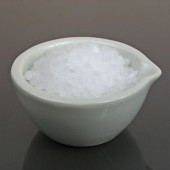
Paraffin Wax
Starting at: £6.60
Paraffin Wax is a by-product of the petro-chemical industry. It has a low melting point of 50-60°c and a brittle texture, making it unsuitable for encaustic painting or as an additive to oil paints, but it can be used to impart softness to lithographic crayons. As a petroleum product, it is more inert than animal or vegetable waxes, and is therefore not saponified (turned into soap) by alkali substances. Learn More -
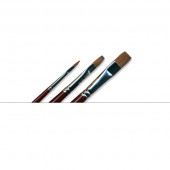
Cornelissen Sable Bright
Starting at: £5.80
Made from the same quality red sable as the rounds and used for short, thicker strokes of paint. Learn More -
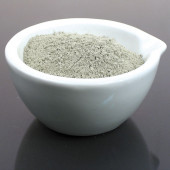
Fullers Earth
Starting at: £6.30
Fullers Earth is used to remove plant debris and other impurities from cold-pressed linseed oil, as its large particle size and unusual shape attracts unwanted matter and pulls it down, away from the surface of the oil. Our Fullers earth consist sly of Bentonite.
Learn More -
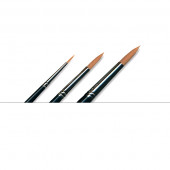
da Vinci Series 1670 Nova Round
Starting at: £2.65
Long handled synthetic brush or acrylic or oil painting. Soft bristles. Learn More -
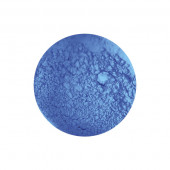
Manganese Blue Pigment
Starting at: £49.50
PB33
Manganese Blue is an articficial mineral pigment, that is prepared by heating sodium sulphate, potassium permanganate and barium nitrate to 750-800 degrees Celcius. It has been produed as a pigment and as a colourant for cement since the 1930s, and is notable for its quick drying time in oils, its high transparency, and its bright, slightly greenish colour. Its weak tinting strength can cause it to be overwhelmed in mixtures, and it has a tendency to granulate as a watercolour. It is no longer used in commercial paints, but many manufacturers offer a Manganese Blue Hue, which is typically based upon Phthalocyanine Blue.
Production of this pigment has now ceased, due to environmental and health concerns, therefore it is only available while stocks last.
Toxicity: C
Learn More -
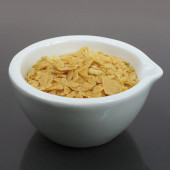
Carnauba Wax Yellow
Starting at: £6.50
Carnauba Wax is the hardest wax commonly used in the production of artists' materials, with a melting point of 83-86°c. It is derived from a tree native to South America, and is available in a natural colour (grey), or a refined colour (pale yellow). Small amounts of carnauba wax are commonly used in both oil painting mediums and encaustic painting, usually in conjunction with beeswax to add toughness, durability and sheen to the paint film. It creates an inflexible surface, so works best on rigid supports such as gesso panels, and it should be noted that it will raise the melting point of encaustic mixtures. It can produce a glossy finish; as such it is used in waxes and polishes for shoes, cars, musical instruments, furniture, and wooden floors, especially when mixed with beeswax and turpentine. Learn More -
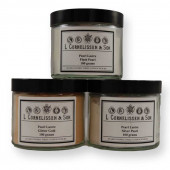
Pearl Lustre Pigments 100g
Starting at: £12.90
Pearl Lustre Pigments 100g. Colour swatch on the left indicates colour on a White Background and Colour on a Black Background on the right. Learn More -
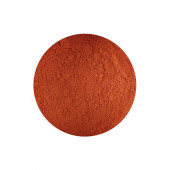
Vermilion Genuine Pigment
Starting at: £15.90
PR106 Vermilion is an artificial pigment based on mercuric sulphide, which occurs naturally as Cinnabar. The synthetic form contains fewer impurities than Cinnabar, and was in use in China as early as the fourth century. It was present in Europe from the ninth century, and was the most widely used red pigment until the introduction of Cadmium Red in the early twentieth century. It has good tinting strength and opacity but, like many red pigments, it dries very slowly in oil media. Larger sizes available on request. Learn More -
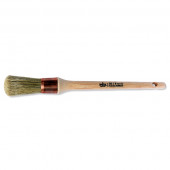
Omega Series 222 Domed Hog Sash
Starting at: £8.80
Long soft Italian hair with copper ferrule. Shaped to a slightly rounded snub tip, these brushes are suited to large scale painting in oils and acrylics. Also useful for decorative paint effects and for applying gesso during gilding. Learn More -
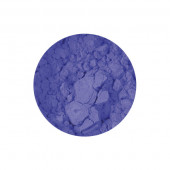
Smalt Light Pigment
Starting at: £5.20
PB32
Smalt is a kind of cobalt blue glass or frit, and its use as a pigment dates from the 1600s in the glass-making regions of Saxony. We offer two shades, light and dark, which are determined by the particle size of the pigment; the more finely ground the powder, the paler the colour. Before the introduction of Ultramarine Blue, Smalt was available in a wide variety of grades. It is a very transparent pigment, which is easily overwhelmed in mixtures due to its weak tinting strength. It works best in water based media. When ground in oil, it can become almost invisible in dried oil-paint films because its refractive index is so close to that of linseed oil.
Larger quantities are available by request.
Learn More -
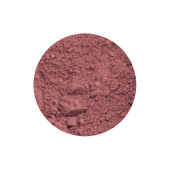
Madder Lake Genuine Pigment
Starting at: £10.20
NR9
Madder Lake pigment is derived from dye that has been extracted from the root of the madder plant, and attached to alum as a base. It has largely been replaced by synthetic alizarin pigments, but it is still used as an ingredient in some commercially-available paints. It provides a very transparent pigment, with a weak tinting strength, which can be used in all lime-free media, although it is very slow-drying in oil. It is fugitive to sunlight, so paintings containing Madder should be stored appropriately, but it remains one of the most lightfast plant-based pigments. It requires a wetting agent to aid dispersion.
Larger quantities are available by request
Learn More -
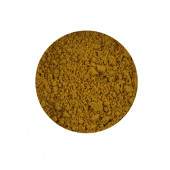
Stil de Grain
Starting at: £12.20
NY13:75640 Stil de Grain is a natural yellow pigment derived from unripe buckthorn berries, which were also once used to produce sap green pigment before the introduction of synthetic alternatives. Stil de Grain may also be known as brown lake, yellow lake, Persian lake, buckthorn lake, Dutch pink, yellow carmine and Italian pink. It has a weak tinting strength, and is very transparent, especially in oil. When mixed with oil, the pigment becomes saturated, darkening considerably in colour and drying very slowly, whereas in a water-based paint it is appears as a warm yellow. It is very fugitive to light, and compatible with all media, except lime. Larger quantities are available by request. Learn More -

Aluminium Handle Squeegee Fabric 12"
£32.0012” “V” Squeegee with an aluminium handle. The squeegee has soft blade with a V shape, ideal for printing on uneven surfaces and textile work. Leaves heavier deposit then conventional square blade. Long-life performance, Precision edge, Tear resistant, Resistant to solvents, Non-oil absorbent and Easy to clean. Learn More -
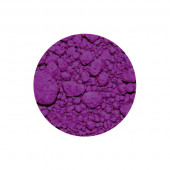
Manganese Violet Pigment
Starting at: £7.20
PV16
Manganese Violet is a synthetic organic pigment, discovered in Germany in 1868 and formed by combining manganese chloride, phosphoric acid and ammonium carbonate. It is very lightfast, but sensitive to alkalis and oils. It is semi-opaque and fast-drying, with a low tinting strength and low absorption of oil.
Toxicity: C
Learn More -
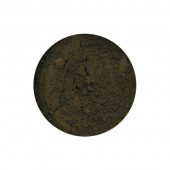
Raw Umber Greenish Pigment
Starting at: £4.80
PBr7
Raw Umber Greenish is a natural earth pigment composed of iron oxide, manganese, and aluminium silicate. It has its roots in the Umbria region of Italy, and was historically a popular colour for underpaintings, as it dries very quickly. It is semi-opaque, very lightfast, and stable in all media but may be difficult to disperse in acrylic. It requires a large amount of liquid when mixed with oil.
Toxicity: B
Learn More -
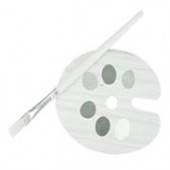
Pearl Lustre Pigments 1 kg
Starting at: £94.00
Call to Order
Pearl Lustre Pigments 1 kg. Colour swatch on the left indicates colour on a White Background and Colour on a Black Background on the right. Learn More -
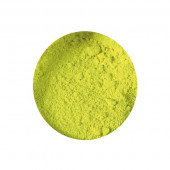
Cadmium Yellow Lemon Pigment
Starting at: £4.50
Synthetic Inorganic pigment. Opaque. Good tinting strength. Excellent Lightfastness. Low oil absorption with slow drying rate. Suitable for all media. Good acid and alkali resist. Exterior application not advised as discoloration occurs. Used since 19th Century. Toxicity B/C
Learn More -
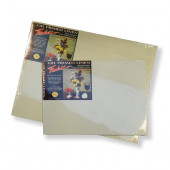
Primed Linen Panels
Starting at: £10.50
Hand-primed pure Belgian linen. Oil or Acrylic (universally) primed. Learn More -
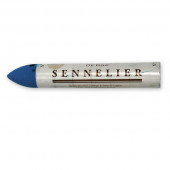
Sennelier Oil Pastels Large
Starting at: £9.50
Beautifully soft and creamy oil pastels in a range of 120 colours. Blend of pure pigment, oil and acid free wax. 20% Discount for purchasing 4+ pastels. Learn More -
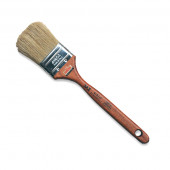
Omega Series 57 Hog Sash
Starting at: £14.00
Thick flat hog hair brush with sligtly domed shape. Used for thick applications of oil or acrylic paint. Especially good for applying white lead primer to sized linen. Learn More -
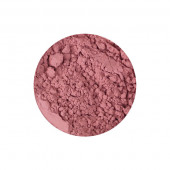
Potters Pink Pigment
Starting at: £7.30
PR233
Potter's Pink is an artificial mineral pigment produced by roasting tin oxide with various other oxides. It was first discovered in the pottery region of Staffordshire in the late-1700s, and in the following century Winsor & Newton introduced Potter's Pink into their watercolour range under the name "pink colour". It went on to become a popular addition to watercolour palettes, offering an opaque, lightfast colour with a weak tinting strength and a medium level of oil absorption.
Toxicity A
Learn More -
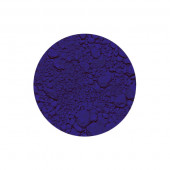
Ultramarine Blue Light Pigment
Starting at: £5.30
PB29
Ultramarine Blue Light is an artificial mineral pigment that is produced by heating clay, soda, sulphur and coal to high temperatures. Its name comes from outremer, or over-the-sea, as a reference to the highly-prized Lapis Lazuli pigment which had been imported into Europe from Afghanistan since the Middle Ages. First manufactured in France and Germany in 1828, synthetic Ultramarine provided a brilliant and affordable blue to artists, and it remains one of the most popular blues on artists' palettes today.
It is a transparent pigment, with a high tinting strength and excellent lightfastness. It reacts to alkali, therefore it is not suitable for use in lime-fresco; we do offer a Limeproof Ultramarine Blue for this purpose. It is stable in all other media, although it can be tricky to grind in oil. Instead of creating a thick, buttery paste, it can remain stringy and deteriorate when stored in a tube. To correct this, many commercial paint manufacturers include additives and waxes in their recipes; if you intend on grinding your own paint, you could try replacing 10-15% of your Linseed Oil with Poppy Oil to improve the consistency. Ultramine Blue provides a slow-drying, fairly hard paint film, which can tend towards brittleness.
Toxicity B
Learn More -
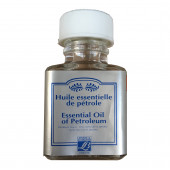
Lefranc Essential Oil of Petroleum 75 ml
£6.40Call to Order
Ideal for making oil paints, mediums and varnishes more fluid, and for cleaning painting equipment. It also removes stains. Learn More -
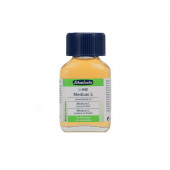
Schmincke Medium L 200ml
£15.00Call to Order
Schmincke Medium L is a jelly-like medium for “soft” painting with oil colours. It improves flow and reduces brush strokes, accelerates drying, increases gloss and transparency. There is no change of the product quality based on the colour change of the raw material alkyd resin. Shake well and stir – if necessary – before use. Close immediately after use.
Contains: alkyd resin, mineral spirit, siccative.
Dosage:10% to 20% maximum.
Thinner: Turpentine substitute
Learn More
Shopping Options
- Category
-
- Pigments, Gums & Resins (80)
- Oils & Acrylics (119)
- Canvas & Supports (2)
- Watercolour (1)
- Pastels (2)
- Drawing / Calligraphy (4)
- Gilding & Restoration (18)
- Printmaking (13)
- Brushes (15)
- Paper (2)
- Studio (5)
- Specialist Decorating (1)
- Manufacturer
-
- Charbonnel (2)
- Cornelissen (102)
- Creta (1)
- Da Vinci (4)
- Daler-Rowney (5)
- Faber-Castell (1)
- Fabriano (2)
- Gamblin (15)
- Golden (7)
- Kölner (1)
- Lascaux (6)
- Lefranc et Bourgeois (15)
- Liquitex (7)
- London Pigment (1)
- Michael Harding (4)
- Omega (5)
- Pro Arte (2)
- Roberson (25)
- Schmincke (18)
- Spectrum (5)
- Winsor&Newton (10)
- Zest-It (1)
- Sennelier (2)
You have no items in your shopping basket.

- Search Brands
-