

Your search 'ornament paint' did not match any products.
Showing results using some of your search terms 'ornament paint'
Search results for 'paint'


-
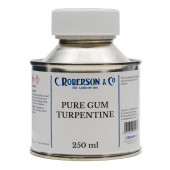
Roberson Pure Gum Turpentine
Starting at: £10.50
Slightly less refined than rectified spirit of turpentine. Often preferred as constituent of painting mediums. Learn More -

-
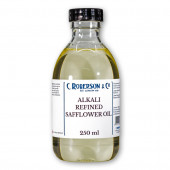
Roberson Safflower Oil
Starting at: £6.40
Safflower Oil is light-coloured, making it suitable for grinding pale pigments. It is still sometimes used as a binder for commercially available paints, although due to its very slow drying time it is best reserved for the final layers of a painting. Compared to Linseed oil, Safflower Oil will give a matte finish.
Learn More -
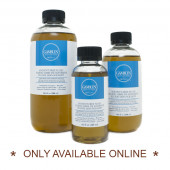
Gamblin Solvent-Free Fluid Medium
Starting at: £11.00
Gamblin Solvent-Free Fluid is an oil painting medium created by the American company Gamblin. They write:
"Gamblin Solvent-Free Fluid painting medium gives oil colours more flow and transparency. It has a moderately fast drying rate and increases gloss. Made from safflower oil and alkyd resin, Gamblin Solvent-Free Fluid is non-toxic and contains no Gamsol or petroleum distillates. To ensure proper drying and prevent beading-up of paint layers, Solvent-Free Fluid should be used in moderation with oil colours – no more than 25% by volume. To avoid wrinkling, apply mixtures of Solvent-Free Fluid and oil colors thinly. For underpainting, we recommend adding Gamsol to Solvent-Free Fluid."
Learn More -
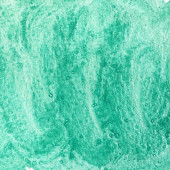
Verdigris Deep Pigment
£18.00Made to a historical recipe, this Verdigris, unlike others available, has been doubly distilled and therefore more stable than basic Verdigris. This rich green is a translucent pigment with a fine grain.
Follow @londonpigment on Instagram for an insight into the stories behind the colours and how she makes them.
NOTE: many of these colours are made in extrmely limited batches so please email us at info@cornelissen.com for further infomation on what is currently availible.
Learn More -

ArtGraf Watersoluble Graphite Stick 250g
£21.00Extra-large hand made water-soluble graphite stick for large mark making. Draw and then use water to paint into the marks for blending. Learn More -
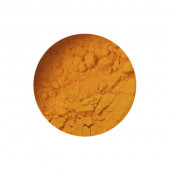
Gamboge Powder
Starting at: £5.20
Gamboge is a natural tree resin, available as a powder and in the solid "pipe" form. It is highly transparent, fugitive to light, with a weak tinting strength. The powder can be dissolved in alcohol to colour resin-based varnishes. In its solid form, Pipe Gamboge does not require a binding agent to be used as a paint. Instead, colour can be lifted with a wet brush, as from a watercolour pan.
Larger quantities are available by request.
Learn More -
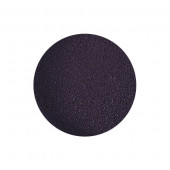
Indigo Blue Genuine Pigment
Starting at: £6.30
NB1
Genuine Indigo is a natural vegetable pigment derived from the Indigofera Tinctoria plant, which was first imported into Europe from India in the seventeenth century. It replaced woad, which had been grown natively in Europe for its blue dye. The leaves are soaked in water to ferment; upon drying, an oxidised residue forms on the dry leaves, which is removed, washed, boiled in water, and then dried to form cakes of pigment or dye.
Indigo is very transparent, with a good tinting strength. It requires a wetting agent to disperse, and in oil it dries very slowly. It is fugitive to light; this drawback means that it is no longer commonly available in commercial paints. It fell out of general use at the beginning of the seventeenth century, largely replaced by Prussian Blue, and synthetic Indigo was patented in the 1890s. However, it provides a subtle shade of blue that is still desirable in works that are going to be protected from light.
Toxicity: B
Learn More -
Schmincke Artists Watercolour Half Pan
Starting at: £5.15
Finest quality watercolours made in Germany. This range offers 139 colours, including 95 single-pigment colours, 3 perylene pigments, 5 quinacridone pigments, and a selection of granulating colours. They present endless mixing possibilities, and can combined with Schmincke's selection of watercolour mediums as well as with their gouache paints. The solid colours are produced by pouring the liquid paint into the pans four times, ensuring the maximum yield for each colour. Also available in whole pans and tubes of 5 and 15ml. Learn More -
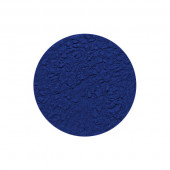
Ultramarine PB29 Pigment
Starting at: £9.10
PB29
Ultramarine Blue is an artificial mineral pigment that is produced by heating clay, soda, sulphur and coal to high temperatures. Its name comes from outremer, or over-the-sea, as a reference to the highly-prized Lapis Lazuli pigment which had been imported into Europe from Afghanistan since the Middle Ages. First manufactured in France and Germany in 1828, synthetic Ultramarine provided a brilliant and affordable blue to artists, and it remains one of the most popular blues on artists' palettes today.
It is a transparent pigment, with a high tinting strength and excellent lightfastness. It reacts to alkali, therefore it is not suitable for use in lime-fresco; we do offer a Limeproof Ultramarine Blue for this purpose. It is stable in all other media, although it can be tricky to grind in oil. Instead of creating a thick, buttery paste, it can remain stringy and deteriorate when stored in a tube. To correct this, many commercial paint manufacturers include additives and waxes in their recipes; if you intend on grinding your own paint, you could try replacing 10-15% of your Linseed Oil with Poppy Oil to improve the consistency. Ultramine Blue provides a slow-drying, fairly hard paint film, which can tend towards brittleness.
Toxicity: B/C
Learn More -
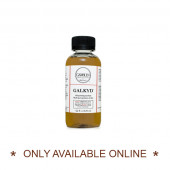
Gamblin Galkyd Medium
Starting at: £11.00
Galkyd is an oil painting medium created by Gamblin. They write:
"Galkyd thins oil colours and increases transparency and gloss. When used in greater proportions with oil colour, Galkyd will level brush-strokes, creating an enamel-like surface. Galkyd is our fastest-drying painting medium. Thin layers will be touch-dry in approximately 24 hours."
Learn More -
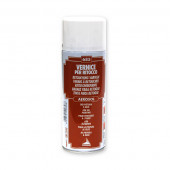
Maimeri Retouching Varnish Aerosol
Starting at: £13.45
Call to Order
Aerosol varnish for oil or acrylic paintings. For use as temporary varnish for paintings less than 6 months old. Unable to send overseas. Learn More -

Roberson CRP Picture Cleaner
Starting at: £12.40
Cleansing/Reviving/Preserving wax paste for oil paintings, sculptures, any painted & polished surfaces except drawings, water colours or pastels. Learn More -

ArtGraf Blue Tailor shape
£5.80Inspired by traditional tailor’s chalk block, prepared for drawing and painting. Water soluble and extremely soft. Learn More -
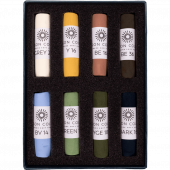
Unison 8 Landscape Assorted Pastels
£40.55The Unison Classic 8 set, specially selected by John Hersey for Landscape painting. Unison Colour Soft pastels allow for ease of use with a highly blendable texture.
Learn More -
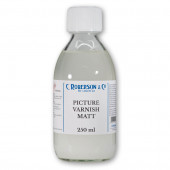
Roberson Matt Picture Varnish
Starting at: £7.00
Ketone resin/white spirit microcrystalline wax. Clear, tough protection without gloss. Useful overpaintings where resinous media have been used. Unable to send overseas. Learn More -
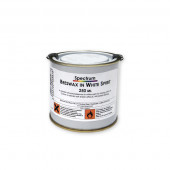
Spectrum Beeswax in White Spirit
Starting at: £16.50
From the Cranfield website:
A pereparation of pure beeswax in white spirit, this is used to achieve a soft sheen on your finished painting. It will retard drying, allowing you to achieve a range of effects.
Learn More -
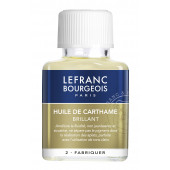
Lefranc Safflower Oil
Starting at: £8.40
Lefranc Bourgeois are a paint manufacturer with a long history of supplying to artists since their beginnings in 1720. From their website: Safflower Oil enhances the fluidity of oil paintings. Lighter in colour than Linseed Oil, it does not yellow and dries faster than Poppy Seed Oil. It improves the flow of the paste and the intensity and transparency of colours. It also works particularly well with different white shades and light colours. Learn More -
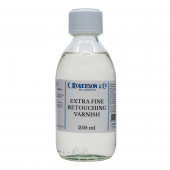
Roberson Extra Fine Retouching Varnish
Starting at: £6.90
Synthetic, Polaroid B67 retouching varnish made as an alternative to natural resin, Damar retouching varnish. superior non-yellowing characteristics. Less readily absorbed into painted surface and less susceptible sinking. Dries quickly to a breathable, uniform, gloss finish. Learn More -
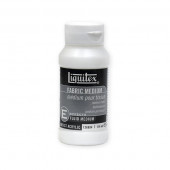
Liquitex Acrylic Fabric Medium
Starting at: £10.50
Enhances blending, workability, and adhesion of acrylic colours for painting acrylics directly on to fabric. Reduces paint stiffness. No heat setting required. Learn More -
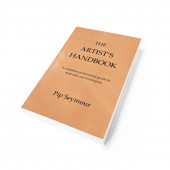
Artist's Handbook
£29.50By Pip Seymour. The Artist’s Handbook provides artists with in-depth, practical information on the materials, equipment and skills necessary for all areas of artistic practice. Topics covered include advice on how to select appropriate art materials, including paints, brushes, canvases and drawing materials; techniques for making your own paints, glue, varnishes and paper; advice on how to achieve the best results from both manufactured and hand-made materials; the best methods of storing and preserving finished artworks, and health and safety precautions. (520 pages) Learn More -

Roberson Matt Medium
Starting at: £37.70
Roberson's Matt Medium creates a dead-flat finish when mixed with oil colour. It aids the flow and increases the artist's control of oil paint, allowing for smooth application flat brush marks with low edges. It can be mixed with oil paint in any ratio. Learn More -
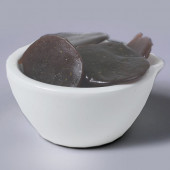
Button Shellac
Starting at: £8.40
Shellac is a natural resin that is deposited by the female lac insect on the branches of trees in India and Thailand. It is soluble with alcohol, but not with mineral spirits or turpentine. It forms a tough yet flexible film, with many applications. It is suitable as a top coat for gilding when applied thinly, a sealant for porous surfaces, an isolating layer for tempera paintings, a base for pigmented inks, a protective layer for collograph plates, and a warm varnish for wooden floors and furniture. As it is prone to darkening with age, it is not recommended as a varnish for oils, and its solubility can reduce over time. There are various grades of shellac. When mixed with alcohol, it may initially form a cloudy mixture, due to traces of wax in the shellac, but this should become clear once it has dried. The highest grades of shellac are Clear Dewaxed Shellac, which has been de-coloured using the carbon filtering method, Lemon Shellac, and Orange Shellac, which are pale in colour. Button Shellac is less refined and therefore produces a reddish varnish. It was, in fact, widely used as a red dye before synthetic dyes became available. Learn More -

Lascaux Tusche Soft Ground Effect 500ml
£36.70This slow drying viscous tusche has been designed to produce effects similar to soft ground in traditional etching. Using this method soft non-printing drawings may be made and impressions of fabric, leaves, feathers and other collage materials may be taken. The tusche can also be used for a broad range of painted marks and can be drawn into with paint shapers and other tools. The diluted tusche dries to creategranular washes. Dry marks can be re-wet and altered. Learn More -
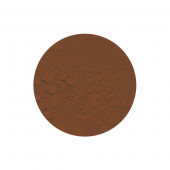
Cadmium Brown Pigment
Starting at: £10.00
PR108
Cadmium Brown is a shade of Cadmium Red, a synthetic organic pigment that has been in use since the 1920s. It is formed by heating cadmium sulphide and selenium, the hue is determined by the level of calcination and proportion of selenium. It is very opaque, and lightfast, with a high tinting strength. It absorbs a small amount of oil, and dries very slowly to form a hard, flexible paint film.
Larger quantities are available by request.
Limeproof
Toxicity: C
Learn More -

Lascaux Coloured coating for Hard Resist
Starting at: £33.00
These black or white coatings may be painted onto a dry layer of Hard resist so that the drawing made with etching tools is highly visible. The coloured coatings are not acid-resistant and are designed to be washed away with water before the plate is stopped-out or etched. Learn More -
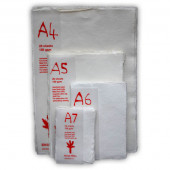
Khadi White Rag Paper Packs 150gsm
Starting at: £2.65
Handmade Paper, 100% Long Fibred Cotton Rag, Acid free, Medium-Rough surface, Deckle Edged. All papers are internally sized with neutral pH size. Learn More -
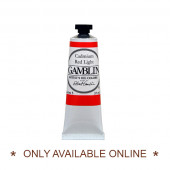
Gamblin Oil Colours 37ml
Starting at: £9.50
Robert Gamblin started making artists' oil paints in 1980. Since then he has built a reputation as both an innovative and imaginative maker of some of the best oils on the market today. As well as usual single pigment colours you would expect, the range also includes an interesting selection of neutral greys, beautiful metallics and the truly innovative Radiant range of pastel colours. Combining science and artistry, Gamblin paints are truly exceptional. *Please note, this range is stored offsite. Please allow extra time for your order to be processed and dispatched. Learn More -
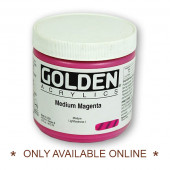
Golden Heavy Body Acrylic 473ml
Starting at: £38.60
The first acrylic colors offered by Golden Acrylic, Heavy Body paints are known for their exceptionally smooth, buttery consistency. The Heavy Body palette includes the largest assortment of unique pure pigments in a 100% acrylic emulsion available to professional artists. These colours offer excellent permanency and lightfastness. There are no fillers, extenders, opacifiers, toners, or dyes added. *Please note, this range is stored offsite. Please allow extra time for your order to be processed and dispatched. Learn More -
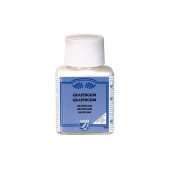
Lefranc Graphigum Masking Fluid 75 ml
£4.90Lefranc Graphigum is a latex-based liquid frisket used for masking areas of a watercolor painting with a brush to protect them from the application of colour. It can be rubbed off with your fingers and leaves no mark on the support. Size: 75 ml Learn More
Shopping Options
- Category
-
- Pigments, Gums & Resins (83)
- Oils & Acrylics (110)
- Canvas & Supports (3)
- Watercolour (23)
- Pastels (3)
- Drawing / Calligraphy (21)
- Gilding & Restoration (25)
- Printmaking (17)
- Brushes (35)
- Paper (7)
- Studio (20)
- Specialist Decorating (13)
- Manufacturer
-
- Arches Aquarelle (1)
- ArtGraf (9)
- Bockingford (1)
- Canson (1)
- Charbonnel (1)
- Cornelissen (98)
- Da Vinci (13)
- Daler-Rowney (6)
- Daniel Smith (6)
- Faber-Castell (1)
- Fabriano (1)
- Gamblin (10)
- Golden (4)
- Khadi (2)
- Lascaux (17)
- Lefranc et Bourgeois (26)
- Liquitex (5)
- London Pigment (4)
- Maimeri (1)
- Michael Harding (4)
- Omega (9)
- Pelikan (1)
- Pilot (1)
- Roberson (51)
- Rohrer and Klingner (2)
- Schmincke (21)
- Spectrum (3)
- Winsor&Newton (9)
- Zest-It (2)
- Talens (3)
- Sennelier (1)
You have no items in your shopping basket.

- Search Brands
-