

Your search 'ornament paint' did not match any products.
Showing results using some of your search terms 'ornament paint'
Search results for 'paint'


-
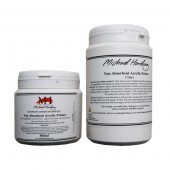
Michael Harding Non Absorbent Acrylic Primer
Starting at: £16.40
Apply 2 coats. First coat may be applied 25% diluted with water to increase flow and coverage if required. Apply second coat once first coat is touch dry (approx.. 1 hour). This product may be applied to: linen, wood, MDF and other supports to produce a strong, flexible, permanent, highly pigmented white ground. Suitable for as a ground for both acrylic and oil paint. May even be applied over inexpensive standard primed canvases to render them non absorbent! Do not apply over rabbit skin / hide glue or to unsound supports such as cardboard and flimsy supports! Learn More -
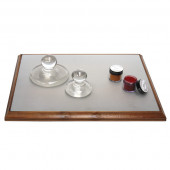
Mixing Slab
Starting at: £19.95
A glass slab with wooden cradle for the grinding of pigments.
The friction created between the sand-blasted surfaces of the glass slab and muller facilitates the thorough mixing of pigment and medium, creating a consistent and strong paint body. This slab can be used to manufacture many types of paint including watercolours, egg tempera and oils.
Mulling is of particular importance when making oil paint; simply mixing pigment and oil together using a palette knife will result in an unstable substance with poor plasticity, which contains a large amount of excess oil and unevenly distributed pigment particles. Thorough mulling in a figure-of-eight motion will enable the pigment to be fully combined into the binder, strengthening the resultant paint film.
PLEASE NOTE: This item is in stock but it is a call to order item due to the fact that we cannot guarantee its safe delivery, however well we package it. Please ring us to discuss your delivery options.
Learn More -
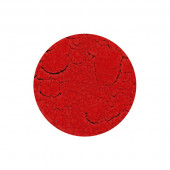
Cadmium Vermilion Pigment
Starting at: £7.50
PR108
Cadmium Red is a synthetic organic pigment that has been in use since the 1920s. It is formed by heating cadmium sulphide and selenium, the hue is determined by the level of calcination and proportion of selenium. It is very opaque, and lightfast, with a high tinting strength. It absorbs a small amount of oil, and dries very slowly to form a hard, flexible paint film. This shade has been formulated to imitate the bright hue of vermilion.
Larger quantities are available by request.
Limeproof
Toxicity: C
Learn More -
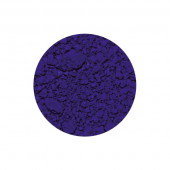
Ultramarine Blue Limewash Pigment
Starting at: £6.30
PB29
Ultramarine Blue Limewash is an artificial mineral pigment that is produced by heating clay, soda, sulphur and coal to high temperatures. Its name comes from outremer, or over-the-sea, as a reference to the highly-prized Lapis Lazuli pigment which had been imported into Europe from Afghanistan since the Middle Ages. First manufactured in France and Germany in 1828, synthetic Ultramarine provided a brilliant and affordable blue to artists, and it remains one of the most popular blues on artists' palettes today.
It is a transparent pigment, with a high tinting strength and excellent lightfastness. Most Ultramarine colours It react to alkali and are therefore unsuitable for use in lime-fresco; Limeproof Ultramarine Blue remedies this problem. It is stable in all other media, although it can be tricky to grind in oil. Instead of creating a thick, buttery paste, it can remain stringy and deteriorate when stored in a tube. To correct this, many commercial paint manufacturers include additives and waxes in their recipes; if you intend on grinding your own paint, you could try replacing 10-15% of your Linseed Oil with Poppy Oil to improve the consistency. Ultramine Blue provides a slow-drying, fairly hard paint film, which can tend towards brittleness.
Toxicity: B
Learn More -
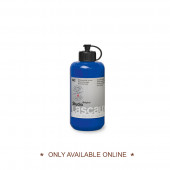
Lascaux Studio Acrylic Colours 250ml
Starting at: £22.00
Great quality acrylic paints ideal to use in silkscreen printing. Mix the colours undiluted to obtain the desired hue and then add the Lascaux Screenprinting Paste. It is advisable to experiment initially, to determine satisfactory working mixes. To find a satisfactory working ratio, it is useful to first print colours using a 50/50 mixture of undiluted colour to paste and to then shift the ratio depending on the results. *Please note, this range is stored offsite. Please allow extra time for your order to be processed and dispatched. Learn More -
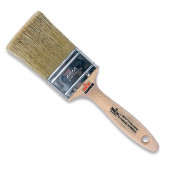
Omega Series 1067 Lily Varnish
Starting at: £15.50
Thick hog hair brush or varnishing or painting on a large scale. Learn More -
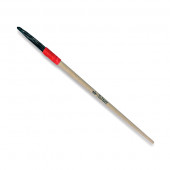
Omega Series 79 Al Fresco
Starting at: £12.20
Long grey bristle and string ferrule. Holds colour well for fresco painting. Learn More -

Renaissance Wax
Starting at: £8.75
Used by restoration specialists to revive and protect furniture, leather, paintings, metals etc. Freshens colours, imparts soft sheen. Very long shelf life. (approx 20 years) as long as it is not exposed to heat. Learn More -
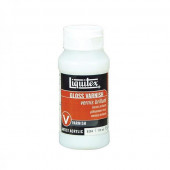
Liquitex Acrylic Varnish Gloss
Starting at: £17.35
Increases colour brilliance and transparency. Promotes flow and levelling. Use as varnish over varnished painting to add gloss and depth of colour. Non removable. Learn More -
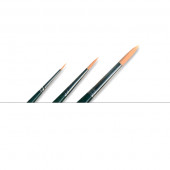
da Vinci Series 5570 Cosmotop Nova Round
Starting at: £3.35
Finest golden synthetic fibre. More springy than Cosmotop Spin making it an excellent brush for watercolour, gouache, acrylic and oil painting. Learn More -
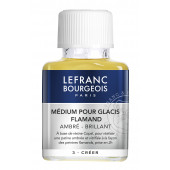
Lefranc Flemish Glazing Medium
Starting at: £9.10
Lefranc Bourgeois are a paint manufacturer with a long history of supplying to artists since their beginnings in 1720.
From their website: The Flemish glazing medium enables artists to create glossy amber finishes in the style of the Flemish masters. It creates a transparent look. It also greatly enhances the brilliance of the oil. After half a day’s work, the colours can be layered over each other.
Learn More -
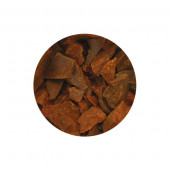
Gamboge Pipe Pieces
Starting at: £22.00
Gamboge is a natural tree resin, available as a powder and in the solid "pipe" form. One of the unique features of Pipe Gamboge is that it does not require a binding agent to be used as a paint. Instead, colour can be lifted with a wet brush, as from a watercolour pan. It is highly transparent, fugitive to light, with a weak tinting strength. The powder can be dissolved in alcohol to colour resin-based varnishes.
Pipe Gamboge is available while stocks last. Larger quantities are available by request.
Learn More -
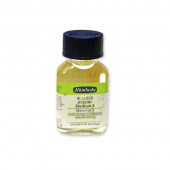
Schmincke Mussini Oil Medium 2
Starting at: £7.95
A slow-drying medium that allows for extending the working period, wet-in-wet painting and blending techniques.
From the Schmincke website:
Medium for oil colours rich in oil. Retards drying; allows wet-in-wet painting; its high content of oil and resin improves the gloss and develops a smooth, elastic film. Dosage: 10% to 20% maximum.
ontains: sunflower oil, stand oil, mineral spirit, aldehyde resin
Learn More -
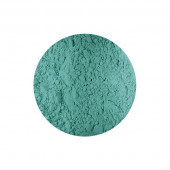
Verdigris Pigment
Starting at: £4.90
Verdigris is an artificial pigment that dates from antiquity. Originally, it was produced by exposing copper to vinegar; nowadays acetic acid is used. It is acidic, so can contribute to the deterioration of paper supports. For this reason, it is more suited to oil or tempera painting than it is to watercolour. In tempera painting, it should be bound in animal glue or isinglass glue rather than egg york. When used in oil painting it should be held in a resin oil or balsam such as Venice Turpentine, as it can turn brown when ground directly into linseed oil. It is a fast-drying, transparent pigment, with a visible crystalline structure.
Larger quantities are available by request.
Learn More -

Gum Arabic
Starting at: £4.25
Gum Arabic is a resoluble binding agent, commonly used in the preparation of watercolours, but also useful as an adhesive, a size, and in the production of soft pastels. It is a natural product, harvested from the Acacia tree between October and May. The highest grade of Gum Arabic comes from the Kordofan region of Sudan. It is exceptionally pale and pure and therefore particularly suited to watercolour painting, while Nigerian Gum Arabic (while stocks last) is better suited to stone lithography and other printmaking techniques. Please see the Formulas & Recipes section on our homepage for a recipe to make your own watercolour paints using Gum Arabic (currently under construction). Learn More -
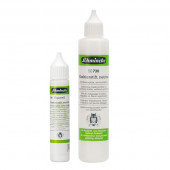
Schmincke Masking Fluid
Starting at: £7.35
Drawing gum for masking specific areas which should remain white on water-colour paper, smooth drawing carton, photographs or films. For direct application with the dispensing bottle. Contains: synthetic resin dispersion without ammonia. Learn More -
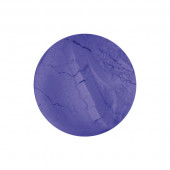
Lapis Lazuli Dark Pigment
Starting at: £12.20
PB29
Lapis Lazuli is a natural mineral pigment, mined in Afghanistan and South America. Different shades of Lapis Lazuli are determined by the intensity of colour of the lazurite vein; we offer the pigment in light and dark. For many centuries it was the most reliable blue pigment available, and became particularly significant during the Medieval and Renaissance periods, when its inclusion in a work of art denoted the wealth and status of the patron, or the holiness of a painting's subject. In commercial paint production it has largely been replaced by the more affordable Ultramarine Blue, although it still has a place on modern palettes due to its unique soft violet tone. It is a transparant pigment, with a low tinting strength.
Larger quantities are available by request.
Learn More -
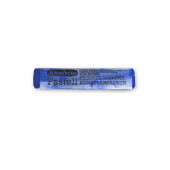
Schmincke Soft Pastels
Starting at: £3.35
Working with Schmincke’s finest extra-soft pastels leads you back to the origin of colour and is a real painting experience rather than simple drawing. They contain only the purest medium fine ground artists’ pigments, which are in the highest possible concentration. Contrastingly, the binding agent content, is kept to a minimum, which ensures a stable compound. In order to guarantee the highest quality it is necessary to manufacture Schmincke pastels using special recipes which avoid the use of machinery. Multiple Discounts: 10+ Pastels 10% SAVING, 30+ Pastels 17% SAVING Learn More -
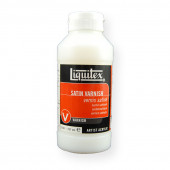
Liquitex Acrylic Varnish Satin
Starting at: £17.35
Use as varnish over finished paintings. Learn More -
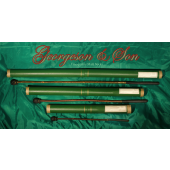
Georgeson & Son Mahl Sticks
Starting at: £22.00
Each Hazel shaft used in the creation of our Mahl poles is individually selected for straightness and overall appearance before being dried and prepared. We use hazel for strength, weight, and the appearance of its rich brown bark when linseed is applied.
Our pommels and handles are made from a stock of fine Italian leather, used for its durability and flex during assembly.
"Georgeson and Son established in 2012 with a singular aim. To resurrect and manufacture forgotten Artist's tools by hand, as carefully and as beautifully as possible.
A desire to make useful things that will last underpins all that we do. We use only the finest quality materials, sustainably sourced and refuse to compromise this quality for the sake of profitability."
Learn More -

Schmincke Casein Binding Medium
Starting at: £20.30
Mix with pigment to create water thinnable casein paint. Learn More -
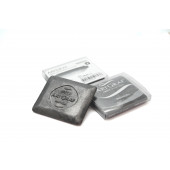
ArtGraf Graphite Tailor shape
£5.80Inspired by traditional tailor’s chalk block, prepared for drawing and painting. Water soluble and extremely soft. Learn More -

Lefranc Retouching Varnish Extra Fine
Starting at: £7.80
Acrylic resin/quick drying petroleum. Colourless and non-yellowing. Allows you to touch up ols paintings. Temporary and insulating varnish. Satin finish. Learn More -
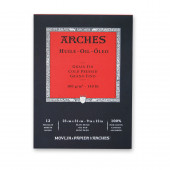
Arches for Oil Pads
Starting at: £21.95
Mould-made, 100% cotton, natural white (Neutral pH acid free). 12 sheets per pad, NOT surfaced. Specially designed for oil painting. Ready to use. Learn More -
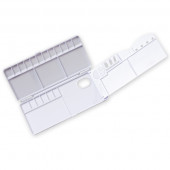
Roberson Watercolour Palette
Starting at: £19.70
Unfolds to give 3 large mixing surfaces with brush holding slots. Special coating prevents water beading. Folding size 21 x 9 cm (8" x 3.5") Learn More -
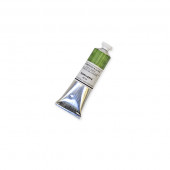
Roberson Artists' Oil Colour 40 ml
Starting at: £7.20
Unlike other commercially available oil paints, Roberson Artists' Oil Colours do not contain any fillers, extenders or stabilisers. Each paint consists solely of high-quality pigment that has been ground into cold pressed linseed oil, resulting in a highly pigmented paint. This strength of colour presents the possibility of greater economy of use and a less homogenised texture between each tube, instead allowing the unique qualities of each individual pigment to reveal themselves. By limiting our range to 59 shades, we dispense with colours that can be easily mixed, creating a focussed palette of intense, lightfast paints that offer limitless combinations.
Available in 40ml and 225ml tubes
Learn More -

Studio Safe Liquid Medium
Starting at: £15.50
Studio Safe Liquid Medium is a mix of Studio Safe Solvent and natural artists' oils. It is used to thin paint and increase gloss. This product is non-aromatic, non-flammable and has an orange scent. Learn More -
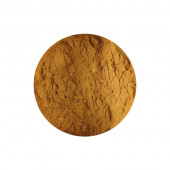
Realgar Pigment
Starting at: £12.75
Realgar, like Orpiment, is sulphide of arsenic, and these two substances are often found in close proximity to each other in nature. Realgar exists in small deposits throughout the world and has been used for its colour since ancient times, although its extreme toxicity means that it has been superseded by cadmiums in modern painting. It is an opaque pigment with poor tinting strength.
Larger quantities are available by request.
Learn More -
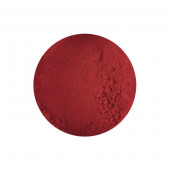
Alizarin Crimson Pigment
Starting at: £4.50
PR83
Alizarin Crimson is a synthetic organic pigment that became available in 1868. It requires a wetting agent to disperse, and in oil it also absorbs a lot of liquid and dries very slowly to form a hard, brittle paint film. It is chemically identical to madder-root pigments and should be protected against UV light where possible as it can fade when applied onto a white ground, although it is less fugitive than its natural counterpart. Alizarin Crimson is a very transparent pigment, with a high tinting strength and slightly blue undertone.
Toxicity: A/B
Larger quantities are available by request.
Learn More -
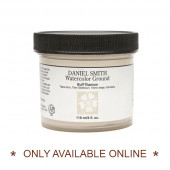
Daniel Smith Watercolour Ground Buff Titanium 4oz
£10.30Buff Titanium is great for value studies and provides a gorgeous, classic-looking surface for work in neutral grays, earthy reds, black and white. *Please note, this product is stored offsite. Please allow extra time for your order to be processed and dispatched. Learn More
Shopping Options
- Category
-
- Pigments, Gums & Resins (83)
- Oils & Acrylics (110)
- Canvas & Supports (3)
- Watercolour (23)
- Pastels (3)
- Drawing / Calligraphy (21)
- Gilding & Restoration (25)
- Printmaking (17)
- Brushes (35)
- Paper (7)
- Studio (20)
- Specialist Decorating (13)
- Manufacturer
-
- Arches Aquarelle (1)
- ArtGraf (9)
- Bockingford (1)
- Canson (1)
- Charbonnel (1)
- Cornelissen (98)
- Da Vinci (13)
- Daler-Rowney (6)
- Daniel Smith (6)
- Faber-Castell (1)
- Fabriano (1)
- Gamblin (10)
- Golden (4)
- Khadi (2)
- Lascaux (17)
- Lefranc et Bourgeois (26)
- Liquitex (5)
- London Pigment (4)
- Maimeri (1)
- Michael Harding (4)
- Omega (9)
- Pelikan (1)
- Pilot (1)
- Roberson (51)
- Rohrer and Klingner (2)
- Schmincke (21)
- Spectrum (3)
- Winsor&Newton (9)
- Zest-It (2)
- Talens (3)
- Sennelier (1)
You have no items in your shopping basket.

- Search Brands
-