Click to Hide Notification

This is a demo shop. Any orders placed through this shop will not be honoured or fulfilled.

Search results for 'painting'

Items 31 to 52 of 52 total

per page
Page:
  1. 1
  2. 2

Grid  List 

Set Ascending Direction
  1. Gum Arabic

    Gum Arabic

    Starting at: £4.25

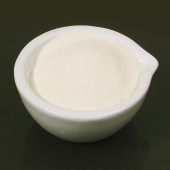
    Gum Arabic is a resoluble binding agent, commonly used in the preparation of watercolours, but also useful as an adhesive, a size, and in the production of soft pastels. It is a natural product, harvested from the Acacia tree between October and May. The highest grade of Gum Arabic comes from the Kordofan region of Sudan. It is exceptionally pale and pure and therefore particularly suited to watercolour painting, while Nigerian Gum Arabic (while stocks last) is better suited to stone lithography and other printmaking techniques. Please see the Formulas & Recipes section on our homepage for a recipe to make your own watercolour paints using Gum Arabic (currently under construction). Learn More
  2. Gelatine Leaf

    Gelatine Leaf

    Starting at: £5.30

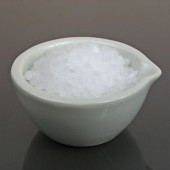
    A pure form of glue from animal tissue. Used for sizing paper. Used in gliding and for weak sizes in isolating layers in tempera painting. Learn More
  3. Madder Root Pieces

    Madder Root Pieces

    Starting at: £27.80

    NR9

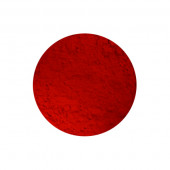
    The madder plant was once widely cultivated for the red dye extracted from its roots. Its earliest known use is in ancient Egypt, and there is evidence of its widespread adoption in Europe from the medieval period. Madder Lake, the pigment that is derived from the root, has now largely been replaced by synthetic alizarin pigments, but it is still used as an ingredient in some commercial paints. It provides a very transparent pigment, with a weak tinting strength, which can be used in all lime-free media, although it is very slow-drying in oil. It is fugitive to sunlight, so paintings containing Madder should be stored appropriately, but it remains one of the most lightfast plant-based pigments. 

    Larger quantities are available by request.

    Learn More
  4. Button Shellac

    Button Shellac

    Starting at: £8.40

    Shellac is a natural resin that is deposited by the female lac insect on the branches of trees in India and Thailand. It is soluble with alcohol, but not with mineral spirits or turpentine. It forms a tough yet flexible film, with many applications. It is suitable as a top coat for gilding when applied thinly, a sealant for porous surfaces, an isolating layer for tempera paintings, a base for pigmented inks, a protective layer for collograph plates, and a warm varnish for wooden floors and furniture. As it is prone to darkening with age, it is not recommended as a varnish for oils, and its solubility can reduce over time. There are various grades of shellac. When mixed with alcohol, it may initially form a cloudy mixture, due to traces of wax in the shellac, but this should become clear once it has dried. The highest grades of shellac are Clear Dewaxed Shellac, which has been de-coloured using the carbon filtering method, Lemon Shellac, and Orange Shellac, which are pale in colour. Button Shellac is less refined and therefore produces a reddish varnish. It was, in fact, widely used as a red dye before synthetic dyes became available. Learn More
  5. Azurite Pigment

    Azurite Pigment

    Starting at: £11.80

    PB30

    Azurite is a naturally occuring copper carbonate, with a long history within European and Asian painting. It was mined in northern Europe, so was a less expensive source of blue than Lapis Lazuli, which was imported from Afghanistan. Medieval artists would often use Azurite in underpaintings, before applying layers of Lapis Lazuli during later stages of production.

    It is best used in aqueous media, as the acidity of oils can cause it to darken in colour, although this can be somewhat counteracted by protecting the pigment particles with a protein such as egg yolk. It has a very low tinting strength, and the particle size tends to be quite large, to give a darker colour. It is sensitive to damp conditions, and is slightly transparent.

    Learn More
  6. Lapis Lazuli Light Pigment

    Lapis Lazuli Light Pigment

    Starting at: £10.20

    PB29

    Lapis Lazuli is a natural mineral pigment, mined in Afghanistan and South America. Different shades of Lapis Lazuli are determined by the intensity of colour of the lazurite vein; we offer the pigment in light and dark. For many centuries it was the most reliable blue pigment available, and became particularly significant during the Medieval and Renaissance periods, when its inclusion in a work of art denoted the wealth and status of the patron, or the holiness of a painting's subject. In commercial paint production it has largely been replaced by the more affordable Ultramarine Blue, although it still has a place on modern palettes due to its unique soft violet tone. It is a transparant pigment, with a low tinting strength.

    Larger quantities are available by request.

    Learn More
  7. Orange Shellac

    Orange Shellac

    Starting at: £8.00

    Shellac is a natural resin that is deposited by the female lac insect on the branches of trees in India and Thailand. It is soluble with alcohol, but not with mineral spirits or turpentine. It forms a tough yet flexible film, with many applications. It is suitable as a top coat for gilding when applied thinly, a sealant for porous surfaces, an isolating layer for tempera paintings, a base for pigmented inks, a protective layer for collograph plates, and a warm varnish for wooden floors and furniture. As it is prone to darkening with age, it is not recommended as a varnish for oils, and its solubility can reduce over time. There are various grades of shellac. When mixed with alcohol, it may initially form a cloudy mixture, due to traces of wax in the shellac, but this should become clear once it has dried. The highest grades of shellac are Clear Dewaxed Shellac, which has been de-coloured using the carbon filtering method, Lemon Shellac, and Orange Shellac, which are pale in colour. Button Shellac is less refined and therefore produces a reddish varnish. It was, in fact, widely used as a red dye before synthetic dyes became available. Learn More
  8. Leather Regent Long Handle Brush Case

    Leather Regent Long Handle Brush Case

    Starting at: £95.00

    Call to Order

    This sturdy brush case measures 39cm, which is long enough to hold a selection of oil-painting brushes. All of our leather goods are handmade in Spain, and dyed with natural dyes that will fade and age beautifully over time. Please ring our office if you would like to make a custom order of this product.

    Learn More
  9. Watercolour paint making set

    Watercolour paint making set

    Starting at: £0.40

    A collection of equipment and ingredients useful for making watercolour by hand. This selection of quality materials has been put together for the begginer and intermediate paint maker alike. This set includes:

    Equipment to mix the paint and fill watercolour pans:

    Glass slab with hardwood stand

    Cornelissen small muller

    Small (half pan) and large (full pan) watercolour pan

    Ingredients to make the watercolour binder :

    Roberson Gum Arabic

    Roberson Ox Gall

    Equipment for painting:

    Cornelissen 80a sables brushes in sizes 3 & 6

    cermaic palette in flower shape

    Learn More
  10. Cornelissen Canada Balsam

    Cornelissen Canada Balsam

    Starting at: £20.10

    Canada Balsam is an oleoresin, meaning that it is a mixture of essential oils and resin. It comes from the fir tree Abies balsamea, native to Canada and the eastern states of North America. It is notable for its pale colour, clarity and gloss, making it a useful ingredient in recipes for oil-painting mediums.

    Learn More
  11. Ivory Black Pigment

    Ivory Black Pigment

    Starting at: £4.00

    Ivory Black is a natural pigment of impure carbon, derived from charred animal bones. It is semi-transparent, very lightfast, and offers good tinting strength. It is a particularly slow-drying pigment, which forms a soft, rather brittle paint film in oil.

    Compared to other blacks, such as Vine Black, Ivory Black possesses warmer, brownish undertones. It should not be used at full-strength in an underpainting, as subsequent layers are likely to crack. Otherwise, it is a very useful all-purpose black for many types of paint, excluding mortar, fresco or cement.

    Toxicity: B

    Learn More
  12. Rose Madder Genuine Pigment

    Rose Madder Genuine Pigment

    Starting at: £15.80

    NR9 Rose Madder is an alizarin lake pigment made by precipitating dye extracted from madder root onto an inert base. It has largely been replaced by synthetic alizarin pigments, but it is still used as an ingredient in some commercially-available paints. It provides a very transparent pigment, with a weak tinting strength, which can be used in all lime-free media, although it is very slow-drying in oil. It is fugitive to sunlight, so paintings containing Madder should be stored appropriately, but it remains one of the most lightfast plant-based pigments. It requires a wetting agent to aid dispersion. Larger quantities are available by request Learn More
  13. Raw Umber Greenish Pigment

    Raw Umber Greenish Pigment

    Starting at: £4.80

    PBr7

    Raw Umber Greenish is a natural earth pigment composed of iron oxide, manganese, and aluminium silicate. It has its roots in the Umbria region of Italy, and was historically a popular colour for underpaintings, as it dries very quickly. It is semi-opaque, very lightfast, and stable in all media but may be difficult to disperse in acrylic. It requires a large amount of liquid when mixed with oil.

    Toxicity: B

    Learn More
  14. Raw Umber Pigment

    Raw Umber Pigment

    Starting at: £4.00

    PBr7

    Raw Umber is a natural earth pigment composed of iron oxide, manganese, and aluminium silicate. It has its roots in the Umbria region of Italy, and was historically a popular colour for underpaintings, as it dries very quickly. It is semi-opaque, very lightfast, and stable in all media but may be difficult to disperse in acrylic. It requires a large amount of liquid when mixed with oil.

    Toxicity: B

    Learn More
  15. Clear Dewaxed Shellac

    Clear Dewaxed Shellac

    Starting at: £9.20

    Shellac is a natural resin that is deposited by the female lac insect on the branches of trees in India and Thailand. It is soluble with alcohol, but not with mineral spirits or turpentine. It forms a tough yet flexible film, with many applications. It is suitable as a top coat for gilding when applied thinly, a sealant for porous surfaces, an isolating layer for tempera paintings, a base for pigmented inks, a protective layer for collograph plates, and a warm varnish for wooden floors and furniture. As it is prone to darkening with age, it is not recommended as a varnish for oils, and its solubility can reduce over time. There are various grades of shellac. When mixed with alcohol, it may initially form a cloudy mixture, due to traces of wax in the shellac, but this should become clear once it has dried. The highest grades of shellac are Clear Dewaxed Shellac, which has been de-coloured using the carbon filtering method, Lemon Shellac, and Orange Shellac, which are pale in colour. Button Shellac is less refined and therefore produces a reddish varnish. It was, in fact, widely used as a red dye before synthetic dyes became available. Learn More
  16. Parchment Clippings

    Parchment Clippings

    Starting at: £9.90

    Parchment Clippings, usually waste goatskin vellum, were utilised throughout the Middle Ages to make an animal hide glue. This continued to be commonly used as a sizing for canvas before rabbit skin glue came to prominence in the nineteenth century. Parchment glue is comparable to isinglass glue, as it also produces a very pale, almost transparent glue with a degree of flexibility. Our parchment clippings are a mixture of vellum scraps, and may include goatskin, calfskin and sheepskin. Cennino Cennini gives a recipe for gesso using parchment in his treatise about painting; please see below for our recipe. Learn More
  17. Lemon Shellac

    Lemon Shellac

    Starting at: £8.20

    Shellac is a natural resin that is deposited by the female lac insect on the branches of trees in India and Thailand. It is soluble with alcohol, but not with mineral spirits or turpentine. It forms a tough yet flexible film, with many applications. It is suitable as a top coat for gilding when applied thinly, a sealant for porous surfaces, an isolating layer for tempera paintings, a base for pigmented inks, a protective layer for collograph plates, and a warm varnish for wooden floors and furniture. As it is prone to darkening with age, it is not recommended as a varnish for oils, and its solubility can reduce over time. There are various grades of shellac. When mixed with alcohol, it may initially form a cloudy mixture, due to traces of wax in the shellac, but this should become clear once it has dried. The highest grades of shellac are Clear Dewaxed Shellac, which has been de-coloured using the carbon filtering method, Lemon Shellac, and Orange Shellac, which are pale in colour. Button Shellac is less refined and therefore produces a reddish varnish. It was, in fact, widely used as a red dye before synthetic dyes became available. Learn More
  18. Precipitate Chalk

    Precipitate Chalk

    Starting at: £6.30

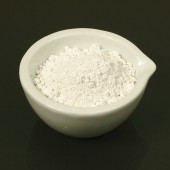
    Precipitate Chalk is fine and white. For use in aqueous mediums as a ground for oil and tempera paintings. Learn More
  19. Lapis Lazuli Dark Pigment

    Lapis Lazuli Dark Pigment

    Starting at: £12.20

    PB29

    Lapis Lazuli is a natural mineral pigment, mined in Afghanistan and South America. Different shades of Lapis Lazuli are determined by the intensity of colour of the lazurite vein; we offer the pigment in light and dark. For many centuries it was the most reliable blue pigment available, and became particularly significant during the Medieval and Renaissance periods, when its inclusion in a work of art denoted the wealth and status of the patron, or the holiness of a painting's subject. In commercial paint production it has largely been replaced by the more affordable Ultramarine Blue, although it still has a place on modern palettes due to its unique soft violet tone. It is a transparant pigment, with a low tinting strength.

    Larger quantities are available by request.

    Learn More
  20. Realgar Pigment

    Realgar Pigment

    Starting at: £12.75

    Realgar, like Orpiment, is sulphide of arsenic, and these two substances are often found in close proximity to each other in nature. Realgar exists in small deposits throughout the world and has been used for its colour since ancient times, although its extreme toxicity means that it has been superseded by cadmiums in modern painting. It is an opaque pigment with poor tinting strength.

    Larger quantities are available by request.

    Learn More
  21. Flake White Pigment

    Flake White Pigment

    Starting at: £18.76

    Call to Order

    PW1

    Flake White Pigment, sometimes referred to as Lead White or Cremnitz White, is an artificial mineral pigment, lead carbonate. It is no longer available as a paint, due to its extreme toxicity. For this reason, great care must be taken when handling the dry pigment.

    It is not usuable in water-based media, but works well in oils. It creates a flexible paint film that dries quickly. Although opaque, small quantities do not dominate mixtures, and can help slow-drying pigments to dry. For this reason, it has been a popular mixing white historically; in fact, until the mid-19th century, Flake White was the only white pigment available to artists. Although varnishing is generally considered optional for oil paintings, it is recommended for works containing Flake White, as contact with sulphur in the atmosphere can cause it to blacken. It creates a warm white, which can yellow over time when mixed with linseed oil.

    Toxicity: D

    Permitted uses: Restoration of art works and protected buildings when alternatives unsuitable.

    Learn More
  22. Wooden Artist's Bridge

    Wooden Artist's Bridge

    £27.50

    Call to Order

    These sturdy wooden bridges provide a support for your hand, allowing you to add details to drawings, paintings, gilded surfaces and calligraphy without smudging your work. They are made by hand in the UK, meaning that our supply of different woods can vary, so please give us a call if you'd like to know what we have available.

    Woods may include: American Walnut; American Oak; American Cherry; Ash; Burr Elm; Brown Oak; Elm; Oak; Ripple Ash; Spalted Beech; Utile. 

    Learn More

Items 31 to 52 of 52 total

per page
Page:
  1. 1
  2. 2

Grid  List 

Set Ascending Direction