
Search results for 'rco and x x'


-
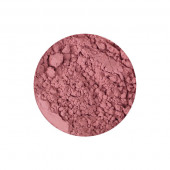
Potters Pink Pigment
Starting at: £7.30
PR233
Potter's Pink is an artificial mineral pigment produced by roasting tin oxide with various other oxides. It was first discovered in the pottery region of Staffordshire in the late-1700s, and in the following century Winsor & Newton introduced Potter's Pink into their watercolour range under the name "pink colour". It went on to become a popular addition to watercolour palettes, offering an opaque, lightfast colour with a weak tinting strength and a medium level of oil absorption.
Toxicity A
Learn More -
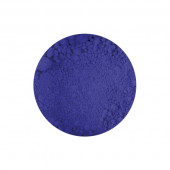
Cobalt Blue Pigment
Starting at: £6.30
PB28
Cobalt Blue is an artificial mineral pigment, produced by the calcination of cobalt oxide and aluminium oxide. It has been widely used since the early 1800s, following its discovery by the French chemist Thenard at the beginning of the century. The name Cobalt has its roots in the German word Kobold, meaning imp or evil spirit. German miners named it to in the late-Middle Ages, as the presence of cobalt ore in the mines made the extraction of silver more difficult. They were possibly also aware of the toxic properties of the mineral that was frustrating their efforts.
Cobalt remains a very popular colour today, and is present in most ranges of paints, being a semi-transparent pigment that is stable in all media. As a watercolour, all cobalt pigments tend to granulate. As an oil paint, it requires less oil content than most other pigments, and dries quite quickly. Like Cerulean Blue, some artists may choose to bind it with poppy oil, to avoid any possible colour changes brought about by the yellowish cast of linseed oil and the pigment's weak tinting strength.
Limeproof
Toxicity: C
Learn More -
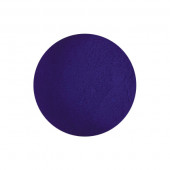
Prussian Blue Pigment
Starting at: £5.20
PB27
Prussian Blue is a synthetic organic pigment that was discovered by the paint maker Diesbach, apparently by accident, in Germany in the early eighteenth century. For many years, it was used not only as a colour in its own right, but also as a component of the original Hooker's Green. The other ingredient, gamboge, is highly fugitive, which is why many watercolours painted with Hooker's green have taken on a bluish tone with with age.
It is a very transparent and heavily staining colour. It dries quite quickly in oil, and can therefore wrinkly if applied too quickly. It is suitable for use in oils, watercolour, and egg tempera. However, it shouldn't be used in conjunction with alkali substances, such as Lead White or Calcium Carbonate as it can turn brown, so it isn't suitable for fresco. For the same reason, it isn't used with acrylic resin binders due to their alkaline nature, so most paint manufacturers will replace Prussian Blue with a mixture of Phthalo Blue and black in their acrylic ranges. It requires a wetting agent to fully disperse into a binder.
Toxicity: B
Learn More -
Manganese Blue Pigment
Starting at: £49.50
PB33
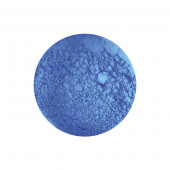
Manganese Blue is an articficial mineral pigment, that is prepared by heating sodium sulphate, potassium permanganate and barium nitrate to 750-800 degrees Celcius. It has been produed as a pigment and as a colourant for cement since the 1930s, and is notable for its quick drying time in oils, its high transparency, and its bright, slightly greenish colour. Its weak tinting strength can cause it to be overwhelmed in mixtures, and it has a tendency to granulate as a watercolour. It is no longer used in commercial paints, but many manufacturers offer a Manganese Blue Hue, which is typically based upon Phthalocyanine Blue.
Production of this pigment has now ceased, due to environmental and health concerns, therefore it is only available while stocks last.
Toxicity: C
Learn More -
Glass Slab 23 x 33cm (10mm thick)
£29.50Call to Order
Glass Slab 23 x 33cm (10mm thick)
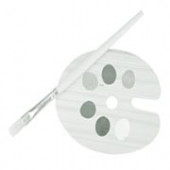
The friction created between the sand-blasted surfaces of the glass slab and muller facilitates the thorough mixing of pigment and medium, creating a consistent and strong paint body. This slab can be used to manufacture many types of paint including watercolours, egg tempera and oils.
Mulling is of particular importance when making oil paint; simply mixing pigment and oil together using a palette knife will result in an unstable substance with poor plasticity, which contains a large amount of excess oil and unevenly distributed pigment particles. Thorough mulling in a figure-of-eight motion will enable the pigment to be fully combined into the binder, strengthening the resultant paint film.
PLEASE NOTE: This item is in stock but it is a call to order item due to the fact that we cannot guarantee its safe delivery, however well we package it. Please ring us to discuss your delivery options.
Learn More -
Genuine Lapis Lazuli Watercolour 1/4 pan
£19.01Call to Order
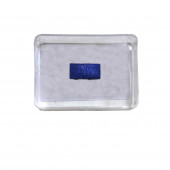
Shell gold, so named because it was historically made and stored in a shallow shell such as a mussel shell, consists of finely powdered genuine gold mixed with a variety of gums. It is mixed with a bit of water and applied in the same way as watercolour. After drying for an hour or so, it can be burnished to a soft, beautiful lustre using an agate stone burnishing tool.
Our Shell gold is used by calligraphers, framers, restorers, iconographers and watercolour artists.
In recent years our colour range of genuine gold has been extended and genuine Lapis Lazuli and genuine Malachite have also been added. Learn More -
Shell Gold Watercolour 1/4 pan Demi Jaune 22 Carat
£39.00Call to Order
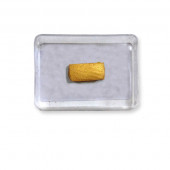
Shell gold, so named because it was historically made and stored in a shallow shell such as a mussel shell, consists of finely powdered genuine gold mixed with a variety of gums. It is mixed with a bit of water and applied in the same way as watercolour. After drying for an hour or so, it can be burnished to a soft, beautiful lustre using an agate stone burnishing tool.
Our Shell gold is used by calligraphers, framers, restorers, iconographers and watercolour artists.
In recent years our colour range of genuine gold has been extended and genuine Lapis Lazuli and genuine Malachite have also been added. Learn More -
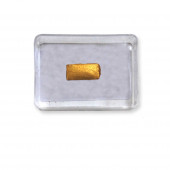
Shell Gold Watercolour 1/4 pan Yellow 23.5 Carat
£40.01Call to Order
Shell gold, so named because it was historically made and stored in a shallow shell such as a mussel shell, consists of finely powdered genuine gold mixed with a variety of gums. It is mixed with a bit of water and applied in the same way as watercolour. After drying for an hour or so, it can be burnished to a soft, beautiful lustre using an agate stone burnishing tool.
Our Shell gold is used by calligraphers, framers, restorers, iconographers and watercolour artists.
In recent years our colour range of genuine gold has been extended and genuine Lapis Lazuli and genuine Malachite have also been added. Learn More -
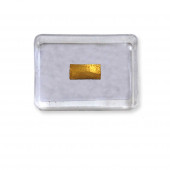
Shell Gold Watercolour 1/4 pan Lemon 22.9 Carat
£39.00Call to Order
Shell gold, so named because it was historically made and stored in a shallow shell such as a mussel shell, consists of finely powdered genuine gold mixed with a variety of gums. It is mixed with a bit of water and applied in the same way as watercolour. After drying for an hour or so, it can be burnished to a soft, beautiful lustre using an agate stone burnishing tool.
Our Shell gold is used by calligraphers, framers, restorers, iconographers and watercolour artists.
In recent years our colour range of genuine gold has been extended and genuine Lapis Lazuli and genuine Malachite have also been added. Learn More
Currently Shopping by:
- Manufacturer: Cornelissen Remove This Item
Shopping Options
- Category
-
- Pigments, Gums & Resins (12)
- Watercolour (6)
- Gilding & Restoration (13)
- Brushes (7)
- Paper (3)
- Studio (3)
You have no items in your shopping basket.

- Search Brands
-