

Search results for 'red'


-
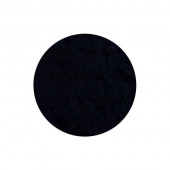
Vine Black Pigment
Starting at: £4.70
PBk8
Vine Black is derived from charred vines, forming an organic pigment of pure carbon. It has been in use since antiquity, providing a cold black with bluish undertones, which creates a blue-grey when mixed with white. It is a very lightfast, slow-drying colour with a medium tinting strength. It requires a wetting agent to disperse properly, and is not suitable for use in fresco, mortar or cement, as the water-soluble impurities within the pigment can create efflorescence.
Toxicity: A
Learn More -
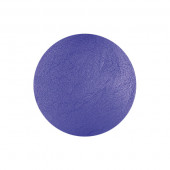
Egyptian Blue Pigment
Starting at: £5.90
Egyptian Blue is stable in all media, highly transparent, with a weak tinting strength. A synthetically produced calcium copper silicate, it is considered to be the earliest artificial pigment, dating from antiquity and widely used in ancient Egypt. Larger sizes available on request Learn More -
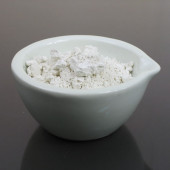
Whiting
Starting at: £3.80
Whiting is powdered Calcium Carbonate, which can be mixed with rabbit skin glue to create a chalk-based ground for oil, tempera, distemper or encaustic painting. Traditionally, whiting was an important ingredient when preparing painting surfaces in the north of Europe, as opposed to gypsum (Calcium Sulphate), which was widely used south of the Alps. Learn More -
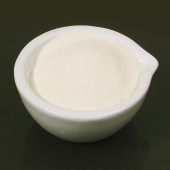
Casein Lactic
Starting at: £18.30
Casein is a protein derived from dried milk, which has been used in painting since ancient times. It can be combined with Ammonium Carbonate to form an emulsion, which acts as a durable, non-resoluble binder for pigments, producing a matte, fast-drying paint, similar in appearance to egg tempera. We use casein as a binder for our L. Cornelissen & Son Pigment Colour Charts, as it is a medium that clearly showcases the characteristics and behaviour of each pigment in its pure form. Casein paints can be applied in thin layers to watercolour paper, but would require a more rigid support, such as a gesso panel, to be applied thickly, as the comparative inflexibility of the paint layer means that it can be prone to cracking. Subsequent layers of paint should be more diluted to aid adhesion, and impasto effects are not recommended. It is possible to varnish casein paintings using an acrylic or damar varnish to obtain a glossy surface if desired, although this is not a necessary step. Casein can also be used as an ingredient in gesso, and is a suitable binder for fresco secco techniques.
Some pigments may require a wetting agent in order to fully disperse within the binder, in which case alcohol may be used.
Learn More -
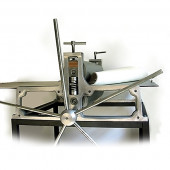
Cornelissen T73140 Professional Press
£3,550.00Cornelissen Press T73140, Bed size: 73 x 140 cm, Upper Roller Diameter: 157 mm, Lower Roller Diameter: 157mm, Etching press base: 78.5 x 91 cm. Weight: 148 kg. We offer press demonstrations for this model. Please call Cornelissen for more details. This press is made to order. Delivery to your address usually takes up to 4 weeks to UK & EU countries and 6 weeks to USA after the order is placed. Please be aware these goods are heavy and it is the customer’s responsibility to check measurements for delivery before orders are placed and to be able to receive the goods over two days.
Learn More -
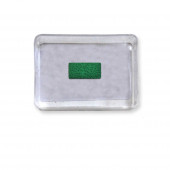
Genuine Malachite Watercolour 1/4 pan
£19.01Shell gold, so named because it was historically made and stored in a shallow shell such as a mussel shell, consists of finely powdered genuine gold mixed with a variety of gums. It is mixed with a bit of water and applied in the same way as watercolour. After drying for an hour or so, it can be burnished to a soft, beautiful lustre using an agate stone burnishing tool.
Our Shell gold is used by calligraphers, framers, restorers, iconographers and watercolour artists.
In recent years our colour range of genuine gold has been extended and genuine Lapis Lazuli and genuine Malachite have also been added. Learn More -

Cornelissen Walnut Oil
Starting at: £6.50
The introduction of Walnut Oil as a pigment binder is contemporaneous with the emergence of Linseed Oil. Their drying properties have been appreciated since the Middle Ages, and throughout history there is evidence of both oils being used alongside each other within the same painting. In fact, until the sixteenth century, it is believed that Walnut Oil was the preferred binding medium among Italian artists. It is made from mature walnut kernals, offering a pale colour and brilliant gloss. For this reason, it is sometimes chosen as a binder for light colours, as it provides a stronger paint film than Poppy Oil, and faster drying times. However, a paint film made from Walnut Oil will tend to be brittle, so it is more suited to a rigid support rather than canvas.
Learn More -

Colophony
Starting at: £7.30
Colophony is a by-product of the distillation of turpentine. It is soluble in most solvents, but considered an adulterant in varnishes and paints, as it forms a weak surface that is prone to darkening and cracking. It is, however, a key ingredient in wax-based etching grounds, imparting hardness, and can be used in powdered form (rosin) to make aquatints. Learn More -
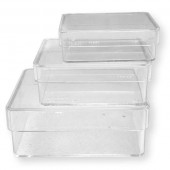
Transparent Containers
Starting at: £1.20
Rigid high quality boxes manufactured in clear Polystyrene. Medium and large sizes are ideal for storing loose nibs. Learn More -
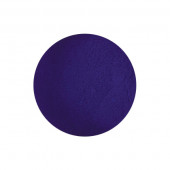
Prussian Blue Pigment
Starting at: £5.20
PB27
Prussian Blue is a synthetic organic pigment that was discovered by the paint maker Diesbach, apparently by accident, in Germany in the early eighteenth century. For many years, it was used not only as a colour in its own right, but also as a component of the original Hooker's Green. The other ingredient, gamboge, is highly fugitive, which is why many watercolours painted with Hooker's green have taken on a bluish tone with with age.
It is a very transparent and heavily staining colour. It dries quite quickly in oil, and can therefore wrinkly if applied too quickly. It is suitable for use in oils, watercolour, and egg tempera. However, it shouldn't be used in conjunction with alkali substances, such as Lead White or Calcium Carbonate as it can turn brown, so it isn't suitable for fresco. For the same reason, it isn't used with acrylic resin binders due to their alkaline nature, so most paint manufacturers will replace Prussian Blue with a mixture of Phthalo Blue and black in their acrylic ranges. It requires a wetting agent to fully disperse into a binder.
Toxicity: B
Learn More -
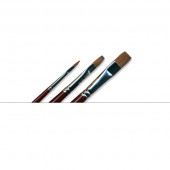
Cornelissen Sable Bright
Starting at: £5.80
Made from the same quality red sable as the rounds and used for short, thicker strokes of paint. Learn More -
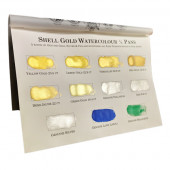
Hand-Painted Shell Gold Sample Chart
£25.00Shell gold, so named because it was historically made and stored in a shallow shell such as a mussel shell, consists of finely powdered genuine gold mixed with a variety of gums. It is mixed with a bit of water and applied in the same way as watercolour. After drying for an hour or so, it can be burnished to a soft, beautiful lustre using an agate stone burnishing tool.
Our Shell gold is used by calligraphers, framers, restorers, iconographers and watercolour artists.
In recent years our colour range of genuine gold has been extended and genuine Lapis Lazuli and genuine Malachite have also been added. Learn More -
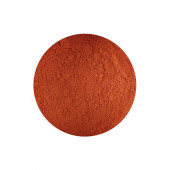
Vermilion Genuine Pigment
Starting at: £15.90
PR106 Vermilion is an artificial pigment based on mercuric sulphide, which occurs naturally as Cinnabar. The synthetic form contains fewer impurities than Cinnabar, and was in use in China as early as the fourth century. It was present in Europe from the ninth century, and was the most widely used red pigment until the introduction of Cadmium Red in the early twentieth century. It has good tinting strength and opacity but, like many red pigments, it dries very slowly in oil media. Larger sizes available on request. Learn More -
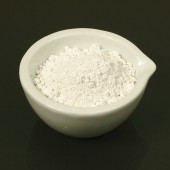
Gypsum
Starting at: £5.70
Gypsum is powdered Calcium Sulphate, a traditional ingredient in gesso grounds used in southern Europe. One of the advantages of preparing your painting surface with gypsum is that it allows for a particularly even absorption of the paint film. It can also be added to acrylic primers to increase absorbency or add tooth to a surface. Learn More -
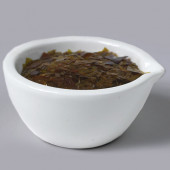
Orange Shellac
Starting at: £8.00
Shellac is a natural resin that is deposited by the female lac insect on the branches of trees in India and Thailand. It is soluble with alcohol, but not with mineral spirits or turpentine. It forms a tough yet flexible film, with many applications. It is suitable as a top coat for gilding when applied thinly, a sealant for porous surfaces, an isolating layer for tempera paintings, a base for pigmented inks, a protective layer for collograph plates, and a warm varnish for wooden floors and furniture. As it is prone to darkening with age, it is not recommended as a varnish for oils, and its solubility can reduce over time. There are various grades of shellac. When mixed with alcohol, it may initially form a cloudy mixture, due to traces of wax in the shellac, but this should become clear once it has dried. The highest grades of shellac are Clear Dewaxed Shellac, which has been de-coloured using the carbon filtering method, Lemon Shellac, and Orange Shellac, which are pale in colour. Button Shellac is less refined and therefore produces a reddish varnish. It was, in fact, widely used as a red dye before synthetic dyes became available. Learn More -

Cornelissen T52100B Professional Press
£2,100.00Cornelissen Etching Press T52100B 52 x 100 cm, Bed size: 52 x 100 cm, Upper Roller Diameter: 110 mm, Lower Roller Diameter: 110mm, Weight: 83 kg. Etching press base: 56 x 44 cm. Please call Cornelissen for more details. Delivery to your address usually takes up to 4 weeks to UK & EU countries and 6 weeks to USA after the order is placed. Please be aware these goods are heavy and it is the customer’s responsibility to check measurements for delivery before orders are placed and to be able to receive the goods over two days.
Learn More -
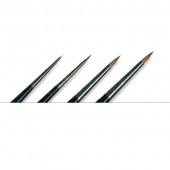
Cornelissen Miniature
Starting at: £9.00
Extra short haired brush for the discerning miniaturist. Learn More -
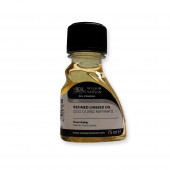
Winsor & Newton Refined Linseed Oil
Starting at: £6.05
From the Winsor & Newton website: Our most popular oil. A low viscosity alkali refined oil of pale colour that dries slowly. Reduces oil colour consistency. Increases gloss and transparency. Add to other oils to slow drying. Learn More -
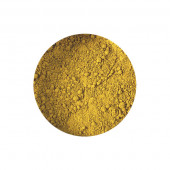
Raw Sienna Pigment
Starting at: £4.00
PBr7
Raw Sienna is a natural earth pigment that dates back to antiquity. Our Raw Sienna comes from areas of Tuscany where the earth has been coloured by iron-rich minerals. It provides a good tinting strength, excellent lightfastness, and a fast to medium drying rate in oil. It is stable in all media but, like umber pigments, can be difficult to disperse in an acrylic binder. It is similar in composition to Yellow Ochre, but whereas Yellow Ochre contains a higher proportion of clay, Raw Sienna contains a higher proportion of silica. As a natural material, the exact colour and qualities of the resultant pigments can vary, but generally this difference creates a paler, more opaque Yellow Ochre, and a darker, more transparent Raw Sienna.
Toxicity: B
Learn More -

Gum Mastic
Starting at: £20.30
Gum Mastic is a tree resin, which dissolves into a clear varnish with alcohol or turpentine, but not with mineral spirits. Mastic varnishes are more prone to blooming and darkening with age than damar-based varnishes, and painting mediums that contain gum mastic can deteriorate in unpredictable ways. For this reason, it is primarily used in restoration, rather than in the production of artwork. Learn More -

Reagent Jar
Starting at: £3.85
Our clear reagent bottles are manufactured in the EU and are made of high quality soda lime glass. They have a solid base and good wall thickness.
Learn More -

Laponite ®
Starting at: £34.40
For cleaning marble. Mix with water to thick paste. LAPONITE® is a registered trademark of BYK Additives Ltd Learn More -
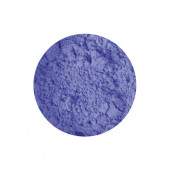
Cerulean Blue Pigment
Starting at: £9.50
PB35
Cerulean Blue is an artificial mineral pigment that is prepared by heating a mixture of Cobalt Chloride and Potassium Stannate. It was first synthesised in the early nineteenth century, becoming more widely used from 1870, when Rowney introduced Coeruleum Blue into their range. It produces a very bright, clear, and unusually opaque blue, hence its name, which is derived from the Latin for "sky-blue", or perhaps "heaven-blue". It has a very low tinting strength meaning that, although it is stable in all media, some artists may choose to bind it in poppy rather than linseed oil, so that the colour isn't affected by the colour of the binder. It creates a fairly flexible paint film, and is a fast-to-medium drying pigment.
Limeproof
Toxicity: B
Learn More -
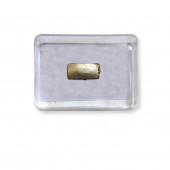
Shell Gold Watercolour 1/4 pan Gris
£32.00Shell gold, so named because it was historically made and stored in a shallow shell such as a mussel shell, consists of finely powdered genuine gold mixed with a variety of gums. It is mixed with a bit of water and applied in the same way as watercolour. After drying for an hour or so, it can be burnished to a soft, beautiful lustre using an agate stone burnishing tool.
Our Shell gold is used by calligraphers, framers, restorers, iconographers and watercolour artists.
In recent years our colour range of genuine gold has been extended and genuine Lapis Lazuli and genuine Malachite have also been added. Learn More -
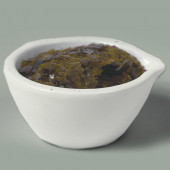
Clear Dewaxed Shellac
Starting at: £9.20
Shellac is a natural resin that is deposited by the female lac insect on the branches of trees in India and Thailand. It is soluble with alcohol, but not with mineral spirits or turpentine. It forms a tough yet flexible film, with many applications. It is suitable as a top coat for gilding when applied thinly, a sealant for porous surfaces, an isolating layer for tempera paintings, a base for pigmented inks, a protective layer for collograph plates, and a warm varnish for wooden floors and furniture. As it is prone to darkening with age, it is not recommended as a varnish for oils, and its solubility can reduce over time. There are various grades of shellac. When mixed with alcohol, it may initially form a cloudy mixture, due to traces of wax in the shellac, but this should become clear once it has dried. The highest grades of shellac are Clear Dewaxed Shellac, which has been de-coloured using the carbon filtering method, Lemon Shellac, and Orange Shellac, which are pale in colour. Button Shellac is less refined and therefore produces a reddish varnish. It was, in fact, widely used as a red dye before synthetic dyes became available. Learn More -
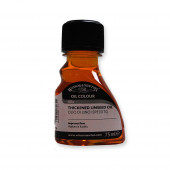
Winsor & Newton Thickened Linseed Oil
Starting at: £8.05
From the Winsor & Newton website: A pale refined oil of syrupy consistency which behaves like Linseed Stand Oil but dries quicker and darker. Improves flow and gloss. Increases the durability of paint film. Reduces brushstroke retention. Learn More -
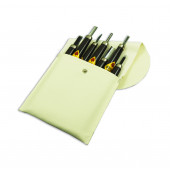
Japanese Classic Tool Set in Denim Case
£28.00Tool set with denim case. Set contains 7pcs, including; 7mm Aisuki (flat), 8mm Hangi-toh (knife), 4mm Aisuki (flat), 6mm Komasuki (U), 3mm Komasuki (U), 4mm Sankatu-toh (V), 10mm Komasuki (U). These are pencil style tools with an imitation wooden handle that is longer when compared to the traditional tools, perfect as an introduction to Mokuhanga printing. Please note: the case differs from the case shown in the photo. Learn More -
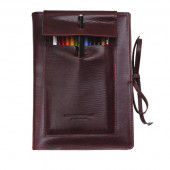
Leather Hoxton Pencil Pad
Starting at: £94.00
Call to Order
This sketchbook case includes a selection of coloured pencils and an A5 hardback sketchbook, which is easily refillable. This item is generally made to order, but we do have a small selection available in green, red and yellow, so please ring our office if you would like to order one. All of our leather goods are handmade in Spain, and dyed with natural dyes that will fade and age beautifully over time. Learn More -
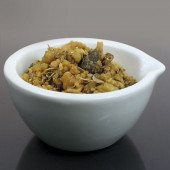
Gum Ammoniac
Starting at: £18.60
Gum Ammoniac is a natural tree sap. It is commonly used as an adhesive for gilding in calligraphy, as it allows for fine detailing and precise strokes.
To make your own gilding size, cover a few lumps of gum in water and leave to soak overnight. Large pieces can be broken easily, so as to be fully covered by the water. In the morning, stir the resultant milky liquid, and strain. As the size hardens quickly, it is important to wash any nibs or brushes thoroughly and frequently to preserve their condition.
Learn More -
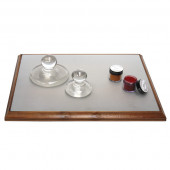
Mixing Slab
Starting at: £19.95
A glass slab with wooden cradle for the grinding of pigments.
The friction created between the sand-blasted surfaces of the glass slab and muller facilitates the thorough mixing of pigment and medium, creating a consistent and strong paint body. This slab can be used to manufacture many types of paint including watercolours, egg tempera and oils.
Mulling is of particular importance when making oil paint; simply mixing pigment and oil together using a palette knife will result in an unstable substance with poor plasticity, which contains a large amount of excess oil and unevenly distributed pigment particles. Thorough mulling in a figure-of-eight motion will enable the pigment to be fully combined into the binder, strengthening the resultant paint film.
PLEASE NOTE: This item is in stock but it is a call to order item due to the fact that we cannot guarantee its safe delivery, however well we package it. Please ring us to discuss your delivery options.
Learn More
Currently Shopping by:
- Manufacturer: Cornelissen Remove This Item
Shopping Options
- Category
-
- Pigments, Gums & Resins (73)
- Oils & Acrylics (6)
- Canvas & Supports (4)
- Watercolour (2)
- Drawing / Calligraphy (5)
- Gilding & Restoration (20)
- Printmaking (14)
- Brushes (5)
- Paper (3)
- Studio (14)
You have no items in your shopping basket.

- Search Brands
-