

Search results for 'varnish'


-
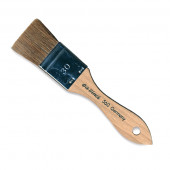
da Vinci Series 560 Ox Lacquer
Starting at: £31.90
Finest quality ox hair suitable for lacquers and fine varnishes. May also be used for watercolour washes. Learn More -
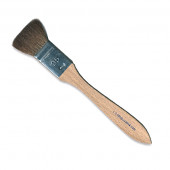
Cornelissen Squirrel Flat Lacquer
Starting at: £15.00
Extra soft brush for varnishing or lacquering. Also useful for watercolour washes. Learn More -
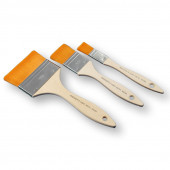
Roberson Liquid Metal Brush
Starting at: £12.00
A high quality multi-purpose golden synthetic fibre brush with plain wood handle and rustproof steel ferrule. This brush was originally developed for use in our testing laboratory and has been specifically designed for use with the Roberson Liquid metal range. The micro fine synthetic bristles ensure a high class smooth finish not available with normal acrylic brushes. It is also excellent for applying both acrylic and solvent based varnishes. Learn More -

Renaissance Wax
Starting at: £8.75
Used by restoration specialists to revive and protect furniture, leather, paintings, metals etc. Freshens colours, imparts soft sheen. Very long shelf life. (approx 20 years) as long as it is not exposed to heat. Learn More -

Universal Lacquer
Starting at: £10.00
Use to protect metal & silver leaf, white gold, Ormoline paint & Robersons Liquid Metal range. Provides extra protection on exterior projects & high-wear areas. It dries crystal clear with a satin finish, and is non-yellowing. Learn More
-

Gum Damar
Starting at: £7.50
Damar is a pale, almost colourless tree resin, which is soluble in turpentine, but not in alcohol or mineral spirits. It can be used as a varnish or as a glossy painting medium in conjunction with vegetable oils, and is generally preferable to other resin-based varnishes, such as mastic varnish, as it retains its colourless appearance for a longer period of time. In encaustic painting, the inclusion of damar resin imparts toughness and gloss to the paint surface. Learn More -

Daniel Smith Watercolour Ground Mars Black 4oz
£10.30Mars Black makes our Luminescent Watercolors “pop” and also provides an exciting, unexpected background for all your standard watercolour paints. Soft pastels, graphite and watercolour pencils show up beautifully on both the buff and black. *Please note, this product is stored offsite. Please allow extra time for your order to be processed and dispatched. Learn More -

Gamblin Cold Wax Medium
Starting at: £10.30
Cold Wax medium is made by Gamblin. They say:
"Cold Wax medium is made from naturally white, pure beeswax. Formulated to knife consistency, Cold Wax Medium makes oil colours thicker and more matte. Cold Wax Medium can be used to make Gamblin mediums and Gamvar more matte. It can also be applied alone as a matte varnish."
Please see below for more information.
Learn More -
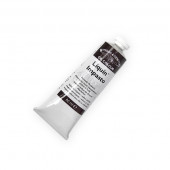
Winsor & Newton Liquin Impasto
Starting at: £10.25
From the Winsor & Newton website: A quick drying, semi-gloss medium which thickens slowly and extends tube colour retaining crisp textures brush marks without any visible levelling. Speeds drying (touch dry in 1-6 days depending on colour and film thickness). Resists yellowing. Not suitable as a varnish or final coat.
Learn More -
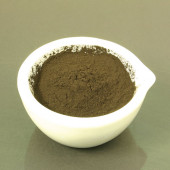
Asphaltum Powder
Starting at: £14.30
Used in etching grounds and stopping out varnishes. Can be used as a blackish brown colourant but when combined with oil causes wrinkling and cracking. Learn More -
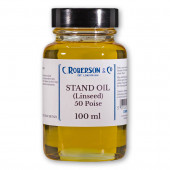
Roberson Linseed Stand Oil
Starting at: £9.40
Linseed Oil is derived from flax seeds, and appears on our shelves in many guises: Cold Pressed, Refined, Stand Oil, and as a key ingredient in many mediums. It has been appreciated for its drying properties since the Medieval period, and has become the most popular oil used in painting today due to the strong, flexible and glossy film that it creates.
Stand Oil is paler and more viscous than other Linseed Oils, having been heated and kept at temperature to provoke a molecular change. It is not suitable for grinding colours, but it is a very versatile ingredient that can be thinned with turpentine to create a glazing medium or be included in a varnish. Stand Oil is notable for its ability to smooth out brush strokes to create an enamel-like surface.
Learn More -
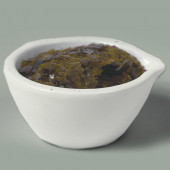
Clear Dewaxed Shellac
Starting at: £9.20
Shellac is a natural resin that is deposited by the female lac insect on the branches of trees in India and Thailand. It is soluble with alcohol, but not with mineral spirits or turpentine. It forms a tough yet flexible film, with many applications. It is suitable as a top coat for gilding when applied thinly, a sealant for porous surfaces, an isolating layer for tempera paintings, a base for pigmented inks, a protective layer for collograph plates, and a warm varnish for wooden floors and furniture. As it is prone to darkening with age, it is not recommended as a varnish for oils, and its solubility can reduce over time. There are various grades of shellac. When mixed with alcohol, it may initially form a cloudy mixture, due to traces of wax in the shellac, but this should become clear once it has dried. The highest grades of shellac are Clear Dewaxed Shellac, which has been de-coloured using the carbon filtering method, Lemon Shellac, and Orange Shellac, which are pale in colour. Button Shellac is less refined and therefore produces a reddish varnish. It was, in fact, widely used as a red dye before synthetic dyes became available. Learn More -
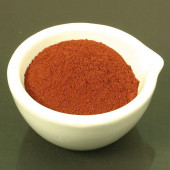
Dragon's Blood Powder
Starting at: £28.10
Dragon's Blood is a natural, resin, mentioned by Pliny in his Natural History. It has a weak tinting strength, and its rich red-colour can be fugitive in direct sunlight. It is fully soluble in alcohol, and can be used to add a warm, transparent tone to spirit varnishes. Also available in lump form.
Learn More -

Gum Benzoin
Starting at: £14.70
Gum Benzoin is used as a fixative, slowing the dispersion of essential oils and other materials into the air. Is occasionally called for in some old varnish recipes where it was employed primarily for its odour. Learn More -
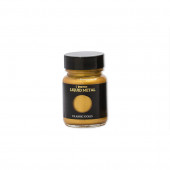
Roberson Liquid Metal 30ml
Starting at: £6.40
Roberson Liquid Metals have a rich deep colour, ideal for a wide range of applications including plaster, wood, paper & canvas. The Liquid Metal range does not tarnish and does not need to be varnished. All colours are intermixable and water wash up. Learn More -
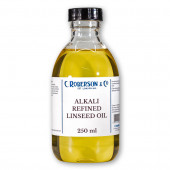
Roberson Refined Linseed Oil
Starting at: £12.10
Linseed Oil is derived from flax seeds, and appears on our shelves in many guises: Cold Pressed, Refined, Stand Oil, and as a key ingredient in many mediums. It has been appreciated for its drying properties since the Medieval period, and has become the most popular oil used in painting today due to the strong, flexible and glossy film that it creates.
Alkali Refined Linseed Oil has been treated to reduce its acidity, and is a useful ingredient in mediums and varnishes.
Learn More -
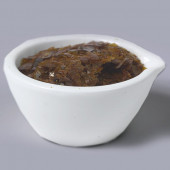
Lemon Shellac
Starting at: £8.20
Shellac is a natural resin that is deposited by the female lac insect on the branches of trees in India and Thailand. It is soluble with alcohol, but not with mineral spirits or turpentine. It forms a tough yet flexible film, with many applications. It is suitable as a top coat for gilding when applied thinly, a sealant for porous surfaces, an isolating layer for tempera paintings, a base for pigmented inks, a protective layer for collograph plates, and a warm varnish for wooden floors and furniture. As it is prone to darkening with age, it is not recommended as a varnish for oils, and its solubility can reduce over time. There are various grades of shellac. When mixed with alcohol, it may initially form a cloudy mixture, due to traces of wax in the shellac, but this should become clear once it has dried. The highest grades of shellac are Clear Dewaxed Shellac, which has been de-coloured using the carbon filtering method, Lemon Shellac, and Orange Shellac, which are pale in colour. Button Shellac is less refined and therefore produces a reddish varnish. It was, in fact, widely used as a red dye before synthetic dyes became available. Learn More -
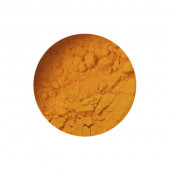
Gamboge Powder
Starting at: £5.20
Gamboge is a natural tree resin, available as a powder and in the solid "pipe" form. It is highly transparent, fugitive to light, with a weak tinting strength. The powder can be dissolved in alcohol to colour resin-based varnishes. In its solid form, Pipe Gamboge does not require a binding agent to be used as a paint. Instead, colour can be lifted with a wet brush, as from a watercolour pan.
Larger quantities are available by request.
Learn More -
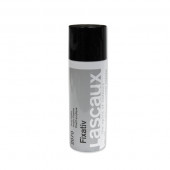
Lascaux Fixative
Starting at: £17.90
Clear, lightfast with excellent ageing properties. Can also be used as picture varnish and protective lacquer for gilded surfaces. Unable to send overseas. Learn More -
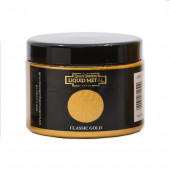
Roberson Liquid Metal 500ml
Starting at: £30.00
Roberson Liquid Metals have a rich deep colour, ideal for a wide range of applications including plaster, wood, paper & canvas. The Liquid Metal range does not tarnish and does not need to be varnished. All colours are intermixable and water wash up. Learn More -
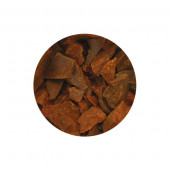
Gamboge Pipe Pieces
Starting at: £22.00
Gamboge is a natural tree resin, available as a powder and in the solid "pipe" form. One of the unique features of Pipe Gamboge is that it does not require a binding agent to be used as a paint. Instead, colour can be lifted with a wet brush, as from a watercolour pan. It is highly transparent, fugitive to light, with a weak tinting strength. The powder can be dissolved in alcohol to colour resin-based varnishes.
Pipe Gamboge is available while stocks last. Larger quantities are available by request.
Learn More -

Winsor & Newton Liquin Light Gel
Starting at: £8.05
From the Winsor & Newton website: This quick drying gloss medium offers a slight gel that brushes out smoothly and is ideal for artists looking for a non-drip effect when mixed with colour. Speeds drying (touch dry in 1-6 days depending on colour and film thickness). Ideal for glazing. Resists yellowing. Not suitable as a varnish or final coat. Learn More -
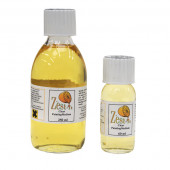
Zest-it Oil Painting Medium
Starting at: £6.90
Zest-It Oil Painting Medium improves the flow of oil paint and reduces brush strokes. It is suitable for wet-on-wet techniques, especially suitable for blending and glazing without using varnish. Learn More -
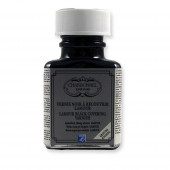
Charbonnel Lamour Black
Starting at: £27.50
Bitumen, turpentine. Covering varnish with hard finish. Recommended for aquatint techniques. Learn More -
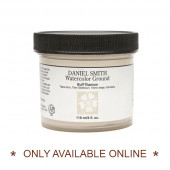
Daniel Smith Watercolour Ground Buff Titanium 4oz
£10.30Buff Titanium is great for value studies and provides a gorgeous, classic-looking surface for work in neutral grays, earthy reds, black and white. *Please note, this product is stored offsite. Please allow extra time for your order to be processed and dispatched. Learn More -
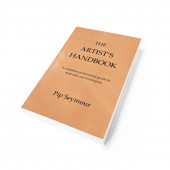
Artist's Handbook
£29.50By Pip Seymour. The Artist’s Handbook provides artists with in-depth, practical information on the materials, equipment and skills necessary for all areas of artistic practice. Topics covered include advice on how to select appropriate art materials, including paints, brushes, canvases and drawing materials; techniques for making your own paints, glue, varnishes and paper; advice on how to achieve the best results from both manufactured and hand-made materials; the best methods of storing and preserving finished artworks, and health and safety precautions. (520 pages) Learn More -
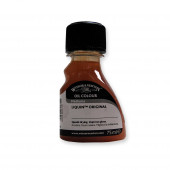
Winsor & Newton Liquin Original
Starting at: £8.05
From the Winsor & Newton website: This reliable favourite is a general purpose semi gloss medium which speeds drying, improves flow and reduces brush stroke retention. Halves the drying time of conventional oil colour (touch dry in 1-6 days depending on colour and film thickness). Resists yellowing. Not suitable as a varnish or final coat. Learn More -

Colophony
Starting at: £7.30
Colophony is a by-product of the distillation of turpentine. It is soluble in most solvents, but considered an adulterant in varnishes and paints, as it forms a weak surface that is prone to darkening and cracking. It is, however, a key ingredient in wax-based etching grounds, imparting hardness, and can be used in powdered form (rosin) to make aquatints. Learn More -
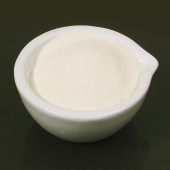
Casein Lactic
Starting at: £18.30
Casein is a protein derived from dried milk, which has been used in painting since ancient times. It can be combined with Ammonium Carbonate to form an emulsion, which acts as a durable, non-resoluble binder for pigments, producing a matte, fast-drying paint, similar in appearance to egg tempera. We use casein as a binder for our L. Cornelissen & Son Pigment Colour Charts, as it is a medium that clearly showcases the characteristics and behaviour of each pigment in its pure form. Casein paints can be applied in thin layers to watercolour paper, but would require a more rigid support, such as a gesso panel, to be applied thickly, as the comparative inflexibility of the paint layer means that it can be prone to cracking. Subsequent layers of paint should be more diluted to aid adhesion, and impasto effects are not recommended. It is possible to varnish casein paintings using an acrylic or damar varnish to obtain a glossy surface if desired, although this is not a necessary step. Casein can also be used as an ingredient in gesso, and is a suitable binder for fresco secco techniques.
Some pigments may require a wetting agent in order to fully disperse within the binder, in which case alcohol may be used.
Learn More -
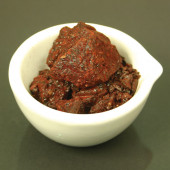
Dragon's Blood Pieces
Starting at: £25.40
Dragon's Blood is a natural, resin, mentioned by Pliny in his Natural History. It has a weak tinting strength, and its rich red colour can be fugitive in direct sunlight. It is fully soluble in alcohol, and can be used to add a warm, transparent tone to spirit varnishes. Also available in powdered form.
Learn More
Shopping Options
- Category
-
- Pigments, Gums & Resins (18)
- Oils & Acrylics (60)
- Watercolour (2)
- Pastels (2)
- Gilding & Restoration (14)
- Printmaking (7)
- Brushes (11)
- Studio (1)
- Specialist Decorating (2)
- Manufacturer
-
- Charbonnel (3)
- Cornelissen (23)
- Da Vinci (4)
- Daler-Rowney (1)
- Daniel Smith (2)
- Gamblin (2)
- Lascaux (2)
- Lefranc et Bourgeois (14)
- Liquitex (5)
- London Pigment (1)
- Maimeri (5)
- Omega (4)
- Roberson (28)
- Schmincke (2)
- Winsor&Newton (13)
- Zest-It (1)
- Talens (3)
You have no items in your shopping basket.

- Search Brands
-