

Search results for 'wax'


-

Renaissance Wax
Starting at: £8.75
Used by restoration specialists to revive and protect furniture, leather, paintings, metals etc. Freshens colours, imparts soft sheen. Very long shelf life. (approx 20 years) as long as it is not exposed to heat. Learn More -

Sealing Wax Mura
Starting at: £2.25
Taper/wick throughout length. Well suited to craft purposes. Assorted colours including Red, Gold, Silver and Blue. Learn More -
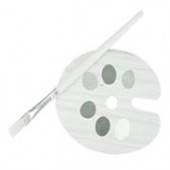
Microcrystalline Wax
Starting at: £8.50
Microcrystalline Wax is related to paraffin wax, and is used as a plasticiser in some recipes. Learn More -
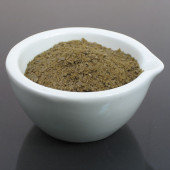
Carnauba Wax Grey
Starting at: £8.40
Carnauba Wax is the hardest wax commonly used in the production of artists' materials, with a melting point of 83-86°c. It is derived from a tree native to South America, and is available in a natural colour (grey), or a refined colour (pale yellow). Small amounts of carnauba wax are commonly used in both oil painting mediums and encaustic painting, usually in conjunction with beeswax to add toughness, durability and sheen to the paint film. It creates an inflexible surface, so works best on rigid supports such as gesso panels, and it should be noted that it will raise the melting point of encaustic mixtures. It can produce a glossy finish; as such it is used in waxes and polishes for shoes, cars, musical instruments, furniture, and wooden floors, especially when mixed with beeswax and turpentine. Learn More -
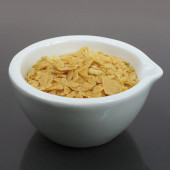
Carnauba Wax Yellow
Starting at: £6.50
Carnauba Wax is the hardest wax commonly used in the production of artists' materials, with a melting point of 83-86°c. It is derived from a tree native to South America, and is available in a natural colour (grey), or a refined colour (pale yellow). Small amounts of carnauba wax are commonly used in both oil painting mediums and encaustic painting, usually in conjunction with beeswax to add toughness, durability and sheen to the paint film. It creates an inflexible surface, so works best on rigid supports such as gesso panels, and it should be noted that it will raise the melting point of encaustic mixtures. It can produce a glossy finish; as such it is used in waxes and polishes for shoes, cars, musical instruments, furniture, and wooden floors, especially when mixed with beeswax and turpentine. Learn More -
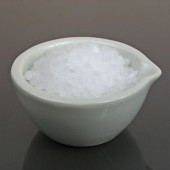
Paraffin Wax
Starting at: £6.60
Paraffin Wax is a by-product of the petro-chemical industry. It has a low melting point of 50-60°c and a brittle texture, making it unsuitable for encaustic painting or as an additive to oil paints, but it can be used to impart softness to lithographic crayons. As a petroleum product, it is more inert than animal or vegetable waxes, and is therefore not saponified (turned into soap) by alkali substances. Learn More -
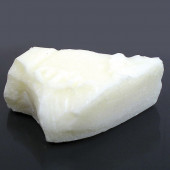
Japan Wax
Starting at: £13.50
A by-product of lacquer production, Japan Wax has a low melting point of 50-52°c. It is very soft and pale yellow in colour, and can be incorporated into lithographic crayons, pastels, and polishing compounds.
While stocks last.
Learn More -

-
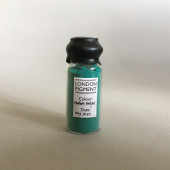
Mud Lark Verdigris Pigment
£18.00Call to Order
Made to a historical recipe, this Verdigris is made from Victorian copper scraps from the foreshore of the Thames in Tilbury, London and reacted with vinegar. This rich green is a translucent pigment with a fine grain. Learn More
-
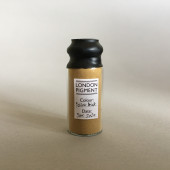
Georgian Yellow Brick Pigment
£12.00Call to Order
This warm earthy yellow is made from yellow bricks the quintessential London ‘stock brick’ which was in use during the 18th and 19th centuries. This pigment has a medium grain size and is transparent. Learn More
-
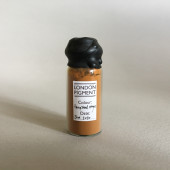
Hampstead Heath Orange Pigment
£12.00Call to Order
A beautifully bright and transparent orange, this ochre is particularly good for glazes. It has been sourced from the banks of the river Fleet, a tributary of the river Thames. This pigment has a fine grain size.
Follow @londonpigment on Instagram for an insight into the stories behind the colours and how she makes them.
NOTE: many of these colours are made in extrmely limited batches so please email us at info@cornelissen.com for further infomation on what is currently availible.
Learn More -
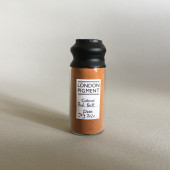
London Red Brick Pigment
£12.00Call to Order
Made from pulverised historic London bricks collected from the foreshore of the Thames near Tower Bridge and Wapping this deep red pigment is essentially a variety of red ochre. During the Victorian era, London Clay was dug up and fired on construction sites to produce the building materials for the city. Red brick pigment has a medium grain size and is opaque. Learn More
-
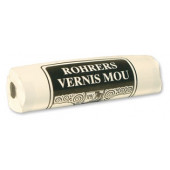
Rohrer & Klingner Soft Ground 16g
£16.40Call to Order
Soft ground is a soft wax mixture for soft ground and cotton ground techniques. The warm ground plate gets coated with suet, which is then wiped off, leaving only a thin film. The soft ground is then applied on the warm plate and spread evenly with a small leather roller. Learn More
Shopping Options
- Category
-
- Pigments, Gums & Resins (37)
- Oils & Acrylics (13)
- Pastels (2)
- Drawing / Calligraphy (6)
- Gilding & Restoration (7)
- Printmaking (10)
- Brushes (1)
- Manufacturer
-
- Charbonnel (4)
- Cornelissen (31)
- Daler-Rowney (1)
- e+m (1)
- Faber-Castell (2)
- Gamblin (2)
- Lascaux (1)
- Lefranc et Bourgeois (1)
- London Pigment (8)
- Roberson (11)
- Rohrer and Klingner (4)
- Spectrum (1)
- Sennelier (2)
You have no items in your shopping basket.

- Search Brands
-