Pigments, Gums & Resins


-
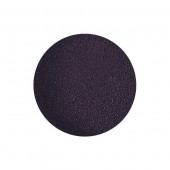
Indigo Blue Genuine Pigment
Starting at: £6.30
NB1
Genuine Indigo is a natural vegetable pigment derived from the Indigofera Tinctoria plant, which was first imported into Europe from India in the seventeenth century. It replaced woad, which had been grown natively in Europe for its blue dye. The leaves are soaked in water to ferment; upon drying, an oxidised residue forms on the dry leaves, which is removed, washed, boiled in water, and then dried to form cakes of pigment or dye.
Indigo is very transparent, with a good tinting strength. It requires a wetting agent to disperse, and in oil it dries very slowly. It is fugitive to light; this drawback means that it is no longer commonly available in commercial paints. It fell out of general use at the beginning of the seventeenth century, largely replaced by Prussian Blue, and synthetic Indigo was patented in the 1890s. However, it provides a subtle shade of blue that is still desirable in works that are going to be protected from light.
Toxicity: B
Learn More -
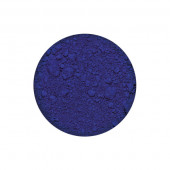
Oriental Blue Pigment
Starting at: £5.40
Oriental Blue Pigment (PB29). Inorganic pigment consisting kaolin, soda ash, sulfides and coal. Semi-transparent. High tinting strength. Excellent Lightfastness. Medium to slow drying rate. Suitable in all media except Lime-fresco. Used since early 19th Century. Toxicity B Learn More -
Manganese Blue Pigment
Starting at: £49.50
PB33
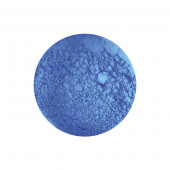
Manganese Blue is an articficial mineral pigment, that is prepared by heating sodium sulphate, potassium permanganate and barium nitrate to 750-800 degrees Celcius. It has been produed as a pigment and as a colourant for cement since the 1930s, and is notable for its quick drying time in oils, its high transparency, and its bright, slightly greenish colour. Its weak tinting strength can cause it to be overwhelmed in mixtures, and it has a tendency to granulate as a watercolour. It is no longer used in commercial paints, but many manufacturers offer a Manganese Blue Hue, which is typically based upon Phthalocyanine Blue.
Production of this pigment has now ceased, due to environmental and health concerns, therefore it is only available while stocks last.
Toxicity: C
Learn More -
Phthalo Blue Pigment
Starting at: £8.00
PB15:3
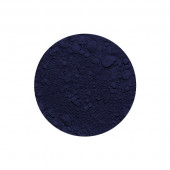
Phthalo (Mona) Blue is a synthetic organic pigment, Copper Phthalocyanine, that has been in use since the 1930s. It has an extremely high tinting strength and is a staining colour, so cannot successfully be lifted in watercolour. It requires a wetting agent to fully disperse into a medium, and, when used at full strength, a copper sheen is visible in dried paint film. It is transparent, very lightfast, and has a medium-to-slow drying rate in oil.
Toxicity: C
While stocks last
Learn More -
Prussian Blue Pigment
Starting at: £5.20
PB27
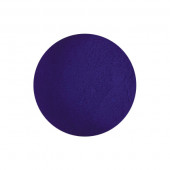
Prussian Blue is a synthetic organic pigment that was discovered by the paint maker Diesbach, apparently by accident, in Germany in the early eighteenth century. For many years, it was used not only as a colour in its own right, but also as a component of the original Hooker's Green. The other ingredient, gamboge, is highly fugitive, which is why many watercolours painted with Hooker's green have taken on a bluish tone with with age.
It is a very transparent and heavily staining colour. It dries quite quickly in oil, and can therefore wrinkly if applied too quickly. It is suitable for use in oils, watercolour, and egg tempera. However, it shouldn't be used in conjunction with alkali substances, such as Lead White or Calcium Carbonate as it can turn brown, so it isn't suitable for fresco. For the same reason, it isn't used with acrylic resin binders due to their alkaline nature, so most paint manufacturers will replace Prussian Blue with a mixture of Phthalo Blue and black in their acrylic ranges. It requires a wetting agent to fully disperse into a binder.
Toxicity: B
Learn More -
Ultramarine Blue Dark Pigment
Starting at: £4.00
PB29
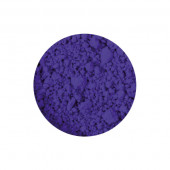
Ultramarine Blue Dark is an artificial mineral pigment that is produced by heating clay, soda, sulphur and coal to high temperatures. Its name comes from outremer, or over-the-sea, as a reference to the highly-prized Lapis Lazuli pigment which had been imported into Europe from Afghanistan since the Middle Ages. First manufactured in France and Germany in 1828, synthetic Ultramarine provided a brilliant and affordable blue to artists, and it remains one of the most popular blues on artists' palettes today.
It is a transparent pigment, with a high tinting strength and excellent lightfastness. It reacts to alkali, therefore it is not suitable for use in lime-fresco; we do offer a Limeproof Ultramarine Blue for this purpose. It is stable in all other media, although it can be tricky to grind in oil. Instead of creating a thick, buttery paste, it can remain stringy and deteriorate when stored in a tube. To correct this, many commercial paint manufacturers include additives and waxes in their recipes; if you intend on grinding your own paint, you could try replacing 10-15% of your Linseed Oil with Poppy Oil to improve the consistency. Ultramine Blue provides a slow-drying, fairly hard paint film, which can tend towards brittleness.
Toxicity: B
Learn More -
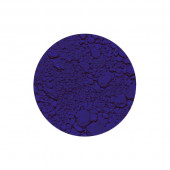
Ultramarine Blue Light Pigment
Starting at: £5.30
PB29
Ultramarine Blue Light is an artificial mineral pigment that is produced by heating clay, soda, sulphur and coal to high temperatures. Its name comes from outremer, or over-the-sea, as a reference to the highly-prized Lapis Lazuli pigment which had been imported into Europe from Afghanistan since the Middle Ages. First manufactured in France and Germany in 1828, synthetic Ultramarine provided a brilliant and affordable blue to artists, and it remains one of the most popular blues on artists' palettes today.
It is a transparent pigment, with a high tinting strength and excellent lightfastness. It reacts to alkali, therefore it is not suitable for use in lime-fresco; we do offer a Limeproof Ultramarine Blue for this purpose. It is stable in all other media, although it can be tricky to grind in oil. Instead of creating a thick, buttery paste, it can remain stringy and deteriorate when stored in a tube. To correct this, many commercial paint manufacturers include additives and waxes in their recipes; if you intend on grinding your own paint, you could try replacing 10-15% of your Linseed Oil with Poppy Oil to improve the consistency. Ultramine Blue provides a slow-drying, fairly hard paint film, which can tend towards brittleness.
Toxicity B
Learn More -
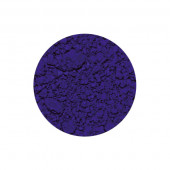
Ultramarine Blue Limewash Pigment
Starting at: £6.30
PB29
Ultramarine Blue Limewash is an artificial mineral pigment that is produced by heating clay, soda, sulphur and coal to high temperatures. Its name comes from outremer, or over-the-sea, as a reference to the highly-prized Lapis Lazuli pigment which had been imported into Europe from Afghanistan since the Middle Ages. First manufactured in France and Germany in 1828, synthetic Ultramarine provided a brilliant and affordable blue to artists, and it remains one of the most popular blues on artists' palettes today.
It is a transparent pigment, with a high tinting strength and excellent lightfastness. Most Ultramarine colours It react to alkali and are therefore unsuitable for use in lime-fresco; Limeproof Ultramarine Blue remedies this problem. It is stable in all other media, although it can be tricky to grind in oil. Instead of creating a thick, buttery paste, it can remain stringy and deteriorate when stored in a tube. To correct this, many commercial paint manufacturers include additives and waxes in their recipes; if you intend on grinding your own paint, you could try replacing 10-15% of your Linseed Oil with Poppy Oil to improve the consistency. Ultramine Blue provides a slow-drying, fairly hard paint film, which can tend towards brittleness.
Toxicity: B
Learn More -
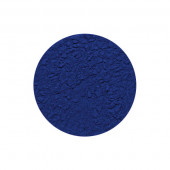
Ultramarine PB29 Pigment
Starting at: £9.10
PB29
Ultramarine Blue is an artificial mineral pigment that is produced by heating clay, soda, sulphur and coal to high temperatures. Its name comes from outremer, or over-the-sea, as a reference to the highly-prized Lapis Lazuli pigment which had been imported into Europe from Afghanistan since the Middle Ages. First manufactured in France and Germany in 1828, synthetic Ultramarine provided a brilliant and affordable blue to artists, and it remains one of the most popular blues on artists' palettes today.
It is a transparent pigment, with a high tinting strength and excellent lightfastness. It reacts to alkali, therefore it is not suitable for use in lime-fresco; we do offer a Limeproof Ultramarine Blue for this purpose. It is stable in all other media, although it can be tricky to grind in oil. Instead of creating a thick, buttery paste, it can remain stringy and deteriorate when stored in a tube. To correct this, many commercial paint manufacturers include additives and waxes in their recipes; if you intend on grinding your own paint, you could try replacing 10-15% of your Linseed Oil with Poppy Oil to improve the consistency. Ultramine Blue provides a slow-drying, fairly hard paint film, which can tend towards brittleness.
Toxicity: B/C
Learn More -
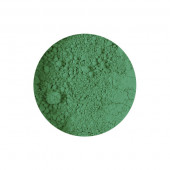
Viridian Green Pigment
Starting at: £6.30
Viridian Green is a synthetic inorganic pigment, similar in composition to Chromium Oxide. However, unlike Chromium Oxide, Viridian contains water molecules within its crystal structure, imparting a greater degree of transparency. Sometimes referred to as Verte Eméraude, Viridian was discovered in France in 1838, patented in 1859, and made available in the UK in 1862. It is stable in all media, and offers excellent lightfastness and good tinting strength. It requires a high oil content, and dries slowly to form a hard, fairly flexible paint film.
Toxicity B
Learn More -
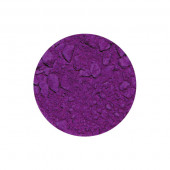
Cobalt Violet Dark Pigment
Starting at: £13.90
Cobalt Violet Dark Pigment (PV14). Synthetic inorganic pigment. Semi-transparent. High tinting strength. Excellent Lightfastness. Low oil absorption with fast drying rate. All media including ceramics. Used since late 19th Century.
Limeproof
Toxicity: C
Learn More -
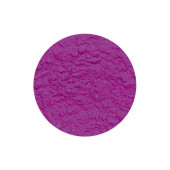
Cobalt Violet Light Pigment
Starting at: £10.00
Cobalt Violet Light Pigment (PV14). Synthetic inorganic pigment. Semi-opaque. Weak tinting strength. Excellent Lightfastness. Fast drying rate. Good for oil and watercolour but not acrylic as pigment 'settles out'. Used since early 1900's. This colour cannot be matched through mixing other colours.
Limeproof
Toxicity: C
Learn More -
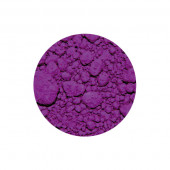
Manganese Violet Pigment
Starting at: £7.20
PV16
Manganese Violet is a synthetic organic pigment, discovered in Germany in 1868 and formed by combining manganese chloride, phosphoric acid and ammonium carbonate. It is very lightfast, but sensitive to alkalis and oils. It is semi-opaque and fast-drying, with a low tinting strength and low absorption of oil.
Toxicity: C
Learn More -
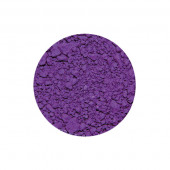
Ultramarine Violet Pigment
Starting at: £6.20
PV15
Ultramarine Violet is a synthetic organic pigment that is produced by heating Ultramarine Blue with Ammonium Chloride, causing the removal of some of the sodium and sulphur and thus a change in colour. It is lightfast and semi-transparent, with a weak tinting strength. In oils, it dries quite slowly, forming a hard, flexible film.
Toxicity: B
Learn More -
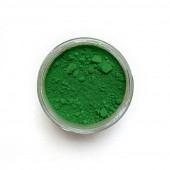
Pigment 15 ml Cadmium Green (16g)
£4.50Cadmium Green is an artificial mineral pigment, a mixture of Cobalt and Cadmium Yellow. It is an opaque, lightfast, slow-drying pigment with a high tinting strength.
Learn More -
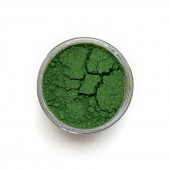
Pigment 15 ml Chromium Oxide (17g)
£4.50Chromium Oxide is a synthetic mixed-metal oxide pigment. It is stable in all media and has an average drying speed in oil, forming a hard, fairly flexible paint film. It is opaque, with a low tinting strength. It has been widely available since the mid-nineteenth century, following its introduction in 1809.
Learn More -
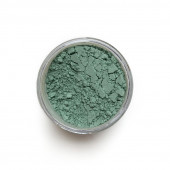
Pigment 15 ml Terre Verte (16g)
£4.00Terre Verte, sometimes known as Green Earth, is a natural earth pigment derived from clay coloured by iron silicate. As with other natural pigments, impurities can prevent it from fully dispersing in an acrylic binder, although it is a popular pigment in all other mediums. It has been in use since antiquity, providing excellent lightfastness and great transparency, with a low tinting strength. It requires a high volume of oil, and dries slowly to create a soft, flexible paint film. When calcined, Terre Verte becomes Burnt Green Earth.
Learn More -
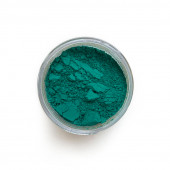
Pigment 15 ml Viridian Green (9g)
£6.30Viridian Green is a synthetic inorganic pigment, similar in composition to Chromium Oxide. However, unlike Chromium Oxide, Viridian contains water molecules within its crystal structure, imparting a great degree of transparency. Sometimes referred to as Verte Eméraude, Viridian was discovered in France in 1838, patented in 1859, and made available in the UK in 1862. It is stable in all media, and offers excellent lightfastness and good tinting strength. It requires a high oil content, and dries slowly to form a hard, fairly flexible paint film.
Learn More -

Cadmium Green Pigment
Starting at: £4.50
Cadmium Green is an artificial mineral pigment, a mixture of Cobalt and Cadmium Yellow. It is an opaque, lightfast, slow-drying pigment with a high tinting strength.
Toxicity C
Learn More -
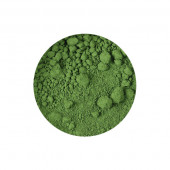
Chromium Oxide Pigment
Starting at: £4.50
Chromium Oxide is a synthetic mixed-metal oxide pigment. It is stable in all media and has an average drying speed in oil, forming a hard, fairly flexible paint film. It is opaque, with a low tinting strength. It has been widely available since the mid-nineteenth century, following its introduction in 1809.
Learn More -

Cobalt Green Deep Pigment
Starting at: £9.20
CPG19
Cobalt Green is a synthetic pigment that consists of compounds of cobalt and zinc oxides. It is sometimes referred to as Rinman's Green, after the Swedish chemist who discovered it in the late-18th century. It is a permanent, opaque colour, with a weak tinting strength. It dries quite quickly in oil, requiring a high oil content and forming a hard, fairly fleixible paint film. Cobalt Green is available in light and dark shades; the colour is determined by the amount of zinc oxide present.
Toxicity: B
Learn More -

Cobalt Green Light Pigment
Starting at: £8.70
PG19
Cobalt Green is a synthetic pigment that consists of compounds of cobalt and zinc oxides. It is sometimes referred to as Rinman's Green, after the Swedish chemist who discovered it in the late-18th century. It is a permanent, opaque colour, with a weak tinting strength. It dries quite quickly in oil, requiring a high oil content and forming a hard, fairly fleixible paint film. Cobalt Green is available in light and dark shades; the colour is determined by the amount of zinc oxide present.
Toxicity: B
Learn More -
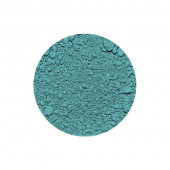
Cobalt Turquoise Pigment
Starting at: £8.80
Cobalt Turquoise Pigment (PB28). Mineral pigment, Calcined Oxides of Titanium and Cobalt. Opaque. Medium tinting strength. Excellent Lightfastness. Fair drying rate. Stable in all media including cermaics. Cobalt Turquoise is a relatively new pigment.
Limeproof
Toxicity: B
Learn More -

Phthalo Green Pigment
Starting at: £8.10
Phthalo (Mona) Green Pigment (PG7). Organic pigment (Chlorinated Copper Phthalocyanine). Transparent. Very high tinting strength. Excellent Lightfastness. Medium to slow drying rate. Requires wetting agent. Suitable for all media. Developed in 1927. Toxicity B Learn More -

Phthalo Turquoise Pigment
Starting at: £17.00
Phthalo Turquoise Pigment (PB15.3, PG7, PW21). Mixture of Phthalo Green, Phthalo Blue and Blanc Fixe. Transparent. Excellent Lightfastness. Requires wetting agent. Toxicity B Learn More -
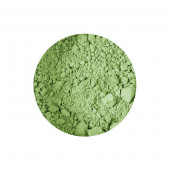
Terre Verte Pigment
Starting at: £4.00
Terre Verte, sometimes known as Green Earth, is a natural earth pigment derived from clay coloured by iron silicate. As with other natural pigments, impurities can prevent it from fully dispersing in an acrylic binder, although it is a popular pigment in all other mediums. It has been in use since antiquity, providing excellent lightfastness and great transparency, with a low tinting strength. It requires a high volume of oil, and dries slowly to create a soft, flexible paint film. When calcined, Terre Verte becomes Burnt Green Earth.
Toxicity B Learn More -
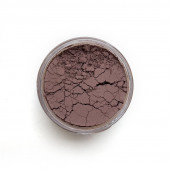
Pigment 15 ml Caput Mortuum (18g)
£4.50Caput Mortuum is a transparent, lightfast pigment that is stable in all media. Colours described as Caput Mortuum can vary greatly; our pigment is a soft purple-brown, made from a mixture of natural iron oxides. It is believed that Caput Mortuum has its roots in ancient Egypt, when colour was derived from remains that had been embalmed in asphaltum.
Learn More -
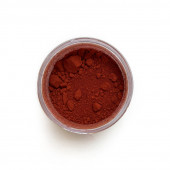
Pigment 15 ml Red Ochre (13g)
£4.00Iron oxide. Semi-opaque, good tinting strength and very lightfast. Stable in all media.
Learn More -
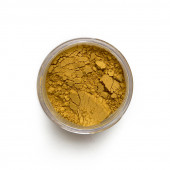
Pigment 15 ml Yellow Ochre (15g)
£4.00Yellow Ochre is a semi-transparent, lightfast natural earth pigment, which is stable in all media. It has a medium to slow drying rate in oil, creating a tough, flexible paint film.
Learn More -
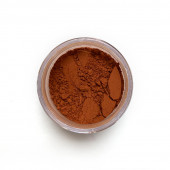
Pigment 15 ml Burnt Sienna (12g)
£4.00Natural earth pigment, calcined raw sienna. Good tinting strength and very lightfast. Stable in all media but can be difficult to disperse in acrylic binders. Fast to medium drying rate in oil. Dates back to antiquity.
Learn More
You have no items in your shopping basket.