
Pigments, Gums & Resins


-
-
-
-
-
-

-
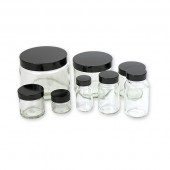
Squat & Powder Jars
Starting at: £0.75
Squat and Powder Jars in glass and plastic. *Please note, our glass jars are fragile, although they are packed very carefully we cannot guarantee they will arrive safely. Cases of jars are stored offsite, please allow extra time for your order to be processed and dispatched. Learn More -

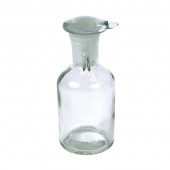
Reagent Jar
Starting at: £3.85
Our clear reagent bottles are manufactured in the EU and are made of high quality soda lime glass. They have a solid base and good wall thickness.
Learn More -

Empty Aluminium Tubes
Starting at: £0.90
Empty Aluminium Tubes. Please see delivery information below. Learn More -

-

Pigment Display Jar 75ml
£10.00Call to Order
This jar has been designed by Cornelissen to display small quantities of pigment to a very high visual standard. Made with 'Borosilicate' glass (as used in laboratories), the container is beautifully clear and transparent while being stronger than normal 'Soda-Lime' glass. The jar measures 11.7 cm in height, 3.8 cm external diameter and has a volume of 75 ml. It's gross weight is 126 grams with ground glass top weighting as much as the container. The top has a very slight, elegant slope from its centre. **DUE TO THE FRAGILE NATURE OF THIS PRODUCT, IT IS ONLY AVAILABLE TO COLLECT IN STORE** Learn More -
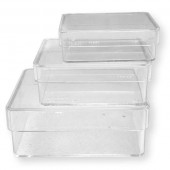
Transparent Containers
Starting at: £1.20
Rigid high quality boxes manufactured in clear Polystyrene. Medium and large sizes are ideal for storing loose nibs. Learn More -
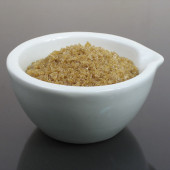
Rabbit Skin Glue
Starting at: £10.95
For sizing canvas prior to priming with an oil based primer. Do not use under acrylic primer. Soak overnight in water. Heat in double boiler (do not boil). Ratio water:size 13:1. Use while still warm. Rabbit Skin Glue do not contain any preservatives. 340 - 360 Bloom Learn More
-
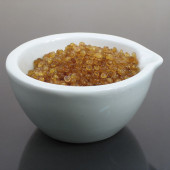
Pearl Glue
Starting at: £5.80
Pearl Glue is a traditional animal-based wood glue used for veneering, joinery and antique restoration. 170-200 bloom. Learn More
-
-
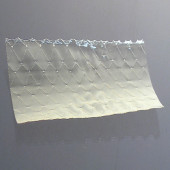
Gelatine Leaf
Starting at: £5.30
A pure form of glue from animal tissue. Used for sizing paper. Used in gliding and for weak sizes in isolating layers in tempera painting. Learn More -
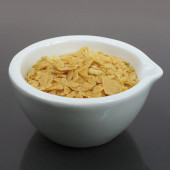
Carnauba Wax Yellow
Starting at: £6.50
Carnauba Wax is the hardest wax commonly used in the production of artists' materials, with a melting point of 83-86°c. It is derived from a tree native to South America, and is available in a natural colour (grey), or a refined colour (pale yellow). Small amounts of carnauba wax are commonly used in both oil painting mediums and encaustic painting, usually in conjunction with beeswax to add toughness, durability and sheen to the paint film. It creates an inflexible surface, so works best on rigid supports such as gesso panels, and it should be noted that it will raise the melting point of encaustic mixtures. It can produce a glossy finish; as such it is used in waxes and polishes for shoes, cars, musical instruments, furniture, and wooden floors, especially when mixed with beeswax and turpentine. Learn More -
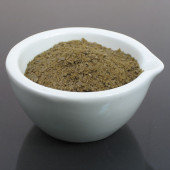
Carnauba Wax Grey
Starting at: £8.40
Carnauba Wax is the hardest wax commonly used in the production of artists' materials, with a melting point of 83-86°c. It is derived from a tree native to South America, and is available in a natural colour (grey), or a refined colour (pale yellow). Small amounts of carnauba wax are commonly used in both oil painting mediums and encaustic painting, usually in conjunction with beeswax to add toughness, durability and sheen to the paint film. It creates an inflexible surface, so works best on rigid supports such as gesso panels, and it should be noted that it will raise the melting point of encaustic mixtures. It can produce a glossy finish; as such it is used in waxes and polishes for shoes, cars, musical instruments, furniture, and wooden floors, especially when mixed with beeswax and turpentine. Learn More -
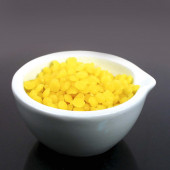
Natural Beeswax
Starting at: £11.20
Beeswax is derived from melted honeycomb, and is available in two grades. Bleached Beeswax Pellets are white, having been bleached by the sun, and are an appropriate choice for using with pale colours, although they may revert to yellow over time. Natural Beeswax Pellets are yellow in colour, and offer a more flexible structure with a higher resin content. Beeswax has a melting point of 63-66°c, and may turn brown if over-heated. It is the most widely used wax in artists' materials, having a wide range of applications. Please see below for more details.
Learn More -
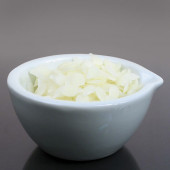
Bleached Beeswax
Starting at: £12.30
Beeswax is derived from melted honeycomb, and is available in two grades. Bleached Beeswax Pellets are white, having been bleached by the sun, and are an appropriate choice for using with pale colours, although they may revert to yellow over time. Natural Beeswax Pellets are yellow in colour, and offer a more flexible structure with a higher resin content. Beeswax has a melting point of 63-66°c, and may turn brown if over-heated. It is the most widely used wax in artists' materials, having a wide range of applications. Please see below for more details.
Learn More -
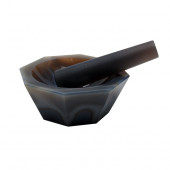
Agate Pestles and Mortars
Starting at: £50.00
Agate pestle and mortars are used by laboratories and artists requiring a harder material than porcelain in order to minimise the risk of contamination. *PLEASE ALLOW UP FOUR WEEKS FOR DELIVERY OF THIS ITEM* (telephone us for more information) Learn More -
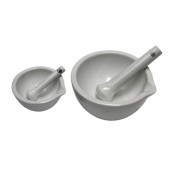
Ceramic Pestles and Mortars
Starting at: £30.00
Call to Order
Ceramic Pestles and Mortars Learn More -
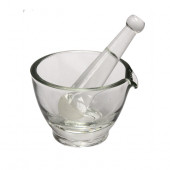
Glass Pestles and Mortars
Starting at: £36.50
Glass Pestles and Mortars 100 or 150 mm diameter. Learn More -
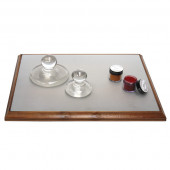
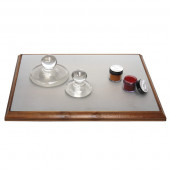
Mixing Slab
Starting at: £19.95
A glass slab with wooden cradle for the grinding of pigments.
The friction created between the sand-blasted surfaces of the glass slab and muller facilitates the thorough mixing of pigment and medium, creating a consistent and strong paint body. This slab can be used to manufacture many types of paint including watercolours, egg tempera and oils.
Mulling is of particular importance when making oil paint; simply mixing pigment and oil together using a palette knife will result in an unstable substance with poor plasticity, which contains a large amount of excess oil and unevenly distributed pigment particles. Thorough mulling in a figure-of-eight motion will enable the pigment to be fully combined into the binder, strengthening the resultant paint film.
PLEASE NOTE: This item is in stock but it is a call to order item due to the fact that we cannot guarantee its safe delivery, however well we package it. Please ring us to discuss your delivery options.
Learn More -
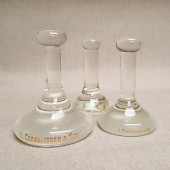
Cornelissen Glass Mullers
Starting at: £24.50
Cornelissen Glass Mullers are handmade using superior boro silicate laboratory glass, which is 40% harder, more heat resistant, and offers better clarity than soda-lime glass. The base of each muller is ground perfectly flat, and sand-blasted to create a fine tooth to facilitate the grinding of pigments. The tall handle features an ergonomic top, to ease fatigue when grinding large amounts of pigment.
*PLEASE NOTE: Small and medim Cornelissen mullers are currently being sold WITHOUT branding, with ONLY the large format muller sold with gold foil logo on the rim*
We will have the branded mullers back soon, please email info@cornelissen.com for further information.
Learn More -
![Roberson Glass muller, medium (7 cm) and small (5 cm) [without logo]](https://cornel.nitbg.com/media/catalog/product/cache/1/small_image/170x/9df78eab33525d08d6e5fb8d27136e95/i/m/img-6584.jpg)
Roberson Glass Mullers
Starting at: £24.50
Roberson Glass Mullers are handmade using high quality-glass.
Mullers act as flat-bottomed pestles, which are used to grind pigment into a binding medium, suspending it evenly to create a uniform covering of binder around each pigment particle. Using a muller and slab, rather than simply mixing pigment and binder together, will create a more homogenised and stable paint.
Use in conjunction with a Cornelissen Glass Slab to make paint efficiently. The sand-blasted texture of the muller and plate helps to push and distribute the pigment throughout the binder quickly. This will mean less grinding, and more painting!
NOTE: Sizes may vary slightly as these are handmade products.
Learn More -
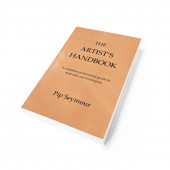
Artist's Handbook
£29.50By Pip Seymour. The Artist’s Handbook provides artists with in-depth, practical information on the materials, equipment and skills necessary for all areas of artistic practice. Topics covered include advice on how to select appropriate art materials, including paints, brushes, canvases and drawing materials; techniques for making your own paints, glue, varnishes and paper; advice on how to achieve the best results from both manufactured and hand-made materials; the best methods of storing and preserving finished artworks, and health and safety precautions. (520 pages) Learn More -
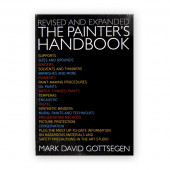
Painter's Handbook
£21.95By Mark David Gottsegen. A guide to artists’ materials as well as a thorough resource presenting techniques for using them and recipes for making them. (355 pages) Learn More -
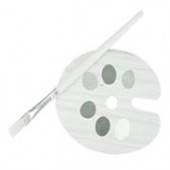
Glass Slab 23 x 33cm (10mm thick)
£29.50Call to Order
Glass Slab 23 x 33cm (10mm thick)
The friction created between the sand-blasted surfaces of the glass slab and muller facilitates the thorough mixing of pigment and medium, creating a consistent and strong paint body. This slab can be used to manufacture many types of paint including watercolours, egg tempera and oils.
Mulling is of particular importance when making oil paint; simply mixing pigment and oil together using a palette knife will result in an unstable substance with poor plasticity, which contains a large amount of excess oil and unevenly distributed pigment particles. Thorough mulling in a figure-of-eight motion will enable the pigment to be fully combined into the binder, strengthening the resultant paint film.
PLEASE NOTE: This item is in stock but it is a call to order item due to the fact that we cannot guarantee its safe delivery, however well we package it. Please ring us to discuss your delivery options.
Learn More -

The Boys Book of Trades and the Tools Used
£17.00Call to Order
This is a facsimile of a book first published in the 1860's, "with numerous illustrations" covering 33 trades including: cabinet maker, painter, gilder, paper stainer, dyer and scourer. Learn More
You have no items in your shopping basket.